Best Home Battery Systems in Western Australia: 2026 Comparison Guide
If you’re a Perth homeowner with solar panels, you’ve probably noticed that your feed-in tariff has dropped to as little as 2c/kWh off-peak under the Distributed Energy Buyback Scheme. Storing your own solar energy instead of exporting it for next to nothing is now the smarter financial move, and the timing has never been better.
The WA Residential Battery Scheme launched in July 2025 and stacks on top of the federal Cheaper Home Batteries Program. Synergy customers can access up to $5,000 in combined rebates on a 10 kWh battery, while Horizon Power customers in regional WA can access up to $7,500. There are 100,000 rebates available statewide, with the scheme expected to run until around 2027.
The catch: not all batteries are equal, and the wrong choice for your household can add years to your payback period.
This guide compares the six most popular home batteries available in WA right now: Tesla Powerwall 3, Sigenergy Sigenstor, Alpha ESS, BYD Battery-Box, SolarEdge Energy Bank, and Huawei LUNA 2000. We cover real specs, what you’ll pay after rebates, pros and cons, and a plain-English decision guide.
WA Battery Rebate: What You Actually Get in 2026
The WA scheme works alongside the federal Cheaper Home Batteries Program. Both rebates are applied upfront at the point of sale by your approved installer. No paperwork on your end.
| Customer Type | WA Rebate (up to 10 kWh) | Federal Rebate (approx.) | Combined Saving |
|---|---|---|---|
| Synergy (metro Perth) | $1,300 | ~$3,440 | ~$4,740 |
| Horizon Power (regional WA) | $3,800 | ~$3,440 | ~$7,240 |
Important: The federal rebate steps down in May 2026. Installing before that date locks in the higher STC value.
To be eligible you must be a Synergy or Horizon Power customer, install a new battery with at least 5 kWh usable capacity, use an approved vendor, and agree to VPP participation readiness. Households earning under $210,000 can also access a no-interest loan of $2,001 to $10,000 over 3 to 10 years, covering the battery, inverter, and solar panels if bundled together.
2026 Battery Comparison: Specs at a Glance
All prices are approximate installed costs for a Synergy customer after combined rebates.
| Battery | Usable Capacity | Efficiency | Warranty | Cycle Life | Est. Installed (after rebates) |
|---|---|---|---|---|---|
| Tesla Powerwall 3 | 13.5 kWh | 89% (system) | 10 yr / 70% | ~3,000+ | ~$11,000-$13,000 |
| Sigenergy Sigenstor | 6-54 kWh (modular) | ~95% | 10 yr / 70% | 10,000 | ~$8,000-$12,000 |
| Alpha ESS Smile5 | 13.3 kWh | 90-94% | 10 yr / 70% | ~6,000 | ~$7,500-$9,500 |
| BYD Battery-Box HVM | 8.3-22.1 kWh | ≥96% | 10 yr / 70% | ~6,000 | ~$8,000-$11,000 |
| SolarEdge Energy Bank | 9.7 kWh | ~94% | 10 yr / 70% | ~6,000 | ~$9,000-$12,000 |
| Huawei LUNA 2000 | 5-15 kWh (modular) | ~97% | 10 yr / 70% | ~6,000 | ~$8,000-$11,000 |
Note on efficiency: Tesla’s 89% is a full system round-trip figure (solar to battery to home). Other brands quote battery-only DC efficiency and require a separate inverter, which adds conversion losses. Always compare on an apples-to-apples basis when getting quotes.
Each Battery Reviewed
Tesla Powerwall 3
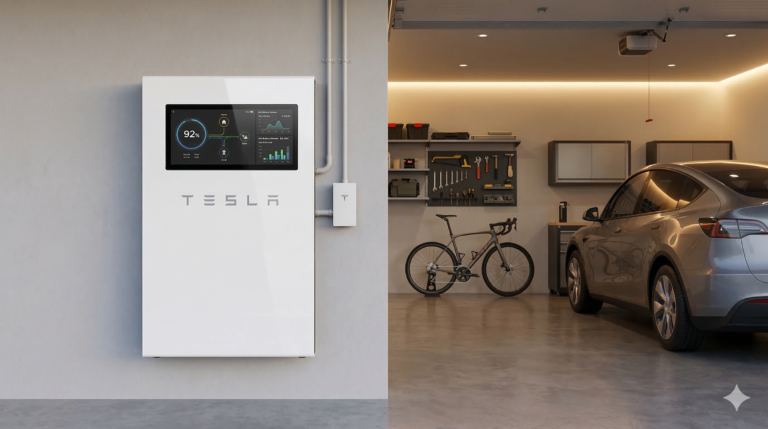
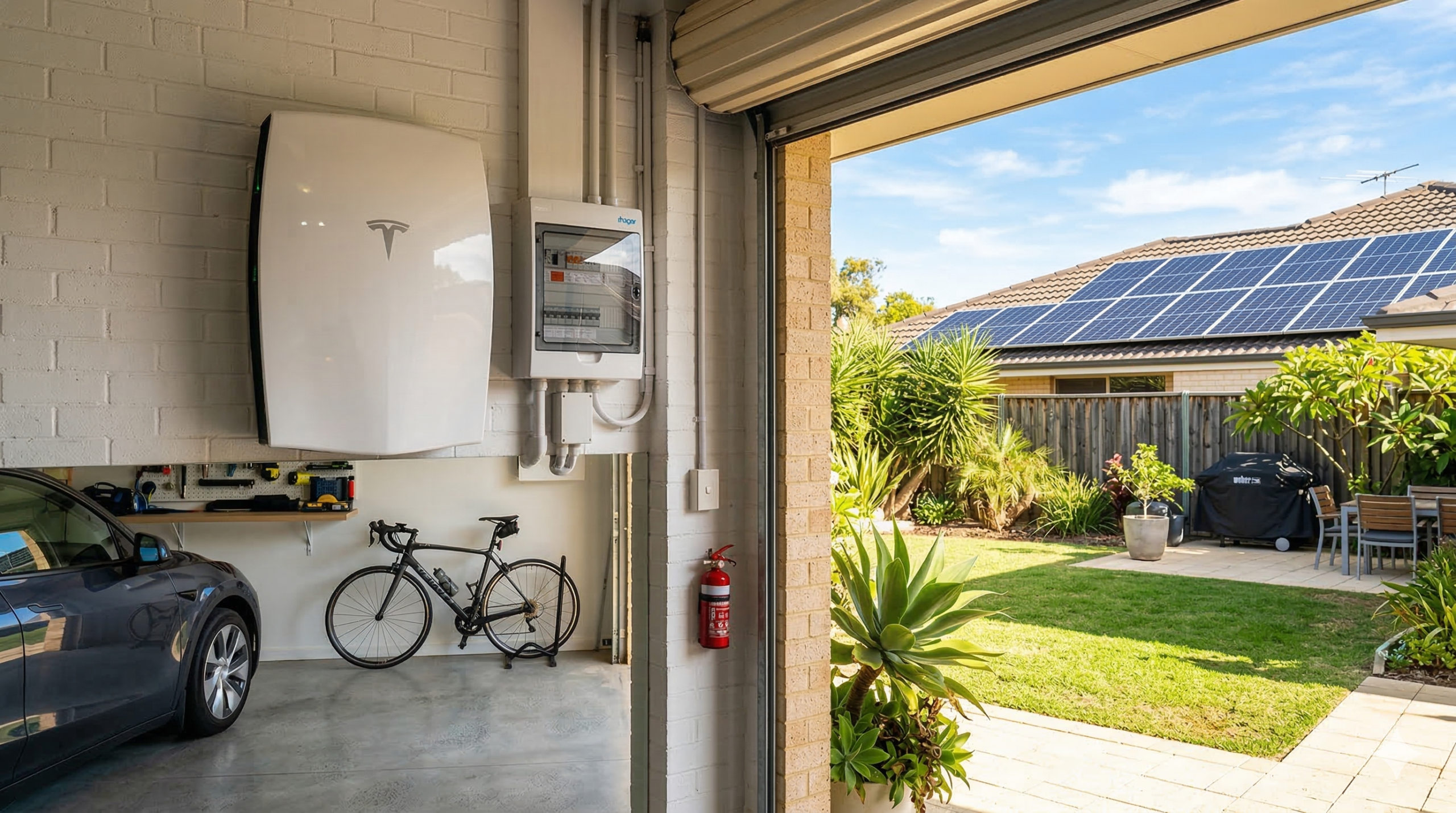
The Powerwall 3 is the benchmark for user experience. It’s a true all-in-one with the solar inverter built in, which simplifies installation when buying solar and battery together.
Pros: Best-in-class app (Storm Watch, time-of-use, EV integration), built-in 11.5 kW solar inverter, scalable to 54 kWh across four units. Cons: Premium price (~$11,000-$13,000 after rebates), not modular (whole new unit to expand), requires a Gateway box for backup.
Best for: Homeowners buying solar and battery together who want the best app experience and are comfortable paying for polish.
Sigenergy Sigenstor
Sigenergy is the standout newcomer. In the 2025 SolarQuotes installer survey, it jumped to second place with a 4.9-star installer rating. The Sigenstor is the only battery on this list with integrated Vehicle-to-Home (V2H) capability out of the box.
Pros: 10,000-cycle warranty (highest on this list), optional 25 kW V2H module, modular from 6 kWh to 54 kWh, excellent installer reviews. Cons: Shorter Australian track record, V2H module adds cost, slightly pricier than BYD or Alpha ESS at equivalent capacity.
Best for: EV owners and tech-forward homeowners who want a future-proof system.
Alpha ESS Smile5
Alpha ESS is the budget-friendly all-in-one. At roughly $7,500-$9,500 installed after rebates for 13.3 kWh, it delivers the lowest cost per kWh on this list.
Pros: Most affordable for large capacity, all-in-one design simplifies installation, local Australian support. Cons: Historical reliability concerns (improved in recent years), three-phase model must be installed indoors (IP21 rated), locked to the Alpha ecosystem.
Best for: Budget-conscious households who want maximum storage for the lowest upfront cost.
BYD Battery-Box Premium HVM
BYD is one of the world’s largest battery manufacturers. The HVM uses cobalt-free LFP chemistry rated at 96%+ efficiency and is the go-to pairing for Fronius Gen24 inverter owners.
Pros: Highly modular (8.3-22.1 kWh, expandable to 66 kWh), cobalt-free LFP chemistry, seamless Fronius and SMA compatibility, proven Australian track record. Cons: Requires a separate hybrid inverter (adds $1,500-$3,000), slightly pricier than Alpha ESS at equivalent capacity.
Best for: Homes with a Fronius inverter, or anyone wanting a highly scalable, proven modular system.
SolarEdge Energy Bank
Built specifically for SolarEdge solar systems, this DC-coupled battery maximises efficiency for existing SolarEdge users.
Pros: Seamless SolarEdge integration, DC-coupled efficiency advantage, detailed MySolarEdge app monitoring. Cons: Poor value outside the SolarEdge ecosystem, 9.7 kWh is on the small side for Perth homes.
Best for: Existing SolarEdge customers wanting a tightly integrated single-brand system.
Huawei LUNA 2000
The efficiency leader on this list at approximately 97% round-trip, the LUNA 2000 is a modular system (5 kWh per module, up to 15 kWh) paired with Huawei’s FusionSolar platform.
Pros: Highest quoted efficiency, modular design, strong FusionSolar monitoring app, competitive pricing. Cons: Requires a Huawei inverter for full functionality, geopolitical considerations for some buyers, 15 kWh maximum limits scalability.
Best for: Households pairing with a new Huawei inverter who want maximum efficiency at a competitive price.
How to Choose the Right Battery for Your Perth Home
The right battery depends on your situation. Here’s a practical framework:
What’s your daily energy use?
Most Perth homes use 15-25 kWh per day. A 10 kWh battery covers roughly half a day’s usage, enough to get through the evening peak without drawing from the grid. Households using more than 20 kWh daily should consider 13 kWh or larger.
Do you already have solar and an inverter?
This is the most important question. Fronius inverter owners should go straight to BYD. SolarEdge users should look at the Energy Bank. If you’re starting fresh with no existing solar, the Tesla Powerwall 3 or Sigenergy Sigenstor (both all-in-one) save money on installation by eliminating the need for a separate inverter.
Quick decision guide
| Your situation | Recommended battery |
|---|---|
| Buying solar + battery together, want best app | Tesla Powerwall 3 |
| Have or planning an EV | Sigenergy Sigenstor |
| Already have a Fronius inverter | BYD Battery-Box HVM |
| Already have SolarEdge solar | SolarEdge Energy Bank |
| Want maximum efficiency, pairing with new inverter | Huawei LUNA 2000 |
| Tightest budget, want most kWh for money | Alpha ESS Smile5 |
Real-World Payback: What to Expect in Perth
Payback periods depend on how much solar you generate, when you use energy, and what you paid. These scenarios are based on current Synergy tariffs (electricity at ~30c/kWh, DEBS export at 2c/kWh off-peak).
Scenario 1: Average Perth family, 10 kWh battery
- Household: 4 people, 22 kWh/day, 6.6 kW solar system
- Battery: 10 kWh (e.g., BYD HVM or Huawei LUNA 2000)
- Installed cost after rebates: ~$9,000
- Annual saving: ~$1,400-$1,600
- Estimated payback: 5.5 to 6.5 years
Scenario 2: High-usage home, 13.5 kWh battery
- Household: 5 people, pool, EV, 30+ kWh/day, 10 kW solar system
- Battery: 13.5 kWh (e.g., Tesla Powerwall 3)
- Installed cost after rebates: ~$12,000
- Annual saving: ~$1,800-$2,200
- Estimated payback: 5.5 to 7 years
The key variable is self-consumption. A battery pays back when it stores solar you’d otherwise export for 2c and uses it at night when you’d otherwise pay 30c. According to energy.gov.au, typical payback periods in Australia sit between 5 and 8 years, with WA’s strong solar resource placing most Perth homes at the favourable end.
Frequently Asked Questions
Which home battery is best in WA in 2026? There’s no single best battery. Tesla leads on user experience, Sigenergy on future-proofing, BYD on value and modularity, and Huawei LUNA on efficiency. The right choice depends on your existing inverter, household size, and whether you have an EV.
Do I need to join a VPP to get the WA battery rebate? Yes. The WA Residential Battery Scheme requires VPP participation readiness. In practice, this means your battery must be VPP-capable. It does not mean your battery will be constantly controlled by a third party.
Can I get the WA rebate if I already have solar? Yes. You can add a battery to an existing solar system and still claim the rebate, provided you use an approved vendor and the battery meets Synergy or Horizon Power technical requirements.
How long do home batteries last? Most LFP batteries on this list are rated for 6,000 to 10,000 cycles. At one cycle per day, that’s 16 to 27 years of daily use before reaching the warranted capacity threshold. Most manufacturers warranty 70% capacity retention over 10 years.
Will the federal rebate still be available after May 2026? Yes, but the STC value steps down, reducing the rebate amount. The WA state rebate is unaffected. Installing before May 2026 locks in the higher combined saving.
Ready to Get a Quote?
With up to $5,000 in combined rebates available for Synergy customers (and the federal portion stepping down after May 2026), now is the right time to act. All six batteries on this list are solid options; the key is matching the right one to your home.
At Talk Energy, we’re an approved WA battery scheme vendor with 250+ five-star reviews across Perth and regional WA. We install all of the brands compared in this guide and model your actual usage data to recommend the right system. We back every installation with a 20-year workmanship warranty and handle the rebate paperwork on your behalf.
Get a free quote and we’ll tell you exactly what your battery will cost after rebates, what your estimated payback looks like, and which system suits your home.