Off-Grid Solar Systems in Western Australia: Everything You Need to Know in 2026
Western Australia is one of the most solar-rich places on earth. Perth receives an average of 5.5 peak sun hours per day, and many rural and remote areas further north receive even more. Yet for thousands of WA property owners, that solar potential sits untapped while they wait on expensive grid extensions, deal with unreliable rural power supply, or simply can’t connect to the grid at all.
Off-grid solar is no longer a compromise. Modern lithium battery systems, purpose-built off-grid inverters, and intelligent generator integration have made fully independent power systems a practical, cost-competitive choice for the right property.
The key question isn’t whether off-grid solar works. It’s whether it’s the right choice for your specific situation.
This guide answers that question with WA-specific data, real cost figures, and a clear decision framework. Here’s what we’ll cover:
- Who actually needs an off-grid system in WA
- How to size your solar array and battery bank correctly
- Where a backup generator fits in
- How off-grid costs compare to grid connection for remote properties
- What maintenance looks like over the long term
- A straight go/no-go decision framework
Who Needs an Off-Grid Solar System in WA?
Off-grid solar suits a specific type of WA property owner. It is not the right choice for everyone, and going in with the wrong expectations is expensive. The candidates who genuinely benefit fall into three clear categories.
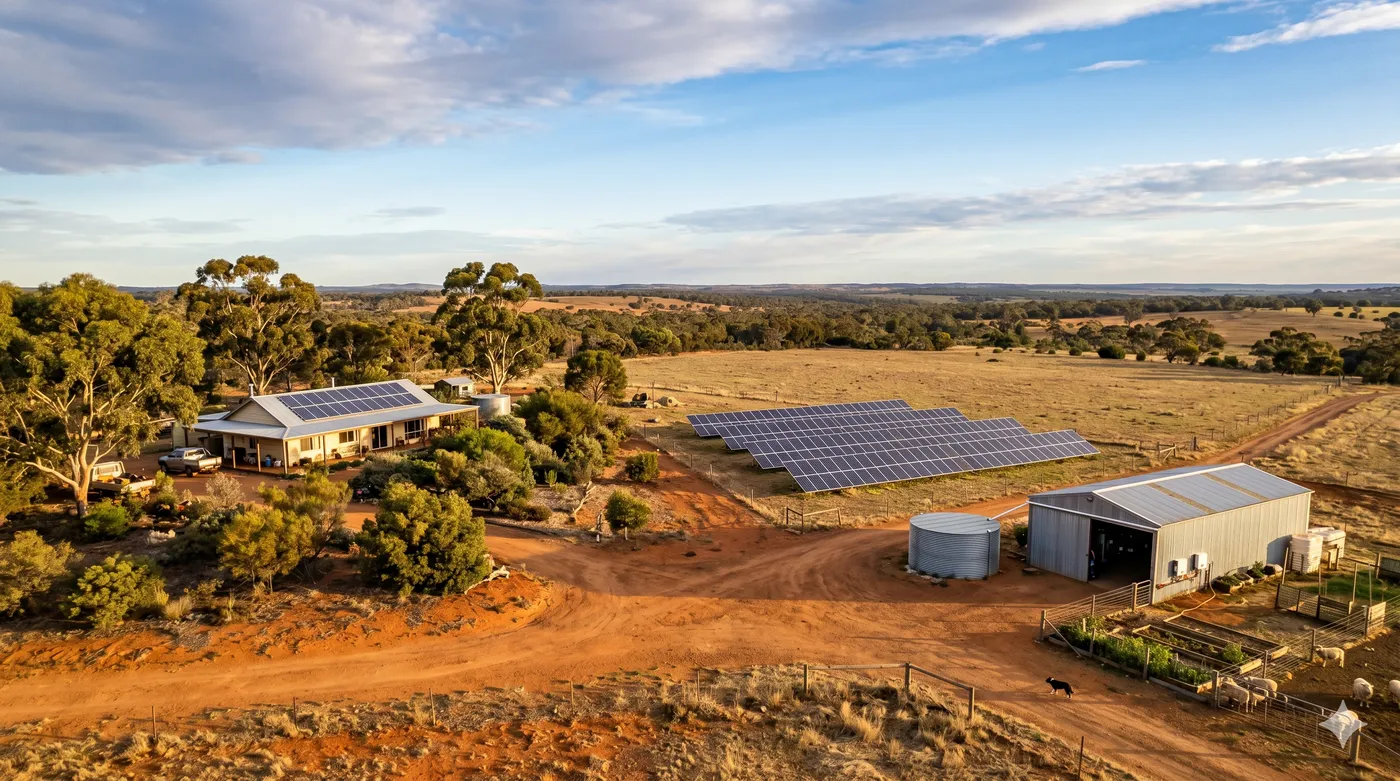
Remote Rural Properties and Hobby Farms
Properties more than a few kilometres from the nearest Western Power or Horizon Power infrastructure face a stark economic reality. Western Power charges $20,000 to $50,000 per kilometre for grid extension to remote properties, and the full cost falls on the property owner. A property sitting 3 km from the nearest line could face a grid connection bill of $60,000 to $150,000 before a single watt of electricity flows.
At those numbers, a well-designed off-grid solar system, priced on its battery bank, inverter, generator and site needs, often pays for itself immediately by replacing a connection cost that would never generate a return.
Hobby farms in the Wheatbelt, South West, and Great Southern regions frequently fall into this category. Typical loads include:
- Residential home (10-20 kWh/day)
- Water pumps and irrigation controls
- Workshop tools and machinery
- Cold storage for produce
- Sheds and outbuildings
Properties on Horizon Power’s Remote Network
Horizon Power supplies electricity to regional WA towns and remote communities from Esperance to Broome and across the Kimberley. Some properties on the fringe of this network experience voltage instability, extended outage periods, and high tariffs. For these owners, going off-grid eliminates ongoing tariff exposure and the vulnerability to supply disruptions that can last days in remote areas.
New Builds on Unserviced Land
Landowners developing rural properties from scratch often find that the cost and timeline of grid connection makes off-grid solar the default practical option. Building approval, network augmentation, and physical line construction through remote WA terrain can take 12 to 24 months. An off-grid system can be operational within weeks of breaking ground.
System Sizing: How to Get It Right
Undersizing an off-grid system is the most common and most costly mistake. Unlike a grid-tied system where the grid covers any shortfall, an off-grid system must meet 100% of your energy needs from solar and storage alone. The methodology has three steps.
Step 1: Calculate Your Daily Energy Consumption
Start with your electricity bills. Divide your quarterly kWh consumption by 90 to get a daily average. For a new build without billing history, add up the wattage of every appliance multiplied by its daily hours of use.
Typical daily consumption benchmarks for WA rural properties:
| Property Type | Daily Usage (kWh) | Recommended Solar |
|---|---|---|
| Small cabin / weekender | 3-8 kWh | 3-5 kW |
| 3-bedroom rural home | 12-20 kWh | 8-10 kW |
| Large family home + workshop | 20-35 kWh | 12-15 kW |
| Hobby farm with irrigation | 35-60 kWh | 15-20 kW+ |
Step 2: Apply the Off-Grid Sizing Formula
Off-grid systems are sized using worst-case solar production, not average production. Perth’s winter minimum is around 4.0 peak sun hours per day. The standard formula is:
Solar kW required = (Daily kWh ÷ peak sun hours) × system loss factor (1.25)
A home using 20 kWh/day in Perth: (20 ÷ 4.0) × 1.25 = 6.25 kW minimum. Most installers add 20-30% headroom on top of this for seasonal variation and load growth, bringing a real-world recommendation to 8-10 kW for that same home.
Step 3: Factor in Autonomy Days
Autonomy days refer to how many consecutive cloudy days your battery bank must cover without solar input. In WA’s south-west, 2 to 3 autonomy days is the standard design target. In the Kimberley or Pilbara, where wet season cloud cover can persist for longer periods, 3 to 5 days is more appropriate.
This is where most off-grid systems get undersized. Designing for average conditions rather than worst-case conditions leaves rural properties without power exactly when they need it most.
Battery Bank Sizing for Off-Grid WA Properties
Battery storage is the most expensive component of an off-grid system and the one that most directly determines reliability. For off-grid applications, lithium iron phosphate (LFP) batteries are the standard recommendation. They offer 4,000 to 6,000 charge cycles (versus 1,000 to 2,000 for older lead-acid technology), tolerate deeper discharge without damage, and perform better in WA’s heat.
How to Size Your Battery Bank
The formula for battery bank sizing is:
Battery capacity (kWh) = Daily usage (kWh) × autonomy days ÷ depth of discharge (0.8 for LFP)
For a rural home using 20 kWh/day targeting 3 autonomy days: 20 × 3 ÷ 0.8 = 75 kWh of usable battery capacity
That is a substantial system. It reflects the reality that off-grid battery banks are significantly larger than grid-connected home batteries, which typically range from 10 to 15 kWh.
2026 Battery Cost Factors
| Battery Bank Size | Main Cost Drivers | Suited To |
|---|---|---|
| 20-30 kWh | Battery capacity, inverter size, site access | Weekenders, small cabins |
| 40-60 kWh | Battery capacity, inverter and generator sizing | 3-bedroom rural home |
| 80-100 kWh | Battery capacity, three-phase inverters, workshop loads | Large home + workshop |
| 100+ kWh | Custom design for high and seasonal loads | Farms, high-load properties |
One important note on rebates: The WA Residential Battery Scheme does not apply to off-grid properties. The scheme requires grid connection and VPP participation. However, federal Small-scale Technology Certificates (STCs) do apply to off-grid solar installations and can reduce upfront costs by $2,000 to $8,000 depending on system size and location. Check the Clean Energy Regulator’s STC calculator for current figures.
Backup Generator Integration
Every professionally designed off-grid system in WA includes a backup generator. This is not optional. It is the safety net that prevents a string of overcast days from leaving your property without power.
How Generator Integration Works
Modern off-grid inverters (Victron MultiPlus, SMA Sunny Island, and similar units) manage the generator automatically. When battery state of charge drops below a set threshold, typically 20 to 30%, the inverter starts the generator, charges the batteries, and passes power through to your loads simultaneously. Once the batteries reach a target charge level, the generator shuts off. The whole process is hands-free.
What to look for in an off-grid generator:
- Diesel or LPG: Diesel generators offer better fuel efficiency and are preferred for remote WA where fuel delivery may be infrequent. LPG suits properties with existing gas infrastructure.
- Sizing: The generator should be sized to match the inverter’s charging capacity, not the full property load. A 5-8 kVA generator suits most residential off-grid systems.
- Auto-start capability: Essential for unattended operation. Manual-start generators are not appropriate for primary backup duty.
- Quality brands: Kubota, Kohler, and Pramac are the preferred options for reliability in remote WA conditions.
Generator Costs
The price of a quality residential generator designed for off-grid use depends on its size, fuel type and auto-start features. Installation, including fuel storage, exhaust systems, and electrical integration with the inverter, adds to that. Budget annually for fuel, servicing, and consumables depending on how frequently the generator runs.
The goal of good system design is to minimise generator run time to less than 200 hours per year. A properly sized solar and battery system should handle the vast majority of your energy needs without generator input.
Off-Grid Costs vs Grid Connection: The Real Comparison
This is where the decision becomes clear for most WA rural property owners. The comparison is not simply “off-grid system cost vs zero.” It is off-grid system cost versus the total cost of grid connection plus ongoing electricity bills over 20 to 25 years.
Upfront Cost Comparison
| Scenario | Upfront Cost | Ongoing Annual Cost |
|---|---|---|
| Grid extension (1 km from nearest line) | $20,000 – $50,000 | $2,000 – $4,000/year in electricity bills |
| Grid extension (3 km from nearest line) | $60,000 – $150,000 | $2,000 – $4,000/year in electricity bills |
| Off-grid system (3-bedroom home) | Quote-based (sized to your loads) | Maintenance + generator fuel and servicing |
| Off-grid system (large home + farm) | Quote-based (sized to your loads) | Maintenance + generator fuel and servicing |
The 20-Year Cost of Staying Grid-Connected
A rural property paying $3,000 per year in electricity bills over 20 years spends $60,000 on electricity alone, on top of whatever the grid connection cost. Factor in tariff increases (WA electricity prices have risen consistently over the past decade) and the long-term cost of grid connection at remote properties regularly exceeds $100,000 to $150,000 in total.
The financial tipping point for most WA rural properties is a grid extension distance of 1 to 2 kilometres. Beyond that, off-grid almost always wins on a 20-year cost basis.
What Off-Grid Doesn’t Save You
Off-grid solar is not a path to zero energy costs. Battery replacement is the largest long-term expense: budget for a battery bank replacement every 10 to 15 years, with the cost depending on technology and capacity. Inverter replacement (every 10 to 15 years) is another significant cost. These are real costs that belong in any honest comparison.
For a deeper look at grid-tied versus off-grid trade-offs specific to WA, see Talk Energy’s grid-tied vs hybrid vs off-grid solar guide.
Maintenance Requirements for Off-Grid Systems
Off-grid systems require more active management than grid-tied systems. The grid is not there to compensate for a underperforming panel or a degraded battery cell. Staying on top of maintenance protects both your investment and your power supply.
Routine Maintenance Schedule
Every 6-12 months:
- Clean solar panels (WA’s red dust, particularly in inland and northern regions, causes significant soiling losses)
- Check battery state of health via the inverter monitoring system
- Inspect all cable connections and terminals for corrosion
- Test generator auto-start function and run under load for 30 minutes
Annually (professional inspection recommended):
- Inverter firmware update and performance check
- Battery bank capacity test against original specifications
- Generator service: oil change, air filter, spark plugs or injectors
- Roof penetration and mounting hardware inspection
Every 5 years:
- Full system audit by a SAA-accredited off-grid specialist
- Review energy consumption against original design assumptions
- Assess whether battery capacity is still meeting autonomy targets
Monitoring: Your Early Warning System
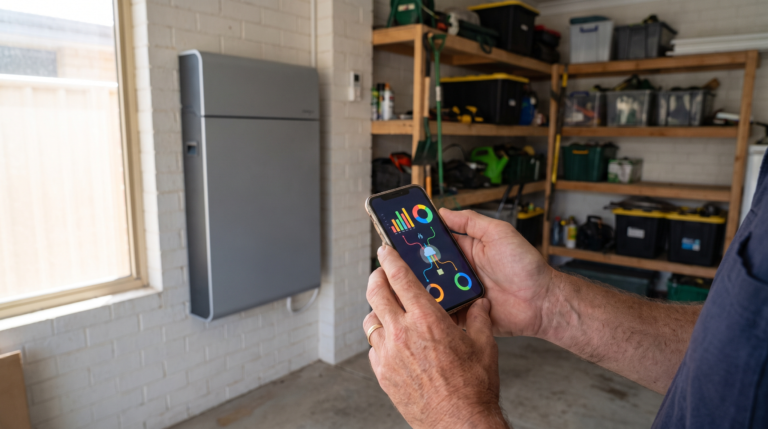
Every modern off-grid system should include remote monitoring. Victron’s VRM portal, SMA’s Sunny Portal, and similar platforms give you real-time visibility of solar production, battery state of charge, and generator run time from any device. Monitoring catches problems early, before a degraded battery cell or a shading issue becomes a power outage.
A well-maintained off-grid system in WA should deliver 20 to 25 years of reliable service from the solar array. The batteries and inverter will need replacement within that window, but the structural components and wiring should last the life of the property.
For solar panel maintenance guidance applicable to WA conditions, Talk Energy’s solar panel maintenance guide covers cleaning schedules and common performance issues.
Should You Go Off-Grid or Stay Connected? A Decision Framework
Use this framework to reach a defensible answer for your specific property. Work through each factor and tally your position.
Go Off-Grid If:
- Your property is more than 1-2 km from the nearest grid connection point
- The quoted grid extension cost exceeds $30,000
- You are building a new rural property without existing grid infrastructure
- You experience frequent or extended power outages on your current rural supply
- Your property is in a Horizon Power remote area with high tariffs and unreliable supply
- Your daily energy consumption is under 40 kWh/day (higher loads require very large, expensive systems)
- You have the budget for a properly sized system upfront, or access to rural finance
Stay Grid-Connected If:
- You are within 500 metres of existing grid infrastructure and connection costs are under $10,000
- You are a Synergy or Horizon Power customer who qualifies for the WA Battery Scheme (the grid-connected battery rebate path is more cost-effective)
- Your property is a primary residence in a metro or peri-urban area
- Your daily energy consumption is highly variable or you plan significant load additions (EVs, industrial equipment)
- You want the simplest possible system with minimal maintenance obligations
The Hybrid Middle Ground
Some rural WA properties are best served by a hybrid system: grid-connected with a large battery bank and solar array that covers the majority of daily needs. This approach works well for properties within reach of the grid but facing high tariffs or unreliable supply. It preserves grid access as a backstop while dramatically reducing ongoing energy costs. Talk Energy’s hybrid solar systems page covers this option in detail.
Bottom line: If your grid connection cost quote exceeds your off-grid system quote, the decision has already been made for you. Off-grid wins. If connection is cheap and easy, staying connected is almost always the simpler and lower-risk path.
Talk Energy’s Off-Grid Project Experience
Talk Energy has designed and installed off-grid solar systems across metropolitan and regional Western Australia, from hobby farms in the South West to remote rural properties in the Wheatbelt and beyond. Off-grid projects require a different skill set from standard residential installations: load analysis, autonomy modelling, generator integration, and system commissioning that accounts for the absence of any grid backup.
Every Talk Energy off-grid project begins with a detailed energy audit and site assessment. This determines the correct system size based on actual consumption data, not generic estimates. Designs are reviewed by in-house SAA-accredited electricians before any equipment is ordered.
Talk Energy’s off-grid installations are backed by the same 20-year workmanship warranty and 48-hour fix guarantee that cover all residential and commercial projects, including regional WA properties. For a look at completed projects, visit the Talk Energy installation showcase.
If you are planning an off-grid system or comparing off-grid against grid connection costs for your WA property, contact Talk Energy for a free consultation. The team can model both scenarios with real figures before you commit to either path.
Frequently Asked Questions
Can I get the WA Battery Scheme rebate for an off-grid system?
No. The WA Residential Battery Scheme requires the property to be connected to the Synergy or Horizon Power grid and to participate in a Virtual Power Plant (VPP). Off-grid properties are not eligible for the state rebate or the no-interest loan. Federal Small-scale Technology Certificates (STCs) do still apply to off-grid solar installations and provide a meaningful upfront discount.
How long does an off-grid solar system last?
Solar panels typically perform for 25 to 30 years, retaining 80 to 85% of their original output by year 25. Lithium iron phosphate batteries last 10 to 15 years depending on cycle frequency and operating temperature. Inverters typically need replacement after 10 to 15 years. A properly maintained off-grid system can serve a WA rural property for 25 or more years with one battery and inverter replacement cycle.
What happens during an extended cloudy period?
This is where the backup generator earns its place. The inverter automatically starts the generator when battery state of charge falls below the set threshold. In a correctly sized system, generator run time during a cloudy week should be measured in hours, not days. Designing for 2 to 3 autonomy days ensures the battery bank handles most weather events without generator intervention.
Do I need council approval for an off-grid solar system in WA?
Electrical work must be carried out by a licensed electrician and comply with Australian Standard AS/NZS 4509 for stand-alone power systems. Building permits may be required for structural work associated with the installation. Your installer should manage all relevant approvals as part of the project. Check with your local council for any specific requirements applicable to your shire.
Is an off-grid system suitable for a property with high water pumping loads?
Yes, but water pumps must be factored carefully into the system design. Large pump motors have high startup current demands that can stress an undersized inverter. The inverter must be rated for the pump’s surge current, and the daily kWh consumed by pumping must be included in the total load calculation. Many off-grid WA properties run bore pumps and irrigation systems successfully on solar power.
Can I add an off-grid system to an existing property that currently runs on a generator only?
Absolutely. This is one of the most common off-grid projects in regional WA. A solar and battery system is designed around the existing generator, which is retained as backup. The result is dramatically lower fuel costs and a quieter, more reliable power supply. The generator typically drops from running most of the day to running a few hours per week.