WA Battery Scheme 2026: What It Covers, Who Qualifies, and How Talk Energy Handles the Paperwork
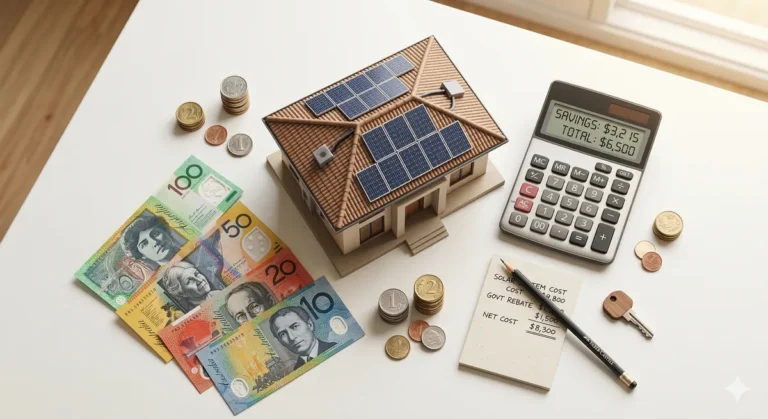
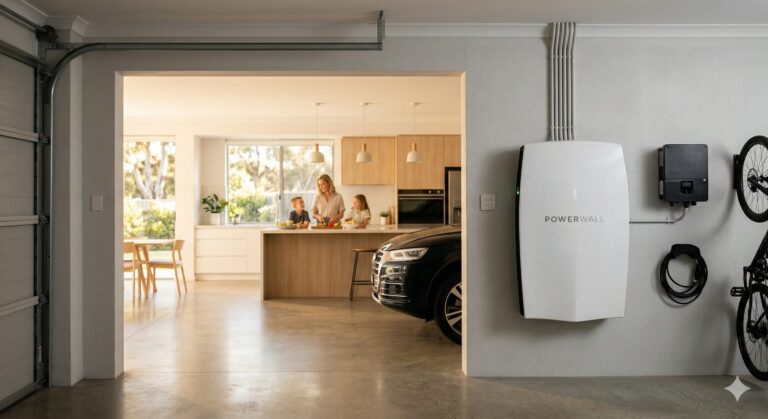
If you’re a Perth homeowner with solar panels, there has never been a better time to add a battery. The WA Residential Battery Scheme, launched on 1 July 2025, puts up to $1,300 back in the pocket of Synergy customers and up to $3,800 for Horizon Power customers in regional WA. Stack that with the Federal Government’s Cheaper Home Batteries Program and the total saving on a standard 10 kWh battery can reach close to $3,750 for metro Perth households.
The catch? Most homeowners don’t know exactly what they qualify for, and the application process runs through an accredited vendor, not directly through the government. That’s where Talk Energy comes in.
This guide covers everything you need to know: what the scheme covers, who qualifies, how much you can save, and how Talk Energy manages the entire rebate process so you don’t have to deal with the paperwork.
Key figures at a glance:
- Synergy customers: up to $1,300 WA rebate
- Horizon Power customers: up to $3,800 WA rebate
- Federal rebate (current rate, after the 1 May 2026 step-down): approximately $2,450 on a 10 kWh battery
- No-interest loan: up to $10,000 for eligible households
- Batteries must be installed on or after 1 July 2025 to qualify
What Is the WA Battery Scheme?
The WA Residential Battery Scheme is a WA Government initiative that provides upfront rebates and no-interest loans to help homeowners install approved home battery systems. It operates alongside, not instead of, the Federal Government’s Cheaper Home Batteries Program, meaning eligible households can claim both.
The scheme is designed to grow the number of household batteries connected to the grid, which helps stabilise the network during peak demand periods. That’s why participation in a Virtual Power Plant (VPP) is a requirement, not optional. In practice, this means your battery will occasionally be called on to export stored energy to the grid during high-demand events. For most households, this has minimal impact on day-to-day usage.
Synergy vs Horizon Power: Two Different Rebate Amounts
The rebate amount you receive depends entirely on who your electricity retailer is.
| Retailer | Service Area | Rebate Rate | Maximum Rebate |
|---|---|---|---|
| Synergy | Perth metro and South West Interconnected System (SWIS) | $130 per kWh | $1,300 (capped at 10 kWh) |
| Horizon Power | Regional and remote WA | $380 per kWh | $3,800 (capped at 10 kWh) |
The higher Horizon Power rebate reflects the greater energy challenges faced by regional communities, where grid reliability is lower and battery storage delivers more tangible benefits. Batteries larger than 10 kWh still qualify but receive the capped maximum amount.
The scheme also complements the federal program. According to the WA Government’s information for applicants, a Synergy customer installing a 10 kWh battery can combine the $1,300 WA rebate with approximately $2,450 in federal support, bringing the total saving to around $3,750 upfront.
Who Qualifies for the WA Battery Rebate?
Eligibility covers both the person applying and the property where the battery will be installed. The official eligibility requirements are straightforward for most Perth homeowners.
Personal Eligibility
You must:
- Be an Australian permanent resident aged 18 or over
- Be a current Synergy or Horizon Power customer
- Be able to verify your identity
- Have a signed supply agreement with an approved battery retailer
Property Eligibility
Your property must:
- Be located in Western Australia
- Be a standalone home or a unit-titled property (with strata approval if applicable)
- Be owner-occupied, or rented with written landlord consent
- Not be majority-owned by a State, Commonwealth, or Local Government entity
- Be used predominantly for residential purposes (home-based businesses are fine)
- Have a reliable ongoing internet connection for VPP monitoring
Battery Equipment Requirements
Not every battery on the market qualifies. The system must:
- Have a usable capacity of at least 5 kWh
- Appear on the Clean Energy Council’s approved battery list
- Appear on Synergy’s or Horizon Power’s Supported Solutions List (depending on your retailer)
- Be a new, replacement, or additional system (not a pre-existing battery installed before 1 July 2025)
One battery per property applies. If you already have a battery installed before 1 July 2025, it is not eligible for the rebate, even if you purchased it recently.
The No-Interest Loan: Extra Help for Eligible Households
Beyond the rebate, qualifying households can also access a no-interest loan of between $2,001 and $10,000 to cover the remaining installation cost. To be eligible for the loan, your household gross annual income must be under $210,000. The loan is administered by Plenti, the scheme’s third-party financial administrator, and is repaid over time with zero interest charges.
This means a Synergy household could potentially pay nothing upfront: the $1,300 rebate reduces the purchase price, and the loan covers the balance, making battery storage genuinely accessible without a large lump-sum payment. For more on financing options, see our guide to solar financing in Perth for 2026.
How Much Can You Actually Save?
The WA scheme and the federal program are designed to stack, and for most Perth households, that combination is what makes battery storage financially compelling in 2026.
Combining the WA and Federal Rebates
The Federal Government’s Cheaper Home Batteries Program provides an upfront discount through Small-scale Technology Certificates (STCs). From 1 May 2026, the federal rebate structure changed to a tiered model. For a standard 10 kWh battery, the federal saving is approximately $2,450.
Here’s what the combined saving looks like for common battery sizes:
| Battery Size | WA Rebate (Synergy) | Federal Rebate (approx.) | Total Combined Saving |
|---|---|---|---|
| 5 kWh | $650 | ~$1,225 | ~$1,875 |
| 10 kWh | $1,300 | ~$2,450 | ~$3,750 |
| 13.5 kWh | $1,300 | ~$3,300 | ~$4,600 |
| 15 kWh | $1,300 | ~$3,580 | ~$4,880 |
Federal rebate figures are estimates based on current STC market pricing and may vary slightly. WA rebate is capped at 10 kWh regardless of battery size.
For Horizon Power customers in regional WA, the combined saving is even more significant: up to $3,800 from the state scheme, plus the federal component, can bring the total to approximately $6,250 or more on a 10 kWh system.
The real-world impact: A quality 10 kWh battery that might retail for $9,000-$12,000 installed can come down to $5,000-$8,000 after rebates, with the option to finance the remainder at 0% interest. That puts the payback period well within the battery’s warranty life. For a detailed ROI breakdown, see our WA Battery Scheme ROI guide for 2026.
For a full walkthrough on stacking both rebates together, our guide on how to stack federal and WA battery rebates covers the exact dollar calculations.
How the Application Process Works
This is where many homeowners get confused. You cannot apply for the WA Battery Scheme rebate directly. The application must be submitted by an accredited scheme vendor on your behalf. This is by design: the government wants to ensure that only compliant systems are installed by qualified retailers.
Here is how the process works from start to finish:
- Get quotes from accredited vendors. Only vendors accredited through Plenti (the scheme administrator) can submit applications. Talk Energy is an accredited scheme vendor.
- Eligibility check. Your vendor confirms that your property, your identity, and your chosen battery system all meet the scheme’s requirements.
- Application submitted. The vendor submits the rebate application (and no-interest loan application, if applicable) on your behalf.
- Conditional approval. Once approved, you have a six-month window to complete the installation. If the window lapses, you must reapply before proceeding.
- Network connection approval. Before installation begins, your installer obtains grid-connection approval from Western Power (for Synergy customers) or Horizon Power.
- Installation and VPP enrolment. The approved battery is installed and registered to the relevant VPP program. For Synergy customers, this is Synergy’s SWIS VPP offer. For Horizon Power customers, it is Horizon Power’s Community Wave program.
- Rebate applied. The rebate is deducted directly from your invoice. You pay the net amount after the rebate has been applied.
Important timing note: Batteries installed before 1 July 2025 are not eligible, and there is no retrospective application. If you installed a battery in 2024 or early 2025, it falls outside the scheme.
To understand what VPP participation actually means for your household, read our plain-English explainer on Virtual Power Plants for Perth homeowners.
How Talk Energy Handles the Rebate Process for You
As an accredited WA Battery Scheme vendor, Talk Energy manages every step of the rebate process on behalf of customers. You don’t need to navigate government portals, chase paperwork, or coordinate with Plenti. Here is what Talk Energy takes care of:
From First Quote to Final Installation
- Eligibility assessment: During your free quote, Talk Energy confirms whether your property, identity documents, and chosen battery qualify under the scheme requirements.
- Product selection: Talk Energy recommends only Clean Energy Council-approved batteries that appear on the Synergy or Horizon Power Supported Solutions Lists, so there is no risk of choosing a system that doesn’t qualify.
- Application lodgement: Talk Energy submits the rebate application and, where applicable, the no-interest loan application through Plenti on your behalf.
- Network approvals: Talk Energy’s in-house electricians handle the grid-connection application with Western Power or Horizon Power before installation begins.
- Installation: Talk Energy’s own SAA-accredited electricians complete the installation. No subcontractors, which means accountability sits with one company from quote to commissioning.
- VPP enrolment: Talk Energy registers your battery with the relevant VPP program as part of the installation process, satisfying the scheme’s mandatory participation requirement.
- Rebate deduction: The rebate is applied directly to your invoice. You see the net price, not the gross price minus a rebate you have to chase.
Talk Energy backs every battery installation with its 20-year workmanship warranty and 48-hour fix guarantee, meaning that if something goes wrong after installation, you have a single point of contact, not a bureaucratic chain.
With 250+ five-star reviews from Perth homeowners and a track record across metro and regional WA, Talk Energy’s familiarity with the scheme means fewer delays and fewer surprises.
Ready to claim your rebate? Get a free battery quote from Talk Energy and we’ll confirm your eligibility, recommend an approved battery, and handle the entire application.
Frequently Asked Questions
Do I need solar panels already to qualify for the WA Battery Scheme?
No. The WA Battery Scheme does not require you to have existing solar panels. You can apply for the battery rebate as a standalone installation. That said, a battery paired with solar delivers significantly greater savings, since you can store your own generated energy rather than drawing from the grid. If you’re considering adding solar at the same time, Talk Energy can quote both as a combined system.
Can I get the WA rebate and the federal rebate at the same time?
Yes, and this is one of the most important things to understand about the scheme. The WA Battery Scheme is explicitly designed to complement the Federal Government’s Cheaper Home Batteries Program. A Synergy customer with a 10 kWh battery can receive approximately $1,300 from the WA scheme and approximately $2,450 from the federal program, for a combined saving of around $3,750. Horizon Power customers can save even more. Both rebates are applied at the point of sale through your accredited vendor.
What is a Virtual Power Plant and do I have to participate?
A Virtual Power Plant (VPP) is a network of home batteries that can be coordinated to supply energy to the grid during peak demand. Participation in a VPP is mandatory under the WA Battery Scheme. Without it, you are not eligible for the rebate or the no-interest loan. The minimum commitment is two years. After that, you are free to exit the VPP arrangement. In practice, most households find that VPP events are infrequent and have little to no impact on their daily energy use. Synergy customers join Synergy’s SWIS VPP; Horizon Power customers join Horizon Power’s Community Wave program.
What happens if I don’t install within six months of approval?
If six months pass between your conditional approval being granted and your installation being completed, the approval lapses. You will need to reapply before proceeding with the installation. Talk Energy manages this timeline on your behalf and will notify you well in advance if a reapplication is needed.
Can renters apply for the WA Battery Scheme?
Yes, renters can apply, provided they have written consent from their landlord. The property must still meet all other eligibility criteria, including being a standalone home or unit-titled property. The rebate and any loan are issued to the applicant, not the property owner, so the renter is the participant in the scheme.
Which batteries are approved under the WA Battery Scheme?
Approved batteries must appear on the Clean Energy Council’s approved battery list and on either Synergy’s or Horizon Power’s Supported Solutions List, depending on your retailer. Popular options that meet these requirements include models from Tesla, BYD, Sungrow, Alpha ESS, and Sigenergy, among others. Talk Energy only supplies and installs batteries that appear on the approved lists, so you won’t be quoted a system that falls outside the scheme. For a side-by-side comparison of leading options, see our guide to the best home battery systems in WA for 2026.
Can I get the rebate on a battery I already have installed?
No. The scheme applies only to batteries installed on or after 1 July 2025. Rebates cannot be applied retrospectively to systems purchased or installed before that date. If your battery was installed before 1 July 2025, it does not qualify regardless of when it was purchased.
How long does the application and installation process take?
The timeline varies, but most Talk Energy customers move from initial quote to completed installation within four to eight weeks. This includes eligibility checks, application lodgement, conditional approval, network connection approval, and installation scheduling. Talk Energy’s in-house team handles each stage, which avoids the delays that can arise when separate companies manage different parts of the process.
The Bottom Line
The WA Residential Battery Scheme makes 2026 one of the most financially attractive years on record to add battery storage to a Perth home. Combined state and federal rebates of around $3,750 on a standard 10 kWh system, paired with a no-interest loan option, remove the two biggest barriers that have historically held homeowners back: upfront cost and paperwork complexity.
The paperwork complexity, at least, is something Talk Energy eliminates entirely. As an accredited scheme vendor, Talk Energy handles the application, the approvals, the installation, and the VPP enrolment, so you receive the rebate without having to navigate the process yourself.
The scheme’s rebates step down over time as battery costs fall. Acting in 2026 secures the current rebate rates before any further adjustments.
Get a free battery quote from Talk Energy and find out exactly how much you can save.