Best Solar Batteries for Perth in 2026: Compared
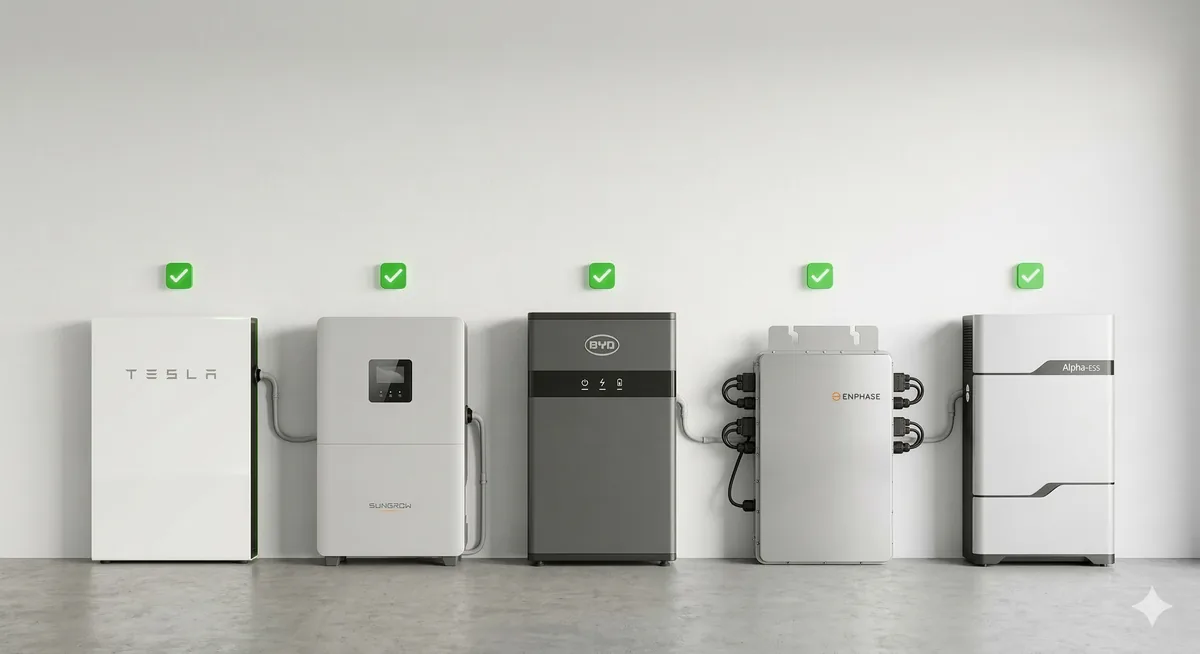
Quick answer: No single solar battery suits every Perth home. The batteries Perth households compare most in 2026 are Sigenergy SigenStor, Tesla Powerwall 3, Sungrow SBR, BYD Battery-Box and Enphase IQ Battery 5P. All use lithium iron phosphate (LFP) cells and carry 10 to 15-year warranties. The real differences are capacity, how they connect to your solar, how they handle heat, and whether they qualify for the WA battery rebate. Tesla Powerwall 3, for example, is not on Synergy’s storage list, so Synergy customers miss the $1,300 WA rebate. As a rough guide, most Perth homes pay around $5,500–$9,000 for a ~10 kWh battery after federal and WA rebates.
If you’re shopping for a solar battery in Perth, you’ve probably noticed every website ranks the brands differently. That’s because the right battery depends on your home: your solar system, your evening usage, where the battery will be mounted and whether you’re with Synergy or Horizon Power.
This guide compares the five batteries Perth homeowners ask about most. It uses each manufacturer’s published Australian specifications and the October 2026 rebate rules. One thing up front, so you can read it with that in mind: Talk Energy installs Sigenergy batteries only. We don’t install or supply Tesla, Sungrow, BYD or Enphase. They’re included here as neutral information so you can compare like for like.
Solar Batteries in Perth Compared: The Key Specs
Here’s how the five batteries compare on the specs that matter most in Perth. Capacity is usable energy, the amount you can actually draw on each evening.
| Battery | Usable capacity | Chemistry | Warranty | Backup | WA rebate (Synergy) |
|---|---|---|---|---|---|
| Sigenergy SigenStor | 5.2 or 7.8 kWh modules; up to 6 modules per stack | LFP | 10 years | Yes, with the SigenStor energy controller (backup setup confirmed at quote) | Eligible (listed for storage on Synergy’s SSL) |
| Tesla Powerwall 3 | 13.5 kWh per unit; up to 4 units plus 3 expansions | LFP | 10 years | Yes, whole-home capable with Backup Gateway 2; 11.04 kW continuous | Not eligible (not listed for storage on Synergy’s SSL, 1 Oct 2026) |
| Sungrow SBR | 6.4–25.6 kWh (3.2 kWh modules) | LFP | 10 years | Yes, via a Sungrow SH hybrid inverter | Eligible (listed for storage on Synergy’s SSL) |
| BYD Battery-Box HVM | 8.28–22.08 kWh per tower; up to 66.2 kWh | LFP | 10 years | Yes, depends on the paired hybrid inverter | Depends on the paired inverter’s SSL listing |
| Enphase IQ Battery 5P | 5.0 kWh per unit, stackable | LFP | 15 years (or 6,000 cycles) | Yes, with IQ System Controller 3 INT | Check the current SSL |
Sources: manufacturer datasheets and Australian warranty documents (Sigenergy, Tesla AU 2025, Sungrow v5 2024, BYD HVM V1.4, Enphase AU), checked October 2026. Rebate status from Synergy’s Supported Solutions List, updated 1 October 2026. Warranties have conditions, such as minimum retained capacity or throughput limits. Specs and listings change, so confirm the current model at quote time.
Two things stand out. First, every battery here uses LFP chemistry, which is more heat-tolerant and longer-lasting than the older NMC batteries. Second, the biggest practical difference for Synergy customers isn’t a spec. It’s rebate eligibility. More on that below.
Which Solar Battery Suits Which Perth Home?
Each battery is built around a different idea. Here’s who each one tends to suit, based on how it’s designed.
Sigenergy SigenStor: modular, all-in-one, room to grow
SigenStor stacks battery modules (5.2 or 7.8 kWh usable each) on top of an energy controller that also acts as the hybrid inverter. You can start at one size and add modules later. An optional DC EV charger module plugs into the same stack. It suits homes that want solar, battery and future EV charging in one system, and households that want to size up as their usage grows. It’s the brand Talk Energy installs, and you can read more in our SigenStor guide for Perth.
Tesla Powerwall 3: one fixed unit with a built-in solar inverter
Powerwall 3 is a single 13.5 kWh unit with a built-in solar inverter and up to 11.04 kW of continuous output. That high output makes it strong for whole-home backup. The trade-off in WA is the rebate: it isn’t listed for storage on Synergy’s Supported Solutions List, so Synergy customers can’t claim the $1,300 WA rebate on it. The federal discount still applies. It suits homes that want high backup power and are happy to forgo the Synergy rebate. Our Powerwall 3 guide covers it in more detail.
Sungrow SBR: small modules for a Sungrow hybrid inverter
The SBR uses 3.2 kWh modules, from 2 to 8 per tower (6.4 to 25.6 kWh). It’s designed to pair with Sungrow’s own SH hybrid inverters. It suits homes that already have a Sungrow hybrid inverter, or new systems built around one, where fine sizing steps are useful.
BYD Battery-Box HVM: works with several inverter brands
BYD’s HVM tower uses 2.76 kWh modules, from 8.28 to 22.08 kWh per tower, and up to three towers. BYD publishes a compatibility list covering several third-party hybrid inverters. It suits homes with an existing compatible hybrid inverter. For the WA rebate, the inverter it’s paired with needs to be on your retailer’s list.
Enphase IQ Battery 5P: AC-coupled, longest warranty term
Each IQ Battery 5P is a 5.0 kWh unit with built-in microinverters, so it connects on the AC side. Its warranty runs up to 15 years or 6,000 cycles, whichever comes first, with at least 60% capacity retained. Continuous output is 3.84 kVA per unit, so you’d stack units for bigger loads. It suits homes with an existing Enphase microinverter system.
| Your situation | Batteries worth comparing |
|---|---|
| Synergy customer who wants the $1,300 WA rebate | Any battery and inverter listed for storage on Synergy’s SSL (e.g. SigenStor, Sungrow SBR) |
| High backup power is the priority | Powerwall 3 or a larger modular stack |
| Want to add capacity or an EV charger later | SigenStor, Sungrow SBR, BYD HVM |
| Existing compatible hybrid inverter to keep | BYD HVM or Sungrow SBR (matching inverter) |
| Existing Enphase microinverters | Enphase IQ Battery 5P |
How Each Battery Handles Perth’s Heat
All five batteries are rated to run in Perth summers, but placement matters more than brand. Most batteries slow their charge and discharge when they get too hot. That’s called derating, and it protects the cells. A battery on a west-facing wall in full afternoon sun can lose output on exactly the hot evenings you need it most.
| Battery | Rated operating temperature | Ingress rating |
|---|---|---|
| Sigenergy SigenStor | -20 °C to 55 °C | IP66 |
| Tesla Powerwall 3 | -20 °C to 50 °C (Tesla notes performance may be derated above 40 °C) | IP67 battery and electronics |
| Sungrow SBR | Charge 0 °C to 50 °C; discharge -20 °C to 50 °C | IP55 |
| BYD Battery-Box HVM | -10 °C to 50 °C | IP55 |
| Enphase IQ Battery 5P | See Enphase AU datasheet | IP55 enclosure |
LFP cells are more thermally stable than older NMC cells, so heat is less of a safety worry than it once was. It’s mainly a performance and lifespan question. Batteries kept cooler tend to age more slowly.
For Perth homes, a few placement rules apply to every brand:
- Avoid western afternoon sun. A shaded south or east wall, a carport or a garage wall keeps the battery cooler.
- Leave airflow space. Most units cool passively, so clearances in the installation manual matter.
- IP rating is about dust and water, not heat. A higher IP rating (IP66 or IP67) gives more flexibility outdoors, but it doesn’t stop heat derating.
- Coastal homes need a check. Some warranties have conditions for sites close to the ocean, which matters in suburbs like Scarborough, Cottesloe or Rockingham. Ask your installer to confirm.
Worth knowing: Perth’s hottest weeks, December to February, are also when ducted air conditioning runs into the evening. If you want the battery to cover those evenings, size it for summer use and mount it somewhere shaded, whichever brand you choose.
Which Batteries Qualify for the WA Battery Rebate?
A battery qualifies for the WA Residential Battery Scheme only if the battery and inverter are on your retailer’s Supported Solutions List (SSL). For Synergy customers, it must be listed for battery storage. The rebate is up to $1,300 for Synergy customers and up to $3,800 for Horizon Power customers, and you must join a Virtual Power Plant (VPP).
Here’s where the five batteries stand on Synergy’s SSL (updated 1 October 2026):
- Sigenergy and Sungrow have storage listings, so they can qualify.
- Tesla Powerwall 3 is listed as a generator only, not for storage. Synergy customers can’t claim the WA rebate on it. Horizon Power’s list hasn’t been confirmed, so check with Horizon if you’re in a regional area.
- BYD Battery-Box depends on the hybrid inverter it’s paired with.
- Enphase IQ Battery 5P: check the current SSL before you buy.
The federal Cheaper Home Batteries program is separate. It doesn’t depend on Synergy’s list and applies to eligible batteries installed by an accredited installer. It’s worth roughly $2,600–$2,700 on a 10 kWh battery, and it drops from 6.8 to 5.7 STCs per kWh on 1 January 2027. The WA and federal rebates stack. For the full checklist, see our WA Battery Scheme eligibility guide.
How Much Do Solar Batteries Cost in Perth?
As a rough guide, most Perth homes pay around $9,500–$13,000 for a ~10 kWh battery before rebates in 2026, or about $5,500–$9,000 after federal and WA rebates. Price depends more on size than brand. Here are the estimate ranges by battery size:
| Battery size | Estimate before rebates | Estimate after federal + WA rebates |
|---|---|---|
| ~10 kWh | $9,500–$13,000 | ~$5,500–$9,000 |
| ~13–16 kWh | $13,000–$18,000 | ~$8,000–$12,500 |
| ~20–25 kWh | $18,000–$26,000 | ~$12,000–$19,000 |
Indicative Perth market estimates, installed, incl. GST, valid to 31 December 2026. After-rebate figures assume the battery qualifies for both rebates. A battery that isn’t eligible for the WA rebate will cost more after rebates.
Your price depends on the battery size, whether you need a new hybrid inverter, and any switchboard or backup work. For a full breakdown, read our solar battery cost guide for Perth.
Real-World Payback in Perth: What Drives It
A battery pays back faster when it stores solar you’d otherwise export cheaply and uses it in the evening instead of buying power from the grid. The brand matters far less than how well the battery matches your usage.
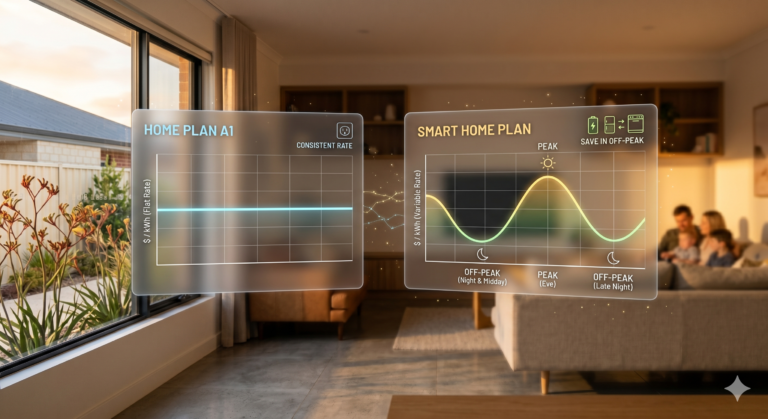
Here’s the basic maths, using Synergy’s rates from 1 July 2026. Exporting midday solar under DEBS earns 2c/kWh off-peak, or 10c/kWh between 3pm and 9pm. Buying power on Synergy’s Home Plan A1 costs 33.26c/kWh, and on Midday Saver it costs 55.33c/kWh between 3pm and 9pm. So every kWh your battery shifts from midday export to evening use is worth roughly 23c to 53c, depending on your plan and when you’d have exported it.
That means payback is shortest for homes that:
- export a lot of solar during the day (often homes that are empty from 9 to 5)
- use a lot of power from late afternoon into the night, such as cooking, air conditioning, pool pumps or EV charging
- size the battery to their real evening usage, so it empties most nights
- qualify for both the federal and WA rebates, which lowers the upfront cost
Payback is longer for small households with low evening use, or where a battery is oversized and rarely empties. Losing the WA rebate also adds to the upfront cost. To estimate your own numbers, use our Perth solar battery payback calculator with your latest power bill.
AC-Coupled vs DC-Coupled: Does It Matter for Your Home?
Yes, mostly when you’re adding a battery to existing solar. DC-coupled batteries (SigenStor, Sungrow SBR, BYD HVM) connect through a hybrid inverter. AC-coupled batteries (Enphase 5P) have their own built-in inverter and connect on the AC side, so they can sit beside an existing solar system. Powerwall 3 has a built-in solar inverter and is often installed as the main inverter for new systems.
- New solar and battery together: a hybrid (DC-coupled) system avoids an extra conversion step and keeps things in one system.
- Existing solar with an older string inverter: you’ll usually need a hybrid inverter or an AC-coupled battery. Your installer should check what’s simpler for your setup.
- Existing hybrid inverter: the battery must be on that inverter’s compatibility list.
VPPs: Why Every Rebated Battery in WA Joins One
If you claim the WA rebate, you must join a Virtual Power Plant. A VPP lets your retailer draw on your battery at times of high grid demand. Synergy customers can use Synergy’s VPP or an eligible alternative. Before you choose a battery, check which VPP it can join and how much control you keep over your battery during outages. Our VPP guide for Perth explains how it works.
Why the Installer Matters as Much as the Battery
The battery brand is only half the decision. The other half is who installs it, who stands behind the whole system, and who you call when something needs attention over the next ten years.
Before you sign, ask any installer:
- Who does the installation? In-house electricians or subcontractors? With subcontractors, it can be harder to know who’s responsible if a fault appears.
- Are the electricians SAA-accredited for batteries? Battery installs for the rebates need Solar Accreditation Australia battery accreditation.
- What workmanship warranty covers the install? The manufacturer covers the battery. The installer’s workmanship warranty covers the wiring and installation.
- Where will the battery go? A good installer will talk about shade, airflow and clearances, not just the wall that’s easiest to reach.
- Will they handle the WA rebate and VPP sign-up? Ask what’s included and confirm the battery and inverter are on your retailer’s list.
Talk Energy and Sigenergy Batteries
Talk Energy installs one battery brand: Sigenergy SigenStor. We don’t install Tesla, Sungrow, BYD or Enphase. If one of those suits your home better, this guide should help you compare quotes from installers who supply them.
We’re based in Mount Pleasant and have been installing solar and batteries across Perth for 7+ years, with 5,000+ installations. Every job is done by our in-house SAA-accredited electricians, with no subcontractors. Our installs carry a 20-year workmanship warranty and a 48-hour fix-or-replace guarantee, and we hold a 4.8-star rating from 300+ Google reviews.
We’ll look at your bills, your existing solar and where a battery could go, then give you a fixed quote with the rebates you’re eligible for shown clearly. You can also see our solar battery installation in Perth page.
Get a free, fixed battery quote or call (08) 6255 5914.
Frequently Asked Questions
What is the best solar battery for Perth homes in 2026?
There isn’t one best battery for every Perth home. The right choice depends on your evening usage, your existing solar and inverter, how much backup you want, and whether the battery qualifies for the WA rebate. Sigenergy SigenStor, Tesla Powerwall 3, Sungrow SBR, BYD Battery-Box and Enphase IQ Battery 5P all use LFP cells and carry 10 to 15-year warranties. For Synergy customers, a battery listed for storage on Synergy’s Supported Solutions List can save up to $1,300 through the WA rebate.
How much does a solar battery cost in Perth after rebates?
As a rough guide, most Perth homes pay around $5,500–$9,000 for a ~10 kWh battery after federal and WA rebates in 2026, or $9,500–$13,000 before rebates. A ~13–16 kWh battery is roughly $8,000–$12,500 after rebates. Your price depends on battery size, inverter needs and switchboard work. A battery that doesn’t qualify for the WA rebate will cost more after rebates.
Does the Tesla Powerwall 3 qualify for the WA battery rebate?
Not for Synergy customers, as of October 2026. On Synergy’s Supported Solutions List (updated 1 October 2026), Powerwall 3 is listed as a generator only, not for battery storage, so it doesn’t qualify for the $1,300 Synergy rebate. The federal Cheaper Home Batteries discount still applies. Horizon Power customers should check Horizon Power’s own list.
How hot is too hot for a solar battery in Perth?
Most home batteries are rated to operate up to 50 °C or 55 °C, but many reduce their output before that to protect the cells. Tesla, for example, notes Powerwall 3 performance may be derated above 40 °C. In Perth, the simplest fix is placement: mount the battery on a shaded wall, away from western afternoon sun, with the airflow clearances the manufacturer specifies.
Which solar battery has the longest warranty?
Of the five compared here, the Enphase IQ Battery 5P has the longest warranty term: up to 15 years or 6,000 cycles, whichever comes first, with at least 60% capacity retained. Sigenergy, Tesla, Sungrow and BYD offer 10-year warranties. Each warranty has its own conditions, such as minimum retained capacity or energy throughput limits, so compare the full terms, not just the years.
Which battery brands does Talk Energy install?
Talk Energy installs Sigenergy SigenStor batteries only. We don’t install or supply Tesla, Sungrow, BYD or Enphase batteries. They’re included in this guide as neutral comparison information. All our installs are done by in-house SAA-accredited electricians and carry a 20-year workmanship warranty.