Federal Cheaper Home Batteries Program + WA Rebate: How to Stack Both and Save Up to $7,500 Before May 2026
Western Australian homeowners are sitting on one of the best battery incentive windows in the country right now, and it closes on 1 May 2026.
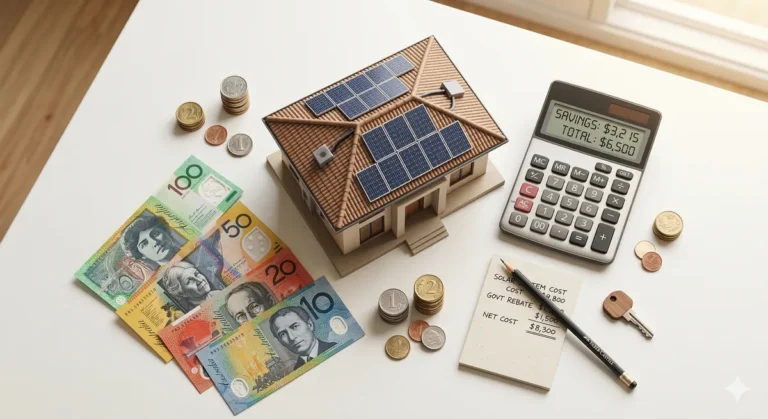
Two programs are currently stackable for WA residents: the Federal Cheaper Home Batteries Program (a national scheme delivering roughly 30% off upfront) and the WA Residential Battery Scheme (a state-level rebate adding up to $3,800 on top). On a standard 10kWh battery, that combination delivers a combined rebate of $5,000 for Synergy customers and $7,500 for Horizon Power customers, according to the WA Government’s official scheme page.
The catch: the federal component drops sharply on 1 May 2026. The STC factor falls from 8.4 to 6.8, cutting the federal rebate per kWh from approximately $311 to $252. That’s a 19% reduction overnight. For a 10kWh system, the difference is roughly $594 off your pocket, simply based on when you book the install.
This guide breaks down exactly how both programs work, what the real dollar numbers look like for a 10kWh system, how to qualify for both simultaneously, and what steps to take before the deadline.
Key takeaway: WA homeowners who install before 1 May 2026 access the highest combined rebate available. After that date, the federal component steps down every six months until 2030, and the WA state scheme has only 100,000 rebates available statewide.
The Federal Cheaper Home Batteries Program: What It Is and How It Works
The Federal Cheaper Home Batteries Program launched on 1 July 2025 as an expansion of the existing Small-scale Renewable Energy Scheme (SRES). It works by generating Small-scale Technology Certificates (STCs) based on your battery’s usable capacity. Your accredited installer creates these certificates and passes the value directly to you as an upfront discount, so you never need to lodge a separate claim or wait for a tax refund.
You don’t apply for this rebate. Your installer handles it and deducts it from your quote.
How the Rebate Is Calculated
The rebate value is determined by two variables: the STC factor (which changes over time) and the current STC market price (currently around $37 per certificate after administration costs). Multiply those together and you get the rebate per usable kWh.
From January to April 2026, the calculation is:
- STC factor: 8.4 per usable kWh
- STC price after admin: ~$37
- Rebate per usable kWh: ~$311
For a 10kWh battery with 10kWh of usable capacity, that’s approximately $3,110 off your install price before any state rebate is applied.
Key Eligibility Requirements
To qualify for the federal program, your installation must meet these conditions:
- Battery must be paired with a new or existing solar PV system (grid-only storage is not eligible)
- Nominal battery capacity must be between 5kWh and 100kWh
- Rebate applies to the first 50kWh of usable capacity only
- Battery and inverter must appear on the Clean Energy Council approved products list
- On-grid systems must be VPP-capable (joining a VPP is optional, capability is not)
- Installer must be accredited by Solar Accreditation Australia
- One rebate per electricity meter
The scheme is not means-tested. It applies equally to homeowners, small businesses, and community facilities across all states and territories.
The STC Step-Down Schedule
This is the number that matters most for timing. According to the federal program’s official documentation, the STC factor drops every six months from May 2026 onwards:
| Period | STC Factor | Est. Rebate per kWh |
|---|---|---|
| Jan to Apr 2026 | 8.4 | ~$311 |
| May to Dec 2026 | 6.8 | ~$252 |
| Jan to Jun 2027 | 5.7 | ~$211 |
| Jul to Dec 2027 | 5.2 | ~$192 |
| Jan to Jun 2028 | 4.6 | ~$170 |
| 2030 (final) | 2.1 | ~$78 |
The program runs until the end of 2030 and is funded to support more than two million batteries nationally, with the government increasing total funding to $7.2 billion after uptake exceeded projections.
The WA Residential Battery Scheme: What WA Homeowners Get on Top
Launched on 1 July 2025, the WA Residential Battery Scheme is a state-level program that sits entirely on top of the federal rebate. The WA Government has committed $337 million to the scheme, with 100,000 rebates available statewide. It is expected to remain open until around 2027 or until allocations run out, whichever comes first.
The rebate amount depends on which electricity network you’re connected to:
| Network | Rebate Rate | Maximum Rebate (10kWh) |
|---|---|---|
| Synergy (Perth metro and surrounds) | $130 per usable kWh | $1,300 |
| Horizon Power (regional WA) | $380 per usable kWh | $3,800 |
The WA rebate applies to the first 10kWh of usable battery capacity. If you install a larger battery, the federal rebate continues to apply to the additional capacity, but the WA component is capped at 10kWh.
No-Interest Loans Available Alongside the Rebate
For eligible households, the WA scheme also includes an optional interest-free loan administered by Plenti:
- Loan amount: $2,001 to $10,000
- Term: 3 to 10 years
- Interest: 0% fixed
- Covers: Battery system, inverter upgrades, and solar panels if bundled with a battery
- Income eligibility: Household gross income under $210,000 (based on most recent tax return)
- No early repayment fees
This means an eligible Synergy household could theoretically cover their entire battery install with the combined rebate ($1,300 state + $3,110 federal = $4,410) plus a $10,000 interest-free loan, effectively paying nothing upfront and repaying over a decade at zero interest.
WA Scheme Eligibility Checklist
Before applying, confirm all of the following:
- WA permanent resident, aged 18 or older
- Active Synergy or Horizon Power customer
- Property is a standalone home or unit title (not an embedded network apartment)
- Property is owner-occupied or rented with written landlord consent
- Battery is new, with at least 5kWh usable capacity
- Battery appears on the Clean Energy Council approved list
- Inverter is on Synergy’s or Horizon Power’s Supported Solutions List
- Willing to participate in a Virtual Power Plant (VPP) for a minimum of two years
Note for renters: The scheme is open to tenants, provided the landlord gives written consent to the installation. This is an often-overlooked eligibility path.
Real Dollar Calculations: What a 10kWh System Costs Before and After May 2026
Here is where the urgency becomes concrete. A 10kWh battery is the most common household size in WA, and it sits perfectly within the rebate sweet spot for both programs. The numbers below use current market pricing and verified rebate figures.
Average installed cost of a 10kWh battery in Perth: approximately $11,000 to $12,000 (including installation, before rebates).
Scenario 1: Synergy Customer, Installs Before 1 May 2026
| Component | Amount |
|---|---|
| Gross installed cost | $11,500 |
| Federal rebate (8.4 STCs x $37 x 10kWh) | -$3,110 |
| WA state rebate ($130 x 10kWh) | -$1,300 |
| Net cost after both rebates | $7,090 |
Scenario 2: Synergy Customer, Installs After 1 May 2026
| Component | Amount |
|---|---|
| Gross installed cost | $11,500 |
| Federal rebate (6.8 STCs x $37 x 10kWh) | -$2,516 |
| WA state rebate ($130 x 10kWh) | -$1,300 |
| Net cost after both rebates | $7,684 |
Difference by waiting: $594 more out of pocket for the exact same battery.
Scenario 3: Horizon Power Customer, Installs Before 1 May 2026
| Component | Amount |
|---|---|
| Gross installed cost | $11,500 |
| Federal rebate | -$3,110 |
| WA state rebate ($380 x 10kWh) | -$3,800 |
| Net cost after both rebates | $4,590 |
That’s a combined saving of $6,910 off an $11,500 battery, or just under 60% of the total install cost covered by government rebates. For regional WA households on Horizon Power, this is arguably the most generous battery incentive package available anywhere in Australia right now.
What About Adding Solar at the Same Time?
Many Perth households are pairing a new battery with a 10kW solar system. A 10kW solar system in Perth typically costs between $8,500 and $12,000 installed, depending on panel brand and inverter quality. Solar panels generate their own STCs separately under the existing SRES scheme, so the battery rebate does not reduce your solar STC entitlement. Both are calculated independently.
If you’re bundling solar and battery, the no-interest loan from the WA scheme can cover up to $10,000 of the combined installation cost, making the total out-of-pocket even lower in the short term.
The real cost of waiting: A Synergy customer who delays from April to June 2026 loses approximately $594 in federal rebate value. A Horizon Power customer loses the same amount on the federal side, but their total package is already so strong that acting before the deadline is even more compelling.
What Changes on 1 May 2026 (and Why It Matters Beyond the Headline Number)
The STC step-down on 1 May 2026 is not just a rate reduction. It also introduces a new size-tapering structure that changes the rebate calculation for any battery above 14kWh. Understanding both changes is important if you’re considering a larger system.
Change 1: The STC Factor Drops from 8.4 to 6.8
This is the straightforward part. Every usable kWh of battery capacity generates fewer certificates after May 2026. At a $37 STC price, the rebate per kWh falls from $311 to $252. That’s a 19% reduction applied uniformly across all system sizes up to 14kWh usable capacity.
Change 2: Size Tapering Kicks in Above 14kWh
From 1 May 2026, the STC factor no longer applies uniformly across the full battery capacity. Instead, it tapers across three bands:
| Usable Capacity Band | STC Factor Applied (post-May 2026) |
|---|---|
| 0 to 14kWh | 100% (full 6.8 factor) |
| 14kWh to 28kWh | 60% (4.08 factor) |
| 28kWh to 50kWh | 15% (1.02 factor) |
For a household considering a 20kWh battery, the rebate calculation becomes more complex and less generous per kWh above the 14kWh threshold. The government’s stated intent is to maintain a 30% average discount on right-sized household systems while reducing incentives for oversized installations.
What this means practically: If you’re considering a battery larger than 14kWh, the argument for acting before May 2026 is even stronger than the headline $594 figure suggests. The tapering effect on larger systems can mean several hundred dollars of additional lost rebate value.
The WA State Scheme Has a Finite Number of Rebates
This is the second urgency factor that often gets overlooked. The WA Residential Battery Scheme has 100,000 rebates available statewide. The scheme is expected to remain open until approximately 2027, but demand has been strong since the July 2025 launch. There is no guarantee the scheme will remain open for its full projected lifespan if allocations are exhausted early.
The federal program, by contrast, is uncapped. There is no limit on the number of federal rebates available. The WA state component is the one with finite supply.
How to Stack Both Rebates: A Step-by-Step Guide for WA Homeowners
Stacking the two programs is not complicated, but it does require using an approved vendor who is accredited for both. Here is the process from start to finish.
Step 1: Confirm Your Network Provider
Your rebate amounts depend entirely on whether you’re a Synergy or Horizon Power customer. If you’re in the Perth metro area or most of the south-west, you’re almost certainly on Synergy. Regional WA customers on Horizon Power receive a significantly higher state rebate.
Step 2: Choose a Battery and Inverter from the Approved Lists
Your battery must appear on the Clean Energy Council approved battery list. Your inverter must be on either Synergy’s Supported Solutions List or Horizon Power’s Compatible Inverters List, depending on your location. Your installer should handle this verification, but it pays to ask the question directly when getting quotes.
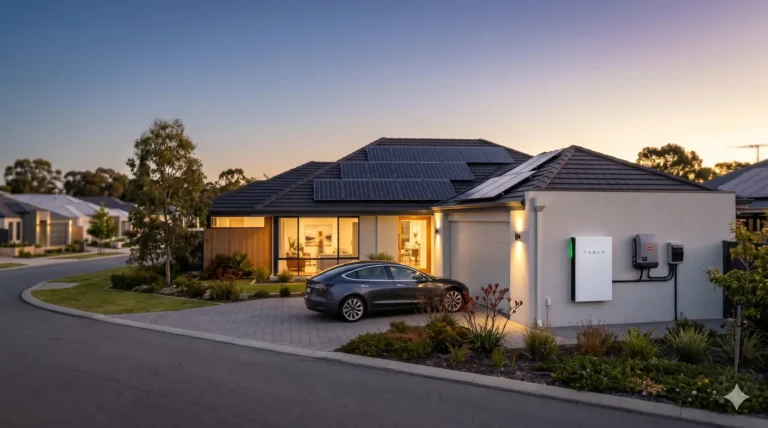
Popular CEC-approved battery options in WA include the Tesla Powerwall 3, BYD Battery-Box, Sungrow SBR and Alpha ESS systems, among others.
Step 3: Get Quotes from WA Battery Scheme-Approved Vendors
The WA state rebate can only be processed by vendors accredited under the scheme. The list of approved vendors is maintained by Plenti, the scheme’s administrator. When requesting quotes, confirm that the installer is:
- Accredited by Solar Accreditation Australia (required for the federal rebate)
- Listed as an approved vendor under the WA Residential Battery Scheme (required for the state rebate)
Both conditions must be met by the same installer for you to receive both rebates through a single transaction.
Step 4: Confirm VPP Participation
Both the federal program (for on-grid systems) and the WA state scheme require your battery to be VPP-capable. The WA scheme additionally requires you to actively participate in a VPP for a minimum of two years. Your installer will connect you to a compatible VPP operator as part of the installation process. Participation typically means your battery can be remotely dispatched during grid stress events, in exchange for credits or payments from the VPP operator.
Step 5: Apply for the No-Interest Loan (If Applicable)
If you want the interest-free loan, your installer will submit the application through Plenti at the same time as the rebate application. You will need to provide income documentation and undergo a credit assessment. Approval is not guaranteed, but the income threshold of $210,000 household gross income covers the vast majority of WA households.
Step 6: Installation and Rebate Application
Your installer submits both rebate applications on your behalf. The federal rebate is applied as a direct discount on your invoice. The WA state rebate is also delivered as an upfront point-of-sale discount. You do not receive a cheque or a tax credit; the savings appear directly in what you pay on the day.
Timeline note: Installation must be completed within six months of WA scheme approval. If you’re aiming to beat the 1 May 2026 federal deadline, start the process now. Installer availability in Perth tightens significantly as deadlines approach, and the quote-to-install timeline can run four to eight weeks.
Frequently Asked Questions
Can I claim both rebates if I already have solar panels?
Yes. The federal rebate requires your battery to be paired with a solar PV system, but that system does not need to be new. An existing rooftop solar installation qualifies, provided it is operational and connected to the same property. The WA state scheme has the same position.
What if I don’t have solar yet?
You can install solar and battery simultaneously. The solar panels will generate their own STCs under the standard SRES scheme, and the battery will generate separate STCs under the Cheaper Home Batteries Program. The two calculations are independent, so you receive both sets of incentives without one reducing the other. If you’re bundling both, the WA scheme’s no-interest loan can cover up to $10,000 of the combined install cost.
Does the WA rebate reduce after May 2026 as well?
No. The WA state rebate rates ($130/kWh for Synergy, $380/kWh for Horizon Power) are fixed and do not step down over time. Only the federal component changes on 1 May 2026. This means the WA rebate becomes a proportionally larger share of the total saving as the federal component declines.
Is the rebate taxable income?
No. Government rebates received under these schemes are not treated as assessable income and do not need to be declared on your tax return. The discount is applied at the point of sale, not paid to you as a cash benefit.
What happens if the WA scheme runs out of rebates before I install?
The 100,000 statewide allocation is finite. If allocations are exhausted, the WA state rebate is no longer available, though the federal program would continue. There is no waiting list or reserve mechanism announced at this stage. First in, first served.
Can I get the rebate on a battery upgrade to my existing system?
Yes, under the federal program, provided the existing system has not already claimed the battery rebate, the additional capacity is at least 5kWh, and the upgraded system does not exceed 100kWh nominal total. The WA state scheme covers new or replacement batteries, so check with your installer whether an upgrade to an existing battery qualifies under the state component.
The Window Is Closing: What to Do Now
The combination of the federal Cheaper Home Batteries Program and the WA Residential Battery Scheme represents the strongest battery incentive package WA homeowners have ever had access to. The numbers are clear: a 10kWh system for a Synergy customer nets out at around $7,090 before May 2026. A Horizon Power customer can bring that same battery down to approximately $4,590, with close to 60% of the cost covered by government support.
After 1 May 2026, the federal component steps down and continues to decline every six months through to 2030. The WA state component remains fixed but has a finite supply of 100,000 rebates.
The practical deadline is not 1 May. It’s now.
Installer calendars in Perth fill up in the weeks before a rebate change. A quote-to-installation timeline of four to eight weeks is typical. That means a household that starts the process in early April may not have their system installed before the deadline.
Talk Energy is an approved WA Battery Scheme vendor and Solar Accreditation Australia-accredited installer, meaning we can process both rebates in a single transaction. Our in-house electricians handle the full installation, and our team manages the federal STC application and WA scheme submission on your behalf.
To lock in the pre-May 2026 rebate rates, get a quote from Talk Energy today. We service Perth metro and regional WA, and we’ll confirm your eligibility for both programs before you commit to anything.
Talk Energy: Perth solar and battery installer rated 4.8 stars from 300+ Google reviews and a 20-year workmanship warranty.
Read next: how to apply for the WA Battery Scheme — The eligibility rules and the application steps in order.