How Much Do Solar Panels Cost in Perth? 2026 Price Guide by System Size
If you have collected two or three solar quotes in Perth, you have probably noticed they can differ by thousands of dollars for what looks like the same system. That is normal. It does not always mean someone is overcharging. Usually the system size, the equipment tier or the work on your roof and switchboard is different.
This guide sets out what solar panels cost in Perth in 2026 by system size, how the STC discount is worked out for Perth, how to size a system for your home, and how to tell a genuine deal from a quote that cuts corners.
How much do solar panels cost in Perth in 2026?
Most Perth homes pay somewhere between $5,000 and $14,000 for a complete solar system in 2026, depending on size. That figure is after the federal STC discount and includes GST, panels, inverter, mounting, wiring and installation. The table below shows estimated ranges for the three most common sizes.
| System size | Typical panels (about 440 W each) | Usually suits | Estimated cost after STC (2026) |
|---|---|---|---|
| 6.6 kW | About 15 | 2–4 people, moderate daytime use | $5,000–$7,500 |
| 10 kW | About 22–23 | Larger families, ducted air conditioning, working from home | $8,000–$11,000 |
| 13 kW | About 30 | Large homes, pools, an EV or a battery planned | $10,000–$14,000 |
Your own price can land outside these ranges. A double-storey roof, tile roof, tilt frames, an old switchboard or a three-phase connection can all push a quote up. A simple single-storey metal roof facing north usually sits at the lower end.
Worth knowing: Larger systems cost less per kilowatt. Much of an installation’s cost is fixed, such as travel, the inverter, design and paperwork. Spreading that over more panels lowers the cost of each kilowatt. That is why many Perth households compare a 6.6 kW quote with a 10 kW quote before deciding. For a closer look at the larger size, read our guide to what a 10 kW solar system costs in Perth.
These estimates are for solar panels only. A battery is a separate cost, covered further down.
How much does a 6.6 kW solar system cost in Perth?
As a rough guide, most Perth homes pay around $5,000–$7,500 for a 6.6 kW solar system in 2026, after the STC discount. Your price depends on your roof type, the panel and inverter brands, and whether your switchboard needs work.
The 6.6 kW size is common in Perth for a practical reason. Before May 2026, a 5 kW inverter was the usual single-phase limit; the panel array can be up to about a third larger than the inverter. A 6.6 kW array paired with a 5 kW inverter fits that rule, so it became the default “standard” system.
Where in the $5,000–$7,500 range a quote lands usually comes down to three things:
- Equipment tier. Entry-level panels and inverters sit at the bottom. Panels with longer product warranties and inverters with strong local support sit higher.
- Roof. Tile, steep pitch, two storeys or panels split across several roof faces all take more time and hardware.
- Battery readiness. A hybrid inverter that can take a battery later costs more than a standard string inverter today, but can save you replacing the inverter later.
What about a 5 kW or 6 kW system?
A 5 kW or 6 kW system usually costs a little less than a 6.6 kW system, but not by as much as you might expect. The fixed costs of an installation stay about the same, so dropping a few panels saves less than the kilowatt difference suggests. For most Perth homes the extra panels of a 6.6 kW system add more value than they add cost. A smaller system mainly makes sense if your roof space is limited or your power use is very low.
If you want to see how a 6.6 kW system performs on a Perth roof and who it suits, read what a 6.6 kW system produces in Perth.
How does the STC discount lower solar prices in Perth?
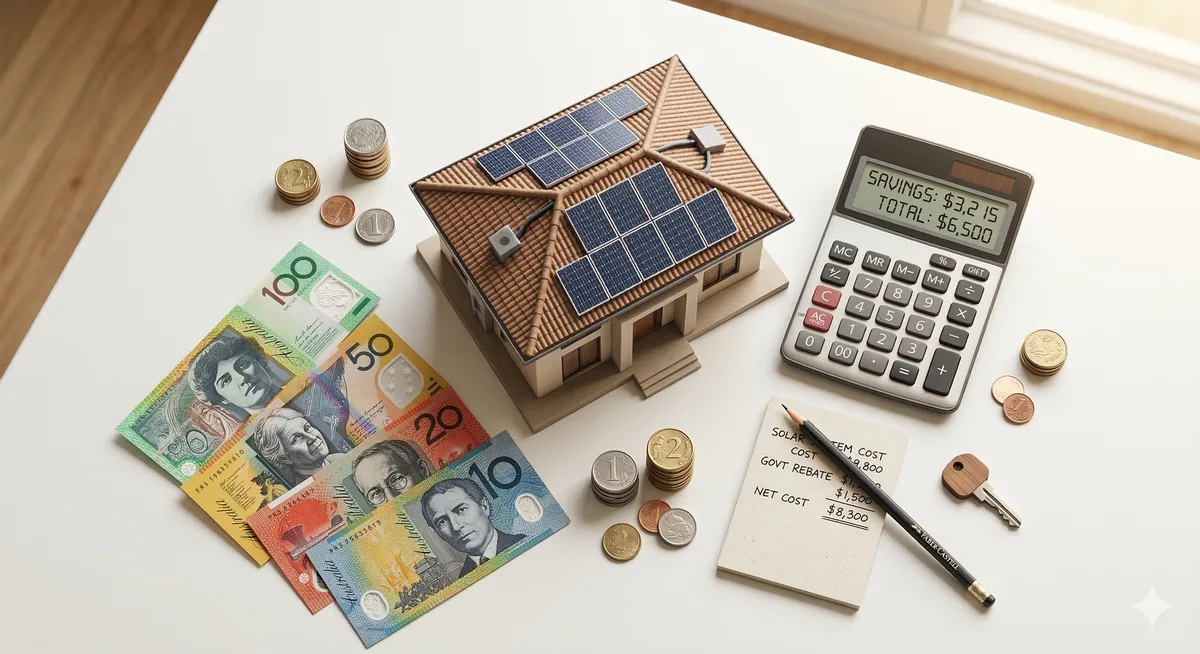
The STC discount takes roughly $1,700–$1,800 off a 6.6 kW system in Perth in 2026, and about $2,600–$2,750 off a 10 kW system. It is not a cheque you claim later. Your installer takes it off the price at the point of sale, then claims the certificates through the federal Small-scale Renewable Energy Scheme.
STC stands for small-scale technology certificate. The Clean Energy Regulator sets how many certificates a system earns. The number depends on three things:
- System size in kilowatts.
- Your zone. Perth is in zone 3, rated at 1.382 megawatt-hours per kilowatt per year.
- The deeming period. For systems installed in 2026 this is 5 years. It drops by one year every 1 January until the scheme ends in 2030.
The formula is: system size × 1.382 × 5, rounded down. That works out to about 6.9 certificates per kilowatt in Perth in 2026. Each certificate is worth roughly $38–$40, depending on the market price on the day.
| System size | STCs (installed in 2026) | Approx. discount at $38–$40 per STC |
|---|---|---|
| 6.6 kW | 45 | About $1,700–$1,800 |
| 10 kW | 69 | About $2,600–$2,750 |
| 13 kW | 89 | About $3,400–$3,550 |
Important: On 1 January 2027 the deeming period falls from 5 years to 4. The same 6.6 kW system will then earn about 36 certificates instead of 45, which is roughly $350 less off the price. The discount is set by the installation date, not the date you sign. If you are close to deciding, check when your installer can fit you in.
Quick tip: A good quote shows the STC discount as its own line, separate from the full price. That lets you check it against the table above. If a quote does not show it, ask.
What size solar system do you need for your Perth home?
Most Perth homes suit a system between 6.6 kW and 13 kW. The right size depends on how much power you use each day, when you use it, and whether you plan to add a battery, pool or electric car. A simple three-step check gets you close.
Step 1: Work out your daily usage
Find the total kilowatt-hours (kWh) on your last Synergy bill and divide by the number of days in the billing period. For example, 2,700 kWh over 90 days is 30 kWh a day. Check a summer bill and a winter bill if you can, because air conditioning and heating change the picture.
Step 2: Compare it with what each system produces
The Clean Energy Regulator’s zone 3 rating assumes each kilowatt of panels in Perth produces about 1,382 kWh a year. That is roughly 3.8 kWh a day, averaged across summer and winter. A well-placed, north-facing array often does a little better, but this is a safe starting point.
| System size | Approx. average output per day | Usually matches daily use of |
|---|---|---|
| 6.6 kW | About 25 kWh | 15–25 kWh a day |
| 10 kW | About 38 kWh | 25–35 kWh a day |
| 13 kW | About 49 kWh | 35 kWh a day or more, or any home adding a battery or EV |
A system can produce more than you use in a day and still make sense. You only use solar power while the sun is up, unless you have a battery. The rest is exported to the grid.
Step 3: Plan for the next five years
If you expect to add an electric car, a pool, ducted air conditioning or a battery in the next few years, size up now. Adding panels to an existing system later usually costs more per kilowatt than including them in the first install, and the new panels may not match the old ones.
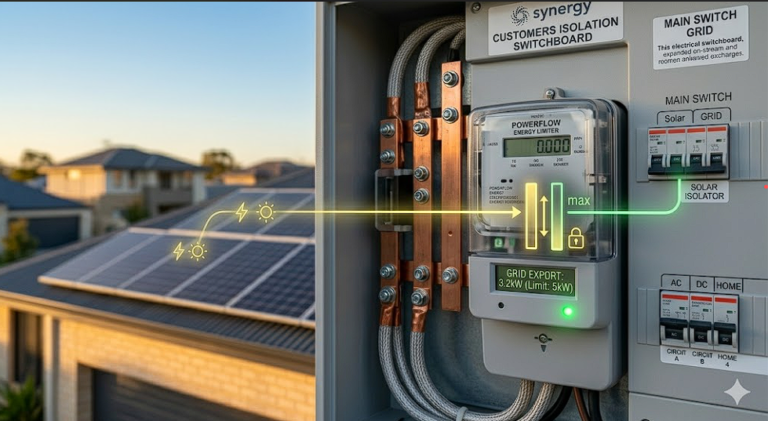
Worth knowing: Most single-phase homes in Perth can only export a limited amount of power to the grid at once. A larger system still helps, because it covers more of your own daytime use, but it is worth understanding the export limits in Perth (1.5 kW, or up to 5 kW with a retailer off-take agreement) before you settle on a size.
What affects the price of solar panels in Perth?
Five things drive most of the difference between solar quotes in Perth: the equipment, the roof, the switchboard, your power supply and whether the system is battery-ready.
1. Panels
Panel prices vary with efficiency, product warranty length and how long the manufacturer has supported the Australian market. Brands commonly seen on Perth roofs include Longi, Trina Solar, Jinko, REC and Tindo. Look past the “tier 1” label. It is a measure of a manufacturer’s finances, not the quality of a particular panel. Ask for the exact model number and its warranty terms. You can read more on our solar panels page.
2. Inverter
The inverter turns the panels’ DC power into the AC power your home uses. It is usually the first part of a system to need replacing, so its warranty and local service support matter. A basic string inverter costs least. A hybrid inverter, which can run a battery, costs more. Microinverters and panel optimisers cost more again and mainly suit shaded or complex roofs.
3. Roof
Metal roofs are usually quickest to work on. Tile roofs take longer, because tiles have to be lifted and refitted around the brackets. Two-storey homes, steep pitches, flat roofs that need tilt frames and arrays split across several roof faces all add time and hardware.
4. Switchboard and power supply
Older Perth homes sometimes have switchboards that need upgrading before solar can be connected safely. A good installer checks this before quoting, not on the day. A three-phase home can take a larger inverter, which often suits 10 kW and 13 kW systems, but three-phase equipment can cost more.
5. Battery readiness
If a battery is likely in the next few years, a hybrid inverter now can avoid a second inverter later. It raises today’s price but can lower the total cost over time.
Budget, mid-range or premium: which solar tier suits you?
When two quotes for the same size system are thousands of dollars apart, the equipment tier is usually the reason. Mid-range equipment suits most Perth homes. Here is what each tier generally means.
| Tier | Typical equipment | Where it sits in the price range | Usually suits |
|---|---|---|---|
| Budget | Entry-level panels, basic string inverter, shorter warranties | Bottom of the range, or below it | Short-term owners on a tight budget |
| Mid-range | Well-known panel brands, string or hybrid inverter with local support | Middle of the range | Most Perth households |
| Premium | Higher-efficiency panels, microinverters or optimisers, longer product warranties | Top of the range | Shaded or complex roofs, homes wanting panel-level monitoring |
Budget systems rarely fail on day one. The risk is later. If the importer leaves the Australian market, a warranty claim in year six can be hard to make. Premium equipment, on the other hand, adds little on a clear, north-facing Perth roof. Pay for it when your roof needs it.
How do you spot a genuine solar deal in Perth?
A genuine solar deal is a fair price for named equipment, installed by accredited electricians, with warranties you can actually use. A quote far below the ranges above usually saves money somewhere you cannot see on the day.
Every solar quote you compare should include:
- Panel brand and model number, not just “tier 1 panels”.
- Inverter brand and model number, and whether it is battery-ready.
- System size in kW and the number of panels.
- The STC discount shown as a separate line.
- Workmanship warranty length, and who stands behind it.
- Who does the installation: the company’s own electricians or subcontractors.
- Solar Accreditation Australia (SAA) accreditation for the electrician who designs and installs the system.
- Western Power grid connection paperwork included in the price.
- Any extras, such as switchboard work, tilt frames or a second storey, listed clearly.
Watch for these red flags:
- A price quoted over the phone without anyone looking at your roof or switchboard.
- Pressure to sign today to “lock in” a discount.
- No model numbers, or a promise to “use whatever is in stock”.
- A workmanship warranty backed by a company that has only traded for a year or two.
For a full side-by-side checklist, see our guide on how to compare solar quotes in Perth.
Is solar worth the cost in Perth?
For most Perth homes that use a fair share of their power during the day, yes. The value comes from the power you use yourself, not the power you export.
Here is why. On Synergy’s Home Plan (A1), every kilowatt-hour you buy from the grid costs 33.26c (rates from 1 July 2026). Every kilowatt-hour of solar you use at home avoids that charge. Solar you export earns much less under the Distributed Energy Buyback Scheme (DEBS): 10c per kWh between 3pm and 9pm, and 2c at other times. Most exports happen in the middle of the day, so most earn the lower rate.
That means the payback on any system depends on how much of its output you use. Running the dishwasher, washing machine, pool pump and air conditioning during the day makes a big difference. A household that is home during the day will usually get its money back faster than one that is out until evening.
For worked examples by system size and household type, read our guide to the solar payback period in Perth.
How much does it cost to add a battery?
As a rough guide, a battery of about 10 kWh costs around $9,500–$13,000 in Perth in 2026 before rebates, or roughly $5,500–$9,000 after the federal Cheaper Home Batteries discount and the WA Residential Battery Scheme rebate. Your price depends on the battery size, your inverter and how the battery connects to your switchboard.
A battery stores your spare daytime solar for the evening, when grid power is most expensive and exports earn little. It makes the most sense alongside a system large enough to charge it, which is one reason 10 kW and 13 kW systems are popular with households planning a battery. See our solar battery page for more.
Get a fixed solar quote for your home
The ranges in this guide are a starting point. The only way to know your price is a quote based on your roof, your switchboard and your power bills.
Talk Energy Solar & Battery has worked in Perth for more than 7 years and completed over 5,000 installations. Every system is installed by our in-house SAA-accredited electricians, with no subcontractors. It is backed by a 20-year workmanship warranty and a 48-hour fix-or-replace guarantee. We hold a 4.8-star rating from 300+ Google reviews. For batteries, we install Sigenergy (SigenStor).
Your quote lists every panel and inverter model, shows the STC discount separately and covers the Western Power paperwork. Learn more about our solar installations in Perth, then get a free, fixed quote or call (08) 6255 5914.
Frequently Asked Questions
What is the average cost of solar panels in Perth?
As a rough guide, most Perth homes pay around $5,000–$7,500 for a 6.6 kW solar system in 2026, after the STC discount. Larger homes often choose 10 kW, which is estimated at $8,000–$11,000. Your price depends on your roof, switchboard and equipment choice.
How much is a 6.6 kW solar system in Perth?
A 6.6 kW solar system in Perth is estimated to cost around $5,000–$7,500 in 2026, after the STC discount of about $1,700–$1,800. Simple single-storey metal roofs sit at the lower end. Tile or two-storey roofs, premium panels and battery-ready inverters push the price higher.
How much is the solar rebate in Perth in 2026?
The federal STC discount is worth about $1,700–$1,800 on a 6.6 kW system and about $2,600–$2,750 on a 10 kW system in Perth in 2026. It works out to roughly 6.9 certificates per kilowatt, at about $38–$40 each. Your installer takes it off the price at the point of sale. It drops on 1 January 2027.
Is a 10 kW system worth it over a 6.6 kW system?
A 10 kW system is often worth it if you use 25 kWh or more a day, run air conditioning during the day, or plan to add a battery or electric car. It costs less per kilowatt than a 6.6 kW system. If your use is low and mostly in the evening, a 6.6 kW system may be enough.
What factors affect solar panel prices in Perth?
The main factors are system size, panel and inverter quality, roof type and height, switchboard condition, single- or three-phase power, and whether the inverter is battery-ready. Cheaper systems often use equipment with shorter warranties and weaker local support.
How long does solar take to pay for itself in Perth?
Payback depends mostly on how much of your solar power you use at home. Each kilowatt-hour you use saves 33.26c on Synergy’s Home Plan (A1), while exports earn only 2c–10c under DEBS. Households that use more power during the day pay their system off faster.