Solar Export Limits in Perth (2026): The New Western Power Rules Explained
Short answer: From 1 May 2026, Western Power’s new rules let most Perth homes connect up to 30 kVA of inverters, with a generation limit of 15 kVA on a single-phase connection (8 kVA per phase on three-phase). Export to the grid is capped at a static 1.5 kW unless you have an off-take agreement with your electricity retailer, in which case the maximum export limit is 5 kW. On three-phase, that 5 kW is a net limit across all phases, not 5 kW per phase. The old “5 kW inverter / 6.66 kW of panels” rule is now history.
This guide is based on Western Power’s Basic Embedded Generator (EG) Connection Technical Requirements and Energy Policy WA’s consumer guidance.
What changed on 1 May 2026?
New technical rules for home solar and batteries on the South West Interconnected System (SWIS) became mandatory at 8:00 am on 1 May 2026. They apply to new systems and to upgrades of existing systems, where the total inverter capacity is up to 30 kVA. Energy Policy WA notes most residential systems are around 5 kVA.
According to Energy Policy WA, the rules are based on the date the work is performed. If your system was installed or upgraded before 1 May 2026, nothing changes for you. If you replace a faulty inverter with a similar or exact model under warranty, you don’t have to meet the new requirements either.
For a new or upgraded system, the big changes are a much higher size limit (30 kVA of inverters), a default 1.5 kW export limit, up to 5 kW export with an off-take agreement, and remote management through Synergy’s CSIP-AUS platform.
The old rules (history only, before 1 May 2026)
Before 1 May 2026, the common pattern for a single-phase Perth home was a 5 kW (5 kVA) inverter with up to about 6.66 kW of panels (133% of the inverter rating). Synergy’s buyback rules treated systems up to 5 kW of inverter capacity as able to export, and new or upgraded systems with an inverter above 5 kW as export limited. This is why so many Perth roofs have a “6.6 kW” system. These are no longer the connection rules for new or upgraded systems. Any “5 kW inverter cap” or “6.66 kW maximum” advice is now out of date.
What are the new solar export limits in Perth?
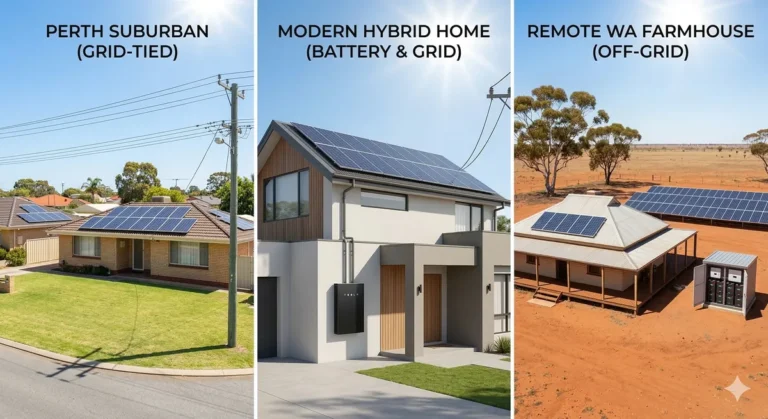
For Perth metro homes, the limits are in Table 4.1 of Western Power’s 2026 requirements. Western Power calls these “large LV networks”. This means all three-phase 415 V low-voltage networks, which it says typically covers the metropolitan area and country city centres.
| Connection (Perth metro / large LV network) | Max total inverter capacity | Generation limit | Static export limit (no off-take agreement) | Maximum export limit (with off-take agreement) |
|---|---|---|---|---|
| Single-phase | 30 kVA | 15 kVA | 1.5 kW | 5 kW |
| Three-phase | 30 kVA | 8 kVA per phase | 1.5 kW | 5 kW |
- Total inverter capacity counts every inverter on the site, solar and battery, AC- or DC-coupled.
- Generation limit is the most all your inverters can produce at once. Above this, a site generation limit control must cap combined output.
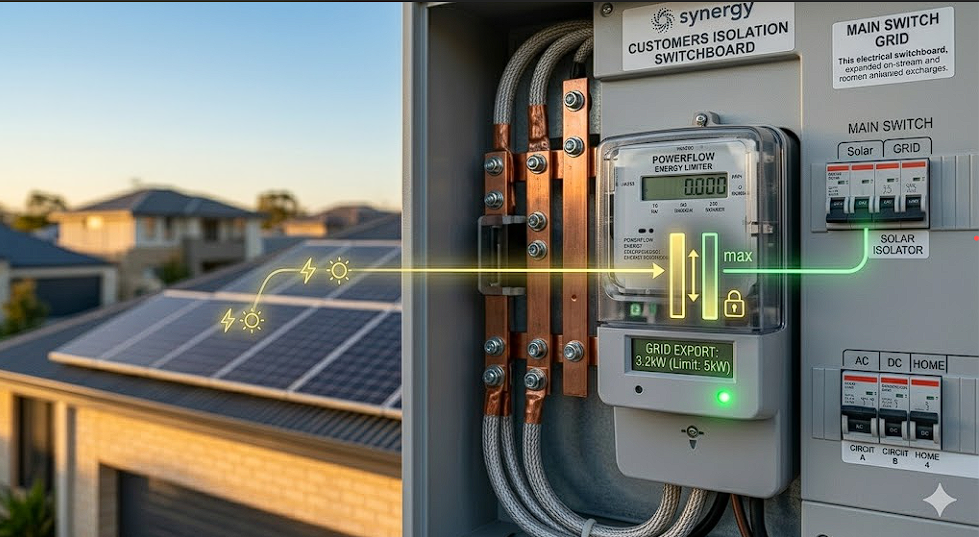
- Export limit is what can flow out through your meter. It applies at the connection point, so it is a whole-of-site limit.
Three-phase: 5 kW total, not 5 kW per phase
Clause 4.3.1.1 says that for multi-phase connections with a balanced system, the export limit is “a net export limit across all the phases”. So a three-phase Perth home with an off-take agreement can export up to 5 kW in total, the same as a single-phase home. Three-phase still helps, because the generation limit is higher (8 kVA per phase, or 24 kVA across three phases). Phase-balance rules also apply.
Outside the metro area: lower limits
Tables 4.2 and 4.3 cover “small LV networks”: small transformers, single-phase or split-phase networks and micro-grids. Western Power says these are typically semi-rural and rural lots and larger properties outside the metro area and country city centres. There, a single-phase connection has a 10 kVA generation limit and a 3 kW maximum export limit. Three-phase is 5 kVA per phase and 3 kW. Split-phase is limited to 1.5 kW export. Each needs a technical study, which can change the limit.
Two more points. The export limit is a maximum, not a guarantee. Your system may export less when network conditions require it. Strata and other shared connection points have their own rule: 3 kW per metered unit with an off-take agreement, or 1.5 kW without one, and you need permission from the strata company or site owner before applying.
What is an off-take agreement, and how do you get 5 kW export?
An off-take agreement is, in Western Power’s words, “a commercial agreement between the User and their connection point energy retailer to purchase exported energy into the grid”. Without one, your system must be set to export no more than 1.5 kW, and that rule overrides anything else that would allow more.
For most Perth households, the retailer is Synergy. Energy Policy WA says almost all residential customers (those using less than 50 MWh a year) are with Synergy. Western Power’s document also says Synergy is currently the only retailer with an approved method for managing solar and batteries remotely. Synergy pays for exported solar through its Distributed Energy Buyback Scheme (DEBS). Neither Western Power nor Energy Policy WA spells out how DEBS maps to an off-take agreement, so ask Synergy how your buyback application works under the 2026 rules. Your installer handles the connection paperwork.
Once you have an off-take agreement, one of two set-ups applies:
- Emergency management only. The maximum export limit (5 kW in Perth metro) applies, with 1.5 kW as a “failsafe” limit.
- Advanced DER management. Your retailer can adjust how much you export at any time, within a dynamic operating envelope published by Western Power. The 1.5 kW static limit still applies as a failsafe. Western Power gives a virtual power plant (VPP) as an example of this kind of product.
One detail matters for sizing. Clause 4.3.3.2 says basic systems “greater than 5 kVA with an offtake agreement shall be subject to advanced DER management and DOE”. So if your inverter capacity is above 5 kVA and you want to export under an off-take agreement, expect your exports to be managed dynamically rather than fixed at 5 kW. Note 1 of Table 4.1 also says a higher maximum limit may be permitted where agreed with the retailer under the WEM Procedure. Check with Synergy before you plan a system around a higher limit.
How do the 1.5 kW static limit, dynamic envelopes and remote management work?
Every new or upgraded system must be able to be switched off and on remotely, and the 1.5 kW static limit is the fallback whenever remote control isn’t active.
The static 1.5 kW limit
The static (or “failsafe”) limit is the export cap that applies when you have no off-take agreement, or when your retailer can’t reach your system. If communications drop, your system falls back to it, and flexible export resumes automatically when they return. Energy Policy WA says customers “will not be penalised” if the retailer can’t communicate with their system.
Dynamic operating envelopes (DOEs)
Western Power defines a dynamic operating envelope as “an operating limit principally allocated at a user connection point by Western Power based on available network capacity that may vary over an effective period”. Put simply, your export limit can move up or down with local network capacity, and your retailer applies it remotely.
CSIP-AUS
CSIP-AUS (Common Smart Inverter Profile – Australia) is an open communications standard. Energy Policy WA says Synergy will use it to communicate with customers’ solar and battery systems. Installers register new systems on Synergy’s CSIP-AUS platform. Existing systems are being moved from Synergy’s emergency solar management platform to a basic version of CSIP-AUS with the same functions.
Emergency Solar Management (ESM)
Emergency Solar Management is not new. Since 14 February 2022, new and upgraded rooftop solar in WA has had to be capable of being remotely turned off during rare low-load events. The 2026 document calls this “Emergency DER management”: Western Power, through the retailer, can remotely disconnect and reconnect systems.
Can you opt out?
Partly. Energy Policy WA says every new system must pass installation capability testing. After that, if you prefer not to join an export product, or your home can’t keep a stable internet connection, you don’t need ongoing connectivity. Your system will simply be held to the standard 1.5 kW export limit. You can opt in or out at any time, and personal use of your solar or battery “will not be affected in any way”.
What do the new limits mean for solar system size?
You can now install a much bigger system than the old 6.6 kW norm, but most of the extra output has to be used at home or stored, because export is still capped at 1.5 kW or 5 kW. So the right size depends on how much power you use during the day and whether you add a battery, not on the export limit alone.
- Self-consumed solar is worth the most. Every kilowatt-hour you use yourself avoids buying power at Synergy’s Home Plan (A1) rate of 33.26c/kWh (from 1 July 2026). Exported solar earns 10c between 3pm and 9pm, and 2c at other times, under DEBS.
- Midday surplus is where limits bite. On a sunny day a large array can easily produce more than your home uses plus 5 kW. Anything above that is curtailed (wasted) unless a battery or a daytime load soaks it up.
- Spread and shift. East, north and west panels flatten the midday peak, and running pool pumps, hot water and EV charging in the day uses more solar directly.
Bigger is allowed, but not always better. For a step-by-step sizing method based on your bills, see our guide to what size solar system you need in Perth.
Is it worth upgrading to three-phase just for export? Usually not, because the maximum export limit is 5 kW net on both single-phase and three-phase in Perth metro. Three-phase mainly helps with a larger generation limit and big three-phase loads. Upgrade costs depend on your switchboard, cable run and Western Power supply work.
How do batteries fit under the 2026 export rules?
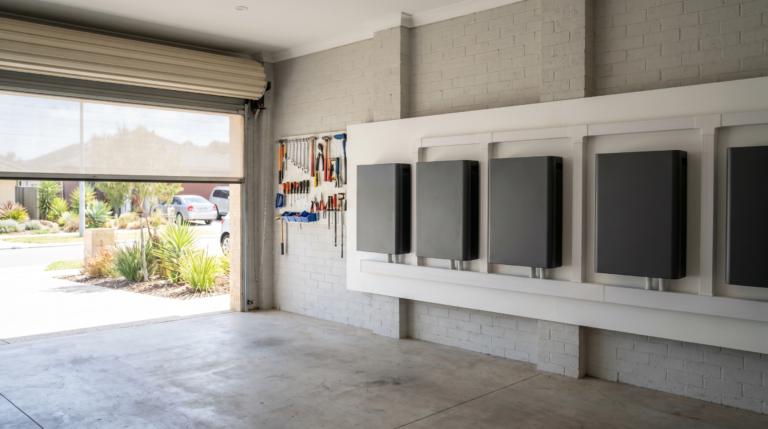
A battery is the simplest way to keep solar that the export limit would otherwise waste. It stores the midday surplus and runs your home in the evening. But its inverter also counts toward your site’s limits.
- Battery inverters count toward the 30 kVA total. Western Power’s aggregate capacity includes solar and battery inverters, AC- or DC-coupled.
- Adding a battery keeps you within the table limits. If you add an AC-coupled battery to an existing system, the whole system must stay within the limits of Table 4.1. If you add a DC-coupled battery to an existing solar-only inverter, the system must be export limited to those limits.
- Adding a battery is an upgrade. Western Power says an upgraded site must comply in full, and you need written approval before adding a battery. Your installer usually lodges this.
- WA Battery Scheme systems are ready. Energy Policy WA says systems installed under the WA Residential Battery Scheme already have the capability to meet the new requirements, and can opt in to flexible exports later without another upgrade.
Synergy states that DEBS does not limit the size of home batteries. A well-sized battery can also export stored energy in the 3pm–9pm window, when DEBS pays 10c/kWh, within your export limit. Talk Energy installs Sigenergy (SigenStor) batteries, designed by in-house SAA-accredited electricians around your usage and connection. Read more about solar battery installation in Perth.
Does DEBS still pay for exports from larger systems?
Check with Synergy. The DEBS rates themselves are clear: 10c/kWh for solar exported between 3pm and 9pm, and 2c/kWh at other times, paid on the first 50 kWh exported per day. What isn’t spelled out yet is how DEBS treats new systems sized under the 2026 rules.
Synergy’s DEBS page still says new and upgraded solar systems with an inverter capacity above 5 kW are subject to export limits. The same page says that from 1 May 2026, new and upgraded systems up to 30 kVA must meet the new WA requirements, with export limits set by Western Power. Energy Policy WA’s consumer page doesn’t mention DEBS.
So, before you commit to a system with more than 5 kVA of inverter capacity, ask Synergy (or let your installer confirm) which buyback rate and export limit will apply to your exact design. For a full breakdown of the scheme, see our Synergy DEBS feed-in tariff guide. To see how the buyback compares with your import tariff, read Synergy electricity plans compared.
Frequently asked questions
What is the Western Power solar export limit in 2026?
For new or upgraded systems in Perth metro from 1 May 2026, the static export limit is 1.5 kW. With an off-take agreement with your electricity retailer, the maximum export limit is 5 kW. These limits apply to the whole site at the connection point.
Is the export limit 5 kW per phase on a three-phase home?
No. Under Western Power’s 2026 rules, the export limit for a balanced three-phase system is a net limit across all phases. A three-phase Perth home can export up to 5 kW in total with an off-take agreement, or 1.5 kW without one.
What is the maximum solar system size in WA now?
Western Power’s basic connection rules allow up to 30 kVA of total inverter capacity. In Perth metro, combined output is capped by a generation limit of 15 kVA on single-phase or 8 kVA per phase on three-phase. Rural and small networks have lower limits.
Do the new rules affect my existing solar system?
No, not unless you upgrade it. Energy Policy WA says systems installed or upgraded before 1 May 2026 are not affected. Replacing an inverter with a similar or exact model under warranty also doesn’t trigger the new requirements. Adding panels or a battery counts as an upgrade.
Can I opt out of remote management?
Your system must pass installation capability testing. After that, Energy Policy WA says you don’t need ongoing connectivity if you prefer not to join an export product. Your system is then held to the standard 1.5 kW export limit. You can opt in or out at any time.
Does a battery help with export limits?
Yes. A battery stores midday solar that would otherwise be curtailed by the export limit, and powers your home in the evening. Its inverter counts toward the site’s limits, so design it as part of the whole system.
Want a system designed around the 2026 rules? Talk Energy’s in-house SAA-accredited electricians size solar and batteries for your usage, your connection type and Western Power’s current limits. Get a free solar quote in Perth or call (08) 6255 5914.