Solar & Battery Installation Areas Across Perth and WA
Quick answer: Talk Energy installs solar panels and home batteries across the Perth metro area, from the riverside suburbs around our Mount Pleasant office to the northern suburbs, the southern suburbs, Fremantle, Rockingham and Mandurah. We also have a guide for regional WA. Every job is done by our in-house SAA-accredited electricians, not subcontractors. Find your area below, or get a free quote and we’ll confirm we cover your address.
Solar is the same technology in Joondalup as it is in Mandurah. What changes from suburb to suburb is the detail: which council you deal with, how close you are to the ocean, how old your roof and switchboard are, and which network you’re connected to. This page is the starting point for all of our local guides. Each section gives a short note on the area and a link to the full guide.
If you’d rather start with how we design and install a system, read about our solar installation service across Perth.
Where does Talk Energy install solar and batteries?
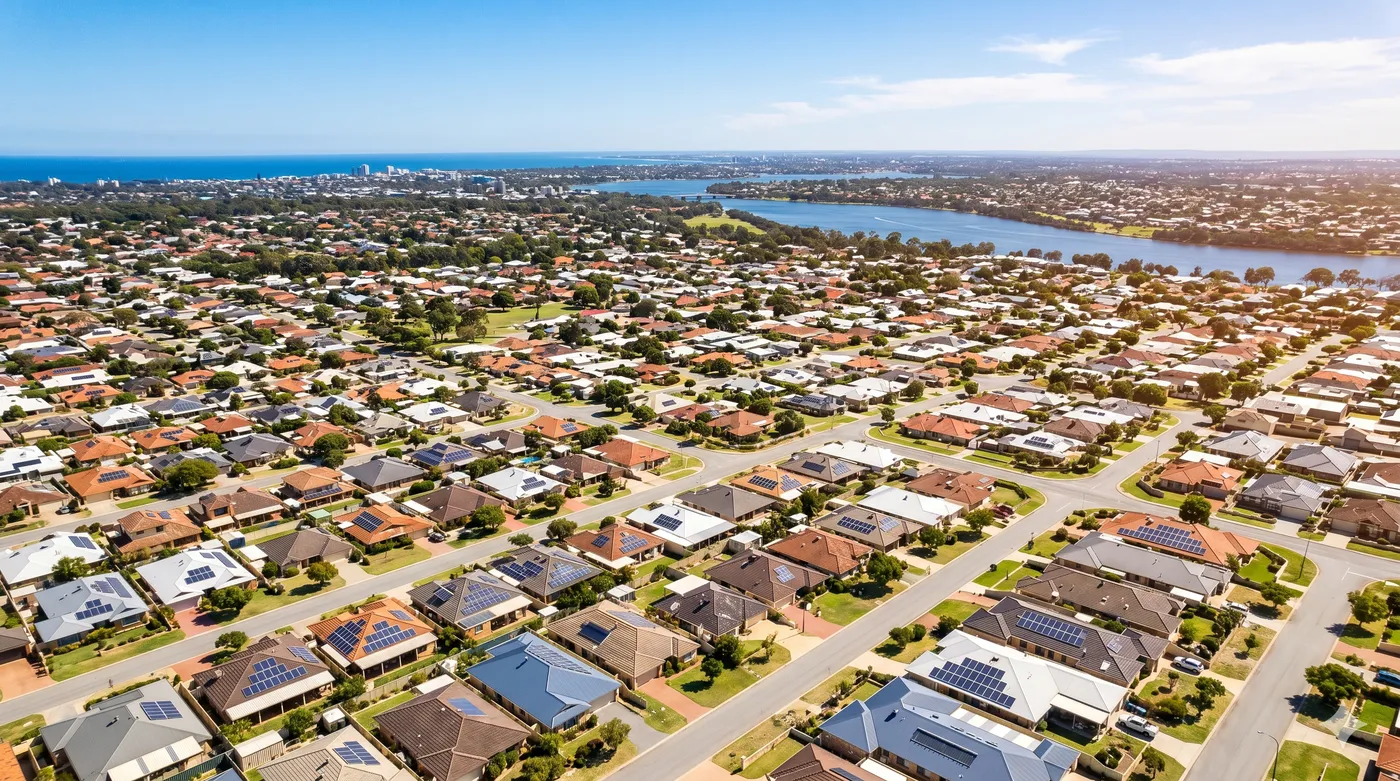
We install across the Perth metro area and into the Peel region. Our office is at 16 Ogilvie Rd, Mount Pleasant, in the City of Melville, about 6 km south of the Perth CBD. That puts suburbs like Applecross, Booragoon, Bull Creek, Willetton and South Perth a short drive away. The northern and southern suburbs are a longer trip, but the same team, the same process and the same warranties apply wherever you are.
Here’s a quick map of the areas we have local guides for:
| Region | Example suburbs | Council(s) | Local guide |
|---|---|---|---|
| Riverside, south of the river | Mount Pleasant, Applecross, Booragoon, Bull Creek | City of Melville | Melville, Applecross & Booragoon |
| Riverside, south of the river | South Perth, Como, Kensington | City of South Perth | South Perth, Como & Kensington |
| Fremantle and the coast | Fremantle, North Fremantle, Hilton, White Gum Valley | City of Fremantle | Fremantle |
| Southern suburbs | Canning Vale, Atwell, Aubin Grove, Harrisdale | Several, incl. City of Canning | Canning Vale & southern suburbs |
| Southern coast | Rockingham, Baldivis | City of Rockingham | Rockingham |
| Peel | Mandurah, Halls Head, Falcon | City of Mandurah | Mandurah |
| Northern suburbs | Joondalup, Hillarys, Wanneroo, Clarkson, Yanchep | City of Joondalup, City of Wanneroo | Joondalup & northern suburbs |
| Regional WA | Towns outside Perth | Various | Regional Western Australia |
Worth knowing: your suburb doesn’t change the price much. As a rough guide, most Perth homes pay around $5,000–$7,500 for a 6.6 kW solar system after the STC discount in 2026. Your price depends on your roof, your switchboard and the equipment you choose. Local factors like heritage rules or coastal exposure matter more for the design than for the bill.
South of the river and the riverside suburbs
This is our home ground. The riverside suburbs south of the Swan River are the closest to our Mount Pleasant office, so site visits and installs here are the easiest to schedule.
Melville, Applecross and Booragoon
Our office sits inside the City of Melville. The City says solar panels don’t need planning approval on properties where the R-Codes apply, which covers most houses. Heritage-listed homes and strata properties need extra checks before anything goes on the roof. Older homes in the area often have tiled roofs and switchboards that may need an upgrade before a battery goes in. Read our guide to solar and batteries in Melville, Applecross and Booragoon.
South Perth, Como and Kensington
These suburbs sit in the City of South Perth, just across the river from the CBD and a short drive from our office. The area mixes established houses, townhouses and apartments. If you live in a strata property, the roof is often common property, so you’ll usually need strata approval first. See our South Perth, Como and Kensington solar and battery guide.
Fremantle
Fremantle is the area where paperwork matters most. Large parts of the City of Fremantle fall inside heritage areas, and a heritage-listed or heritage-area home may need City approval before panels go on. Newer homes outside those areas usually follow the standard process. Fremantle is also on the coast, so ask your installer about the corrosion rating of the racking and fasteners. Our Fremantle solar installation guide explains the heritage steps in detail.
Southern suburbs, Rockingham and Mandurah
Heading south and south-east from the river, the suburbs get newer and the roofs get simpler. Further down the coast, salt air becomes the main local issue. All of these areas, including Mandurah, are on Western Power’s network, so the standard Perth rules and rebates apply.
Canning Vale and the southern suburbs
Canning Vale sits in the City of Canning. Much of this area was built from the 1990s onwards, so many homes have simple roof lines, newer switchboards and plenty of roof space. That often leaves room for a larger system. Read our Canning Vale and southern suburbs solar guide.
Rockingham and Baldivis
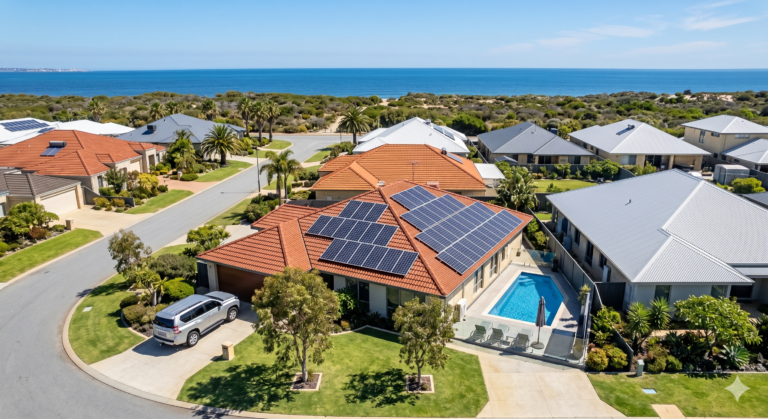
Rockingham is in the City of Rockingham and faces Cockburn Sound. Homes near the water get salt-laden wind, so marine-grade racking and stainless fasteners are worth asking about. Baldivis, further inland, is mostly newer estates where the main question is roof orientation. Our Rockingham solar installation guide covers both.
Mandurah and the Peel region
Mandurah is about 70 km south of Perth, in the City of Mandurah. Even at that distance, it’s still on Western Power’s network (the South West Interconnected System), not Horizon Power. That means Synergy customers here are in line for the same WA Battery Scheme rebate of up to $1,300 as Perth homes. Canal and estuary-front homes face salt and humidity, which affects where the inverter and battery should go. See our Mandurah solar installation guide.
Joondalup, Wanneroo and the northern suburbs
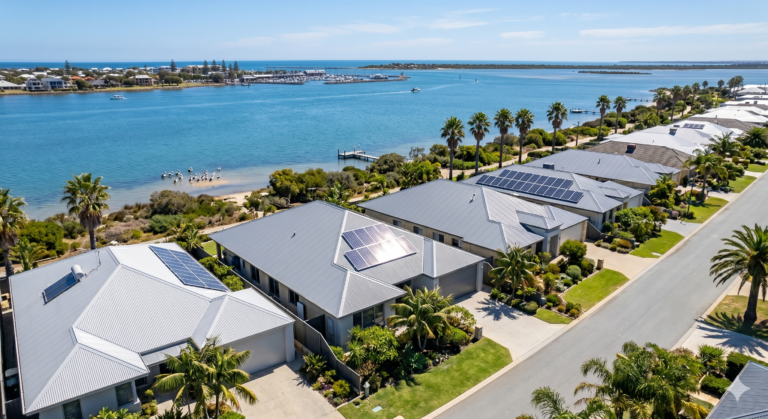
We install right along the northern corridor, from Duncraig and Hillarys up to Clarkson, Yanchep and Two Rocks. Most of this area falls in the City of Joondalup or the City of Wanneroo. The City of Joondalup says a single house or grouped dwelling needs neither planning approval nor a building permit for solar panels, so for most homes there’s no council step at all.
The two things that vary most up north are roof type and distance to the beach. Newer estates tend to have Colorbond roofs and modern switchboards. Older suburbs such as Duncraig, Greenwood and Warwick are more likely to have tiles and an older switchboard. Coastal suburbs like Hillarys, Mullaloo, Quinns Rocks and Two Rocks get salt wind, so check the corrosion rating of the mounting hardware. Read our Joondalup, Wanneroo and northern suburbs solar guide.
Regional WA: Western Power or Horizon Power?
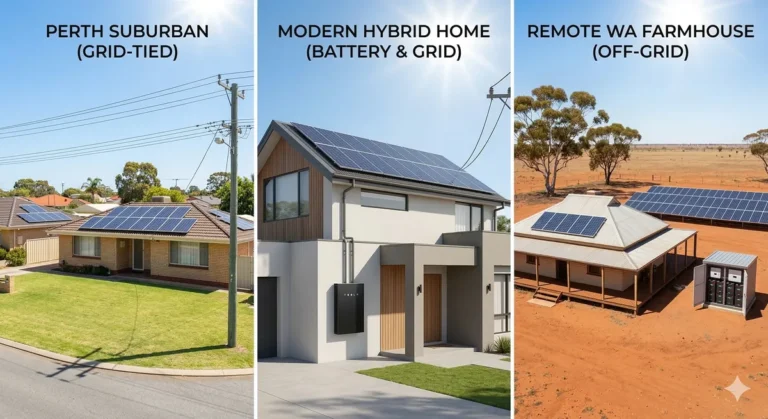
Outside Perth, the first question is which network your home is on, because it changes the rules and the rebate. Western Power’s network, the South West Interconnected System, reaches north to Kalbarri, east to Kalgoorlie and south to Albany. Homes on it follow the same connection process as Perth.
Horizon Power runs the separate networks further out: the Pilbara grid, Esperance and more than 30 smaller networks in regional towns and remote communities. Two differences matter if you’re a Horizon Power customer:
- A bigger battery rebate. The WA Residential Battery Scheme offers up to $3,800 for Horizon Power customers, compared with up to $1,300 for Synergy customers. Virtual power plant (VPP) participation is required either way, and the federal Cheaper Home Batteries program can apply on top.
- Stricter connection rules. Horizon Power’s small networks are more sensitive to large solar systems, so you need written approval from Horizon Power before installation, and larger systems go through a technical assessment.
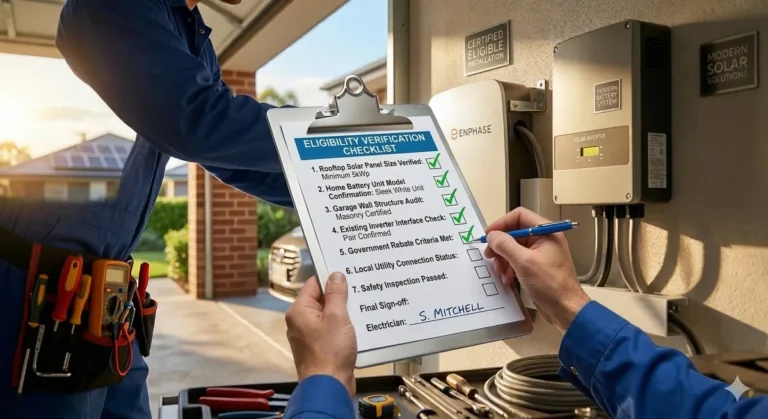
Our regional Western Australia solar guide explains Horizon Power’s process step by step. For the rebate conditions, see our WA Battery Scheme eligibility checklist.
How far do we travel?
We cover the Perth metro area and the Peel region, from Two Rocks in the north to Mandurah in the south. If your suburb has a guide on this page, we install there. If you’re further out, call us before you book anything and we’ll tell you straight away whether we can take the job.
We keep every install in-house, with our own electricians, rather than handing distant jobs to subcontractors. That’s why we confirm coverage address by address instead of promising to go everywhere. It also matters after the install: we only service and repair systems we installed ourselves, so we want to be sure we can come back if you ever need us.
If your area isn’t listed here, for example the Perth Hills, call (08) 6255 5914 or send your address through our free quote form and we’ll confirm.
Choosing a solar installer in your part of Perth
Whichever suburb you’re in, the checks are the same. A good installer should be able to answer these clearly before you sign:
- Who does the install? Ask whether the electricians are employees or subcontractors, and whether they hold Solar Accreditation Australia (SAA) accreditation for solar and batteries.
- What does the local site need? Heritage rules in Fremantle, strata approval in South Perth apartments, salt air on the coast, and network approval in Horizon Power areas should all come up at the quote stage, not after.
- Who handles the network paperwork? Every system needs approval from Western Power or Horizon Power. Ask who lodges it.
- Who fixes it later? Check the workmanship warranty and who you call if something stops working.
Here’s how Talk Energy answers those questions. We’ve been installing in Perth for 7+ years and have completed 5,000+ installations. Every job is done by our in-house SAA-accredited electricians, with no subcontractors. Every installation carries a 20-year workmanship warranty and a 48-hour fix-or-replace guarantee. We’re rated 4.8 stars from 300+ Google reviews, and our WA electrical contractor licence is EC15564. For batteries, we install Sigenergy SigenStor systems.
To see how a system is designed and installed from quote to switch-on, read about how our Perth solar installations work. When you’re ready, request a free, fixed quote or call (08) 6255 5914, Monday to Friday, 9:00 to 5:30.
Frequently asked questions
Do you install solar and batteries in my suburb?
Most likely, if you’re in the Perth metro area or Mandurah. We install from Two Rocks in the north to Mandurah in the south, including the riverside, southern and northern suburbs, Fremantle and Rockingham. If you’re further out, call (08) 6255 5914 and we’ll confirm whether we can cover your address.
Where is Talk Energy based?
Our office is at 16 Ogilvie Rd, Mount Pleasant WA 6153, in the City of Melville, about 6 km south of the Perth CBD. Suburbs such as Applecross, Booragoon, Bull Creek, Willetton and South Perth are a short drive away. We’re open Monday to Friday, 9:00 to 5:30.
Do I need council approval to install solar in Perth?
Usually not for a standard house. The City of Joondalup and the City of Melville both say most houses don’t need planning approval for rooftop solar. Heritage-listed homes, homes in heritage areas such as parts of Fremantle, and strata properties may need approval first. Every system still needs network approval from Western Power or Horizon Power.
Is the WA battery rebate different outside Perth?
Yes, if you’re a Horizon Power customer. The WA Residential Battery Scheme offers up to $3,800 for Horizon Power customers and up to $1,300 for Synergy customers. Homes on Western Power’s network, including Mandurah, get the Synergy amount. Virtual power plant participation is required for both.
Do you service systems installed by other companies?
No. We only service and repair systems that Talk Energy installed. That’s how we can stand behind our 20-year workmanship warranty and 48-hour fix-or-replace guarantee. If another company installed your system, contact that installer or the equipment manufacturer.
How far outside Perth do you travel?
We confirm coverage address by address. Our local guides cover Perth and the Peel region down to Mandurah. For properties further out, call (08) 6255 5914 before booking and we’ll tell you whether we can take the job.