Solar Installation Delays in Perth: What Causes Them and How Talk Energy Handles Scheduling
Solar installation delays are one of the most common frustrations Perth homeowners mention when discussing their experience with solar companies. In most cases, the delay wasn’t caused by incompetence or poor planning. It was caused by one of four predictable factors: a Western Power grid connection queue, a Perth summer that regularly pushes roof temperatures past safe working limits, equipment lead times, or an approval process that applies to certain property types.
This guide explains each cause honestly, what Talk Energy does to reduce the impact of each one, and what your rights are if a delay pushes past the timeframe quoted to you.
Key takeaway: Most Perth solar installations complete within four to eight weeks of contract signing. Delays beyond that window almost always trace back to one of the four causes below, each of which has a defined management process.
The Four Main Causes of Solar Installation Delays in Perth
Understanding why delays happen is the first step to not being blindsided by one. These four causes account for the vast majority of schedule changes across the Perth solar industry.
1. Western Power Grid Connection Approvals
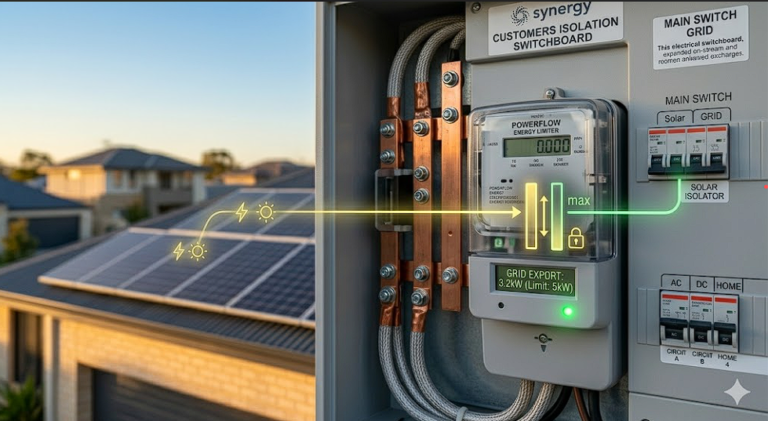
Before any solar system can export energy to the grid, Western Power must approve the connection. This is a regulatory requirement, not a formality, and the approval clock is set by Western Power, not by your installer.
Realistic approval timeframes for Perth metro:
| Application type | Typical timeframe |
|---|---|
| Standard residential (up to 10 kW) | 5-10 business days |
| Larger systems or constrained network areas | 10-20 business days |
| Older suburbs with high solar saturation | Up to 30 business days (rare) |
From May 2026, new WA Government technical requirements apply to all new solar and battery systems on the SWIS network, including CSIP-AUS connectivity standards for remote monitoring. Talk Energy’s systems already meet these requirements, so customers are not experiencing additional delays from the regulatory change.
What Talk Energy does: The connection application is lodged the moment your contract is signed, not after equipment arrives. Equipment ordering runs concurrently, so the approval clock and the procurement clock run in parallel rather than in sequence. This alone removes five to ten days from the typical timeline.
2. Weather: Extreme Heat and Summer Storms
Perth’s climate is genuinely one of the best in the world for solar energy production. It is also one of the most challenging for the people installing it.
Rooftop solar installation is classified as high-risk construction work under the Safe Work Australia guidelines for rooftop solar installation. Under WA construction industry standards, rooftop work must cease when conditions become unsafe, including during:
- Temperatures at or above 37.5°C (when all outdoor construction work must stop under WA industry protocols)
- Active storm conditions, including strong winds that make panel handling dangerous
- Lightning risk periods
- Heavy rain, which creates slip hazards on pitched roofs
Perth records more than 20 days per year above 35°C, concentrated between December and March. A single week of extreme heat during summer can push a scheduled installation by several days, particularly when the forecast changes overnight and crews are already deployed elsewhere.
This is not a Talk Energy-specific issue. It is a physical reality that applies to every installer working in Perth. The question is how it is managed.
What Talk Energy does: The scheduling team monitors Bureau of Meteorology forecasts actively during summer months and contacts customers as early as possible when conditions are likely to affect their installation date. Where a morning start is feasible but afternoon conditions are forecast to deteriorate, crews are dispatched early to maximise safe working hours. Customers are never left waiting without communication.
3. Equipment Supply Chain Lead Times
Solar panels, inverters, and batteries are manufactured predominantly in Asia and shipped to Australian distributors before reaching local installers. Lead times fluctuate based on shipping volumes, port capacity, and demand spikes.
Perth’s geographic position adds a layer of complexity that east-coast customers don’t face. Freight from eastern states distribution centres adds transit time, and local stock levels matter more here than in Sydney or Melbourne.
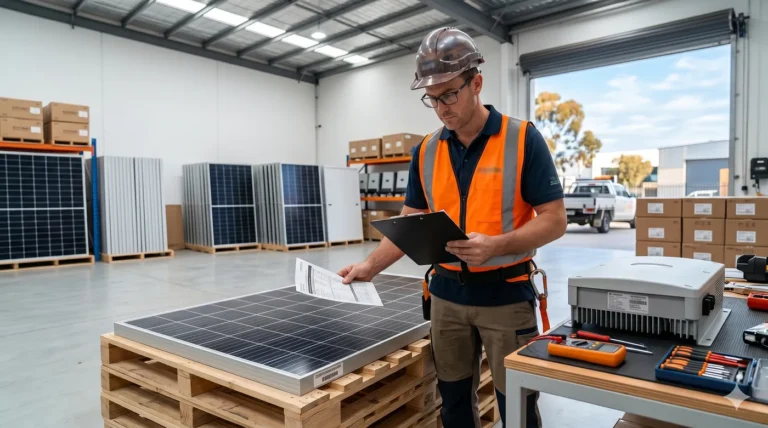
What Talk Energy does: Talk Energy stocks a local inventory of the most commonly specified panels and inverters at its Perth warehouse. For the majority of standard residential installations, equipment is available immediately from local stock rather than being ordered to job. This removes one to two weeks from the timeline for most customers. Customers whose systems require equipment not held in local stock are told this at the quoting stage, with an honest lead-time estimate built into the quoted timeframe.
4. Council and Strata Approvals
Most Perth residential solar installations on standard suburban homes do not require a building permit. Under Schedule 4, Clause 2 of the WA Building Regulations, solar panels attached to a Class 1 residential building outside a cyclonic wind region are exempt from building permit requirements, which covers the vast majority of Perth metro properties.
However, a building permit is required for:
- Class 2-9 buildings (apartments, commercial premises) regardless of wind region
- Properties in cyclonic wind regions (C or D under AS 1170.2)
- Installations requiring structural roof reinforcement
- Heritage-listed properties in some local government areas
Strata-titled properties add another layer: approval from the strata company or owners corporation is typically required before any installation can proceed, and response times vary significantly between strata managers.
What Talk Energy does: The pre-installation site assessment identifies whether council or strata approvals apply before the contract is signed. If approvals are needed, the application is lodged immediately and customers are given a realistic timeframe based on the relevant local government or strata manager’s known processing times.
How Talk Energy Communicates When a Delay Occurs
A delay that is communicated well is a very different experience from a delay that isn’t. The frustration most customers feel isn’t just about the wait; it’s about not knowing what is happening or when to expect a resolution.
Talk Energy’s scheduling process follows a defined communication sequence:
- At contract signing: The quoted timeframe is explained with the specific variables that could affect it, including the Western Power approval window and any known supply or seasonal factors at that time.
- When the Western Power approval is received: Customers are notified and a confirmed installation date is provided.
- If a weather delay occurs: Customers are contacted by phone or SMS before the scheduled date, not on the morning of the install. A revised date is offered at the same time where possible.
- Post-installation: Talk Energy notifies customers once Western Power confirms grid connection is live and the system is fully exporting.
The part most customers want to know: If you haven’t heard anything in the two weeks following contract signing, contact the Talk Energy scheduling team directly. Silence is not normal and is not acceptable. A good installer proactively updates you; if yours isn’t doing that, it’s worth asking why.
Your Rights If a Delay Exceeds the Quoted Timeframe
Knowing your rights matters, and a trustworthy installer should be comfortable stating them clearly.
What your contract should include
Your solar contract should specify a quoted installation timeframe or a completion date. Under Australian Consumer Law, a service must be delivered within a reasonable time if no specific date is stated. If a date is stated and not met, you have rights to seek a remedy.
Specifically, you are entitled to:
- A clear explanation of the reason for any delay
- A revised completion date provided promptly
- A refund of your deposit if the delay is unreasonable and the installer cannot provide a firm revised date
- Compensation for any direct costs you incur as a result of the delay, where those costs are directly caused by the installer’s failure (not by regulatory or weather factors outside their control)
The distinction that matters
There is an important distinction between delays caused by third-party regulatory processes (Western Power approval, council permits) and delays caused by the installer’s own scheduling or resourcing failures. Weather delays fall into a third category: force majeure events that no party controls.
An installer who is transparent about which category a delay falls into is demonstrating integrity. An installer who blames “Western Power” for a delay that is actually a resourcing or communication failure is not.
If you are uncertain about your rights in relation to a solar contract delay, the Energy Policy WA consumer resources and the WA Department of Energy, Mines, Industry Regulation and Safety provide guidance on consumer protections in the energy sector.
Talk Energy’s commitment on timeframes
When Talk Energy quotes a timeframe, it is based on the actual current state of Western Power approval queues, local stock levels, and seasonal conditions at the time of quoting. If circumstances change after signing, customers are told promptly, given a revised date, and never left without a point of contact.
The 20-year workmanship warranty Talk Energy provides only has value if the company is still operating and accountable. That accountability starts with how delays are handled, not just how installations are completed.
What a Realistic Perth Solar Installation Timeline Looks Like
For a standard Perth metro residential installation, here is an honest end-to-end timeline:
| Stage | Typical duration |
|---|---|
| Contract signed to Western Power application lodged | Same day |
| Western Power approval (standard, up to 10 kW) | 5-10 business days |
| Equipment confirmed from local stock | 1-3 business days |
| Installation date scheduled | Within 1-2 weeks of approval |
| Physical installation (residential) | 1 day |
| Grid connection live post-install | 1-5 business days |
| Total: contract to live system | 4-8 weeks |
Installations requiring council permits, strata approval, or equipment not held in local stock will take longer, and that will be communicated at the quoting stage.
For a more detailed breakdown of each stage, see Talk Energy’s complete solar installation timeline guide for Perth and the solar and battery installation timeline guide for battery-inclusive systems.
The honest answer on weather delays: If your installation is scheduled during Perth’s summer months (December through March), build in the possibility of a one-to-five day weather delay. It doesn’t affect every installation, but it is a real and predictable risk. An installer who quotes a summer installation without mentioning this is not being straight with you.
Choosing an Installer Who Handles Delays Well
Delays are an industry-wide reality. The variable that separates a good experience from a bad one is not whether a delay happens, it is whether your installer has the systems, communication, and honesty to manage it properly.
When evaluating installers, ask these questions directly:
- “What is your current Western Power approval turnaround time?” A good installer will know this from recent experience and give you a specific number, not a vague range.
- “Do you hold local stock in Perth?” If they are ordering to job from the east coast, factor in extra lead time.
- “How do you notify customers if a weather delay affects their installation date?” The answer should describe a proactive process, not a reactive one.
- “What happens if my installation goes past the quoted timeframe?” Silence or evasion here is a red flag.
Talk Energy uses in-house electricians rather than subcontracted crews for all Perth installations. This matters for scheduling because it means the scheduling team has direct control over crew availability and can make real-time decisions about rescheduling without negotiating with third-party subcontractors. For more on why that distinction matters, see the Talk Energy guide on in-house versus subcontracted solar electricians.
If you are ready to get a quote and want to understand the current Western Power approval window and local stock availability before you sign, contact Talk Energy’s scheduling team directly. The honest answer is always available before you commit.