How Talk Energy Assesses Your Roof Before Installation: Our Site Survey Process Explained
When a Perth homeowner hears that a solar installer had to “adjust the design on the day,” it usually means one thing: the installer didn’t look hard enough before showing up. Roof space limitations, unexpected shading, structural concerns, and metering board issues are not surprises if you know where to look. They are entirely predictable, and they are exactly what Talk Energy’s site survey is designed to find.
The real risk isn’t a complex roof. It’s an installer who skips the homework.
Before Talk Energy books a single panel onto a truck, a qualified assessor visits your property in person. The survey typically takes 60 to 90 minutes and covers every variable that could affect your system’s performance, safety, or layout. Here is exactly what that process involves, and why it matters for your investment.
What Happens During a Talk Energy Site Survey
A Talk Energy site survey is not a quick look from the driveway. It is a structured, multi-point inspection carried out by an SAA-accredited assessor before any final design is locked in. The goal is simple: confirm that what was proposed in your quote can be delivered exactly as promised, or identify what needs to be refined before installation day.
Shading Analysis Using Design Software
Shading is the single biggest performance killer in Perth solar. Even a small shadow from a neighbouring roofline, a TV antenna, or a mature tree can reduce a panel’s output by 20 to 50 percent if the system is not designed to account for it.
Solar design software (for example SolarEdge Designer) is used to map your roof against real sun-path data for your specific location. The software simulates shading across every hour of the year, not just peak summer midday. This means seasonal shading from deciduous trees, low winter sun angles, and neighbouring structures are all factored into the final layout before a single bracket is ordered.
Why this matters: A system designed around your actual shading profile will generate meaningfully more power over its 25-year lifespan than one designed purely on paper from satellite imagery.
Roof Pitch and Orientation Measurement
Perth’s ideal roof orientation for solar faces north, with a pitch between 18 and 22 degrees. That said, most Perth homes have usable east and west-facing roof sections that can contribute significantly to morning and afternoon generation, particularly for households with high daytime energy use.
During the survey, the assessor physically measures roof pitch using a digital inclinometer and confirms orientation with a compass bearing. This data feeds directly into the system’s yield modelling, so the energy production estimate in your proposal reflects your actual roof, not a generic assumption.
Structural Assessment
Solar panels are not light. A standard residential system adds a distributed load of around 15 to 20 kilograms per square metre across the mounting area. The assessor checks:
- Rafter size and spacing: Undersized or widely spaced rafters may require additional mounting hardware or a revised layout.
- Roof material and condition: Terracotta tiles, concrete tiles, Colorbond, and corrugated iron all require different mounting systems. Aged or brittle tiles may need individual assessment before clamps are fitted.
- Existing damage or sagging: Any signs of water damage, sagging ridgelines, or compromised eaves are flagged before work begins, protecting both the customer and the installation crew.
- Age of the roof: A roof nearing the end of its serviceable life may need to be addressed before solar is installed, rather than after.
This structural check is what prevents the most common post-installation complaint in the industry: leaks caused by incorrect mounting on a roof that was never properly assessed.
Metering Board Inspection
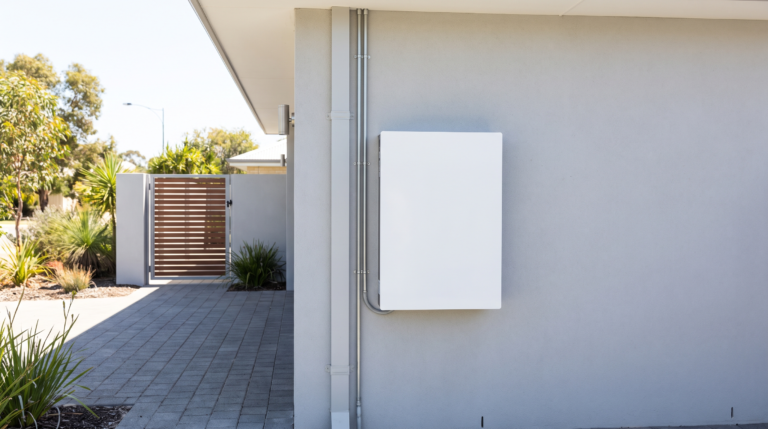
The metering board is where your solar system connects to the grid and to your home’s electrical circuits. It is also one of the most commonly overlooked parts of a pre-installation survey.
Talk Energy’s assessor inspects the switchboard for:
- Available capacity: Older switchboards with limited circuit space may need an upgrade before a solar inverter can be safely connected.
- Phase configuration: Whether your property is single-phase or three-phase determines which inverters are compatible and how export limits apply under Western Power’s connection rules.
- Switchboard condition: Outdated or non-compliant boards (including older ceramic fuse boards) are identified upfront, with any required upgrades quoted transparently before the contract is signed.
Key takeaway: A switchboard upgrade discovered on installation day creates delays and unexpected costs. Identifying it during the survey means it is priced into your quote from the start.
Roof Material and Condition Check
Not all roofing materials are equal when it comes to solar mounting. The assessor documents the roof type in detail, including:
- Tile profile (flat, Roman, terracotta, slate-effect)
- Metal roofing type (corrugated, standing seam, Kliplok)
- Condition of flashings, ridge caps, and gutters
- Any existing penetrations, skylights, or vents that affect available panel space
This information determines the exact mounting hardware specified for your job. Using the wrong hardware on a particular tile profile is a leading cause of water ingress after installation. Getting it right at the survey stage costs nothing. Getting it wrong after the fact costs considerably more.
Why Designs Sometimes Change Between Quote and Installation
Here is an honest answer to a question many homeowners have but rarely ask directly: can the design still change after the site survey?
In most cases, no. The whole point of the survey is to lock in a design that works. But there are scenarios where refinements happen, and transparency about this is more valuable than pretending the process is infallible.
What the Survey Eliminates
The survey eliminates the most common causes of on-day design changes:
| Issue | How the Survey Catches It |
|---|---|
| Insufficient roof space | Physical measurement of usable area, accounting for setbacks and obstructions |
| Shading not visible on satellite | On-site assessment of trees, neighbouring structures, and seasonal sun angles |
| Structural limitations | Rafter inspection and load calculation before hardware is ordered |
| Switchboard incompatibility | Electrical inspection by an SAA-accredited assessor |
| Wrong mounting hardware | Roof material documented and hardware specified before ordering |
When Minor Refinements Still Occur
Occasionally, a detail emerges on installation day that was not visible during the survey. A tile that appeared sound may crack during removal. A rafter may be positioned slightly differently than the structural drawings suggested. A previously unnoticed vent may reduce available space by one panel.
When this happens, Talk Energy’s in-house electricians and installation crew have the authority and the product knowledge to make a like-for-like adjustment on the spot, without needing to reschedule or call back to the office for approval. The system size is preserved wherever possible, and the customer is informed immediately if any change affects their expected output.
The difference between a well-surveyed job and a poorly surveyed one is not whether adjustments ever happen. It is whether those adjustments are minor and managed, or major and unexpected.
What Happens If Your Roof Is Not Suitable
Not every roof is ready for solar. Some are structurally marginal. Others are too shaded, too small, or covered in a material that makes mounting impractical. When Talk Energy’s assessor identifies a genuine limitation, the conversation is straightforward and honest, not a hard sell for a workaround.
The Honest Conversation
If a roof has significant issues, the assessor will explain exactly what was found, what the implications are, and what options exist. Customers are never pressured to proceed with a system that will underperform or create problems down the line. Talk Energy’s 20-year workmanship warranty means the team has a direct financial interest in only installing systems that are set up correctly.
Alternative Placement Options
A roof limitation does not always mean solar is off the table. Depending on the property, Talk Energy will assess alternatives including:
- East or west-facing roof sections: Where the primary north-facing roof is too small or too shaded, additional panels on east or west faces can supplement generation, particularly for households with spread-out daily usage patterns.
- Garage roof: A detached or attached garage often offers a clean, unobstructed north-facing surface that the main roof lacks.
- Carport structures: A solar carport can be designed to cover an existing parking area while generating power, effectively creating usable roof space where none existed before.
- Ground-mount systems: For properties with sufficient land, a ground-mounted array can be oriented and tilted for optimal performance, independent of the roof entirely.
The Australian Government’s energy guidance notes that ground-mount and carport solutions are increasingly viable for residential properties where rooftop installation is constrained.
When the Answer Is “Not Yet”
Sometimes the honest answer is to wait. A roof that needs re-tiling in the next two to three years should be addressed before solar is installed. Removing and reinstalling a solar system to re-roof underneath it adds a significant labour cost, which depends on system size, roof type and access. Talk Energy will flag this clearly and recommend the customer sort the roof first, even if it means delaying the sale.
That kind of advice is not common in a high-volume sales environment. It is, however, consistent with how Talk Energy approaches every job: the right outcome for the customer is the only outcome worth pursuing.
How the Site Survey Protects You From Post-Installation Surprises
A solar system is a 25-year investment. The decisions made in the week before installation affect how that system performs for the next quarter century. The site survey is where those decisions get made correctly.
Here is what a thorough pre-installation assessment protects you from:
- System underperformance: A design based on real shading data and accurate roof measurements will generate close to its modelled output. A design based on assumptions will not.
- Structural damage: Incorrect mounting hardware or inadequate load assessment can cause roof leaks, tile cracking, or rafter stress over time. None of these are covered by a manufacturer’s panel warranty.
- Electrical non-compliance: A switchboard that cannot safely accommodate a solar inverter is a safety issue, not just an inconvenience. Identifying it before installation means it is fixed properly, not worked around.
- Costly retrofits: Discovering a problem after installation is always more expensive than finding it before. Repositioning panels, upgrading hardware, or revisiting the switchboard after the job is complete adds cost and disruption.
Talk Energy’s 20-year workmanship warranty covers the installation itself, not just the products. That warranty is only viable if the underlying survey and design work is done properly. It is, in effect, Talk Energy’s guarantee that the site survey was thorough enough to stand behind.
For a deeper look at what that warranty covers and how to use it, see How Talk Energy Handles Warranty Repairs.
Questions to Ask Any Installer About Their Site Assessment
Not all solar companies conduct site surveys with the same level of care. Some send a salesperson with a measuring tape. Others rely entirely on satellite imagery and never visit the property before installation day. Before signing any contract, these questions will quickly reveal how seriously an installer takes their pre-installation process.
The Six Questions Worth Asking
1. Who conducts your site survey, and what are their qualifications? The assessor should be SAA-accredited. A sales consultant is not a substitute for a qualified electrician or accredited installer when it comes to switchboard and structural assessment.
2. Do you use software to model shading and system yield? If the answer is no, or vague, the production estimates in the quote are likely based on generic assumptions. Ask for a shading simulation specific to your property.
3. How do you assess my roof’s structural capacity? The assessor should be able to describe how they check rafter sizing and spacing, not just whether the roof “looks okay.”
4. What happens if you find a switchboard issue on the day of installation? A good installer will have already found it during the survey. If they cannot answer this question confidently, that is a red flag.
5. Will the design I receive after the survey be the one that gets installed? The survey should produce a finalised design document that the installation crew works from. Vague answers here suggest the design process is not as rigorous as it should be.
6. What is your workmanship warranty, and does it cover post-installation roof issues? Product warranties cover panels and inverters. Workmanship warranties cover the installation itself. Ask specifically whether leaks, bracket failures, or tile damage caused by the installation are covered, and for how long.
These questions are not designed to trip installers up. They are designed to distinguish between companies that have a real process and those that are improvising. See Talk Energy’s full guide on what to ask a solar installer before signing for a broader checklist covering licensing, subcontracting, and after-sales support.
Book Your Talk Energy Site Survey
The site survey is free, it carries no obligation, and it takes less than two hours. What it gives you is a system design you can trust, a quote with no hidden variables, and the confidence that installation day will go exactly as planned.
If you are comparing quotes from multiple installers, the site survey process is one of the clearest indicators of how each company operates. An installer who skips it, rushes it, or sends an unqualified representative is telling you something important about how they will handle every other part of the job.
Book a free site survey with Talk Energy or call (08) 6255 5914 to speak with the team directly. You can also explore Talk Energy’s full solar installation process to understand what happens from survey through to system activation.