15 Questions to Ask a Solar Installer in Perth Before You Sign (2026)
Quick Answer: Before you sign with a Perth solar installer, ask who will physically do the work, whether those electricians are SAA-accredited and WA-licensed, whether the seller is a New Energy Tech Consumer Code (NETCC) Approved Seller, what the workmanship warranty covers in writing, how fast they respond to faults, and who handles the Western Power connection and rebates. Check the answers yourself on the SAA, NETCC and Building and Energy WA registers. Walk away from any installer who can’t answer clearly and in writing.
Solar is one of the bigger purchases a Perth household makes. A well-installed system should run quietly for decades. A poorly installed one can mean roof leaks, inverter faults, a warranty nobody honours and a company that stops answering the phone.
For each of the 15 questions below you’ll find why it matters and what a good answer sounds like, followed by red flags and a checklist.
Quick tip: Send these questions by email and ask for written answers. Vague answers or irritation at being asked are warning signs.
Credentials: Who Is Allowed to Do the Work?
Three separate credentials matter in WA: one for the installer, one for the electrical business and one for the seller.
1. Are the electricians installing my system SAA-accredited?
Why it matters: Installer accreditation is run by Solar Accreditation Australia (SAA), which took over the role from the Clean Energy Council (CEC) in 2024. Your system needs an accredited installer to qualify for Small-scale Technology Certificates (STCs), the federal incentive that lowers your upfront cost. Batteries need SAA battery accreditation too, which matters if you want the WA Residential Battery Scheme.
Accreditation is held by individual electricians, not companies. Anyone still advertising “CEC-accredited installers” is using an outdated term.
What a good answer sounds like: “Every electrician on your job holds current SAA accreditation. Here are their names and accreditation numbers.” You can check each one on the SAA accreditation status check by number or by name.
2. Do you hold a current WA electrical contractor licence, and can I have the number?
Why it matters: Solar installation is electrical work. In Western Australia the business doing it needs an electrical contractor licence, and the electricians need their own electrician’s licences, both issued through Building and Energy WA. SAA accreditation does not replace a licence.
What a good answer sounds like: A licence number given straight away, often printed on the quote. Check it on the Building and Energy licence and registration search.
3. Is the company selling me the system a NETCC Approved Seller?
Why it matters: The old CEC Approved Solar Retailer program no longer exists. On 1 February 2023 it was replaced by the New Energy Tech Consumer Code (NETCC) Approved Seller scheme, which covers solar, batteries, EV chargers and virtual power plants. Approved Sellers commit to consumer protection standards on sales and contracts.
It also has a direct dollar impact in WA. To claim the WA Residential Battery Scheme rebate (up to $1,300 for Synergy customers or $3,800 for Horizon Power customers), the battery must be sold by a NETCC Approved Seller.
What a good answer sounds like: “Yes, here is our listing.” Confirm it with the NETCC Find an Approved Seller search. If a salesperson says they are a “CEC Approved Retailer”, ask why they’re quoting a program that ended in 2023. Our guide to approved retailers versus accredited installers explains the difference in more detail.
Who Actually Does the Work?
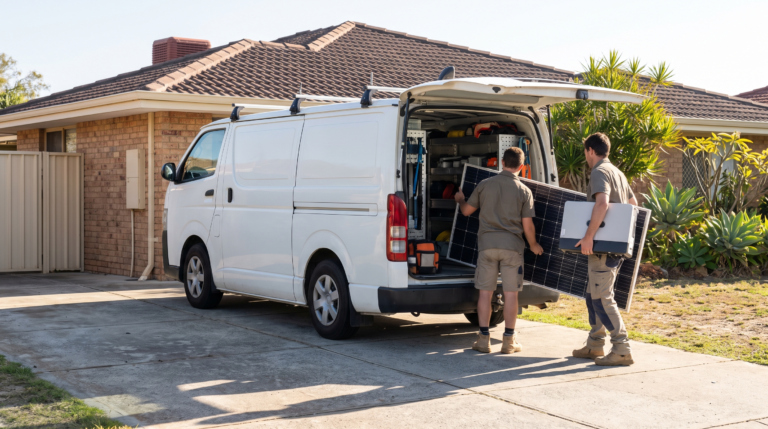
4. Do you use your own employed electricians or subcontractors?
Why it matters: Many solar companies are mainly sales businesses. They take your deposit, then pass the job to a third-party crew they may have little control over. When a fault appears months later, the retailer points at the subcontractor and the subcontractor has moved on. You’re left chasing two businesses for one problem.
What a good answer sounds like: “Our own employed electricians install every system, and the same company handles your warranty.” If a company does use subcontractors, it should explain how they are vetted and confirm in writing that its own workmanship warranty still covers their work.
- Ask: “Who will physically be on my roof on the day?”
- Ask: “If something goes wrong with the installation, who do I call?”
5. Will one team handle the job from roof to switchboard?
Why it matters: Some companies outsource panel mounting to a separate crew, which creates hand-over gaps around roof penetrations and waterproofing.
What a good answer sounds like: One team does the mounting, the DC and AC wiring, the inverter and any battery, and commissions the system before leaving.
The Quote and the Equipment
6. Can you give me a fully itemised quote that includes every cost?
Why it matters: A cheaper lump-sum total can simply mean cheaper parts. An itemised quote lets you compare like for like and stops surprise “extras” on installation day.
| Line item | What to check |
|---|---|
| Panel brand and model | Exact model, product warranty and performance warranty |
| Inverter brand and model | Size in kW, warranty length, battery-ready or not |
| Battery (if included) | Usable capacity in kWh, warranty, scheme eligibility |
| Number of panels and system size | Matches the size recommended from your bills |
| Mounting system | Suits your roof type (tile, metal, flat or tilted) |
| Switchboard and metering work | Any upgrade identified before you sign, not on the day |
| Rebates applied | STCs and any battery rebates shown as separate lines |
What a good answer sounds like: “Yes. Everything is listed, and if a site check finds extra work, we’ll requote before you commit.”
7. Which panels, inverter and battery are you quoting, and why those?
Why it matters: Equipment needs to be on the Clean Energy Council’s approved product lists to be eligible for STCs. The CEC still runs those product lists, even though installer accreditation has moved to SAA. For batteries under the WA scheme, the battery and inverter must also be on Synergy’s or Horizon Power’s Supported Solutions List.
Ask who handles inverter warranty claims and whether the manufacturer has local Australian support.
What a good answer sounds like: The installer names specific models and explains the trade-offs: efficiency, warranty terms, local support and suitability for adding a battery later. “Whatever’s cheapest this month” is not an answer. Neither is swapping components after the quote without telling you.
8. How did you work out the system size you’re recommending?
Why it matters: A recommendation made without looking at your power bills is a guess. In Perth, the right size depends on when you use power, not just how much, because daytime use is worth more than exports at today’s buyback rates.
| Factor | Why it matters |
|---|---|
| Daily kWh use (from your bills) | Sets how much generation you actually need |
| Roof orientation, tilt and shading | Affects yearly output and winter performance |
| When you use power | Self-use saves more than exporting to the grid |
| Battery or EV plans | Changes inverter choice and panel count |
| Western Power export limits | Can cap how much your system may send to the grid |
What a good answer sounds like: “We looked at your last 12 months of bills, your roof and your plans for a battery or EV, and here’s the reasoning.”
Warranties: What Is Covered, and by Whom?
9. How long is your workmanship warranty, and what does it exclude?
Why it matters: Most early faults come from the installation, not the equipment. A short workmanship warranty, or one with sweeping exclusions, offers little protection.
What a good answer sounds like: A clearly documented warranty of ten years or more that covers labour, wiring, roof penetrations, mounting and commissioning. Exclusions should be limited to genuine outside causes such as storm damage, vandalism or changes made by someone else. Get the document before you sign. Our solar warranty page shows what a written workmanship warranty should set out.
10. What happens to my warranty if your company closes?
Why it matters: When an installer stops trading, its workmanship warranty usually goes with it. Manufacturer warranties on the panels, inverter and battery generally survive, but you’ll need to deal with the manufacturer directly.
What a good answer sounds like: A calm, specific explanation rather than offence at the question. The company should tell you how long it has traded in WA, whether its warranty is insurance-backed, and which warranties sit with manufacturers. Check its ABN history on the Australian Business Register. Be cautious if the ABN is much younger than the warranty is long.
11. If a component fails outside warranty, what happens and who does the repair?
Why it matters: Inverters in particular can fail after their warranty period ends. Many people only find out their installer won’t come back once something stops working.
What a good answer sounds like: A clear description of the out-of-warranty process: diagnosis, written repair or replacement options, and who carries out the work. Also ask the reverse question: “Do you service systems installed by other companies?” Some installers, Talk Energy included, only service systems they installed themselves. So the company you choose now is the one you’ll rely on later.
After-Sales Support
12. If I report a fault, how quickly will you respond, and is that in writing?
Why it matters: Every day a system sits faulty means lost generation and higher power bills. Many companies are responsive only until they’re paid.
What a good answer sounds like: A defined response commitment, in writing, plus a local Perth contact. “As soon as we can” is not a commitment. Ask specifically: “If I call you in two years because my inverter is showing a fault code, who answers, and what happens next?”
13. What monitoring do I get, and will you watch my system too?
Why it matters: Monitoring is how many faults are first spotted. A drop in output can go unnoticed for months.
What a good answer sounds like: The installer sets up the app with you on the day, explains what normal output looks like for your system, and tells you whether they can see the data at their end to help diagnose problems.
Grid Connection, Rebates and Finance
14. Who handles the Western Power connection and the rebate paperwork?
Why it matters: In most of Perth and the South West, a grid-connected system needs approval from Western Power, the network operator, before it can export power. Meter changes are then arranged with Synergy. Regional customers outside that network deal with Horizon Power.
Rebates need the same care. STCs are usually applied as a discount on your quote. For batteries, the federal Cheaper Home Batteries program and the WA Residential Battery Scheme can both apply. The WA scheme requires a NETCC Approved Seller, an SAA battery-accredited installer, equipment on the Supported Solutions List and joining a virtual power plant (VPP).
What a good answer sounds like: “We lodge the network application, deal with any queries, coordinate the meter change and show every rebate as a separate line on your quote.” Be wary of a price that only looks reasonable after a large, vaguely explained “rebate” is taken off.
15. If I finance the system, what are the full terms?
Why it matters: “No upfront cost” offers can hide deferred interest, fees or a total repayment well above the cash price.
| Ask | Why |
|---|---|
| What is the comparison rate? | Interest-free periods can revert to high rates |
| What is the total amount I’ll repay? | Compare it with the cash price |
| Are there establishment or monthly fees? | Fees can wipe out the savings |
| Can I repay early without penalty? | Exit fees reduce flexibility |
| Who is the lender? | Your contract is with the lender, not the installer |
What a good answer sounds like: Full terms in writing, a side-by-side comparison of cash versus finance, and no pressure to sign the loan on the day.
Red Flags That Should Make You Walk Away
One of these is a reason to slow down. Two is a reason to look elsewhere.
- Pressure to sign today. “This price ends tonight” or “we’ve had a cancellation this week” are designed to stop you asking questions.
- No names or numbers. They can’t name the electricians, give SAA accreditation numbers or provide a WA electrical contractor licence number.
- Outdated credentials. They claim to be “CEC-accredited” or a “CEC Approved Retailer” and can’t point you to a NETCC Approved Seller listing.
- A lump-sum quote. No panel or inverter model numbers, or components swapped after you’ve agreed.
- Warranty only in words. No written workmanship warranty before signing, or exclusions so broad the cover is meaningless.
- Vague rebate maths. A headline price that only looks fair after a large, unexplained deduction.
- No after-sales plan. No answer to “who do I call in two years?”
Quick Checklist: Question, Good Answer, How to Verify
| Check | Good answer | Where to verify |
|---|---|---|
| SAA accreditation | Named electricians with current numbers | SAA status check |
| WA electrical licence | Contractor licence number on the quote | Building and Energy search |
| NETCC Approved Seller | Listed, especially for battery rebates | NETCC seller search |
| Company history | Years trading in WA, stable ABN | ABN Lookup |
| Reviews | Steady volume over several years | Google reviews and other independent sites |
| Workmanship warranty | 10+ years, in writing, clear exclusions | The warranty document itself |
| Who does the work | Employed electricians, one team | Ask for names before install day |
How Talk Energy Answers These Questions
Put every question on this list to us too. Here are our answers on the points you can check:
- Who does the work: in-house SAA-accredited electricians on every job, with no subcontractors. You can meet our team before you decide.
- Licence: WA electrical contractor licence EC15564, which you can look up on the Building and Energy register.
- Warranty: a 20-year workmanship warranty on the installation.
- Faults: a 48-hour fix-or-replace guarantee on systems we install.
- Who we service: only systems Talk Energy installed, so we stay accountable for our own work.
- Track record: 7+ years in business, 5,000+ installations and 4.8 stars from 300+ Google reviews.
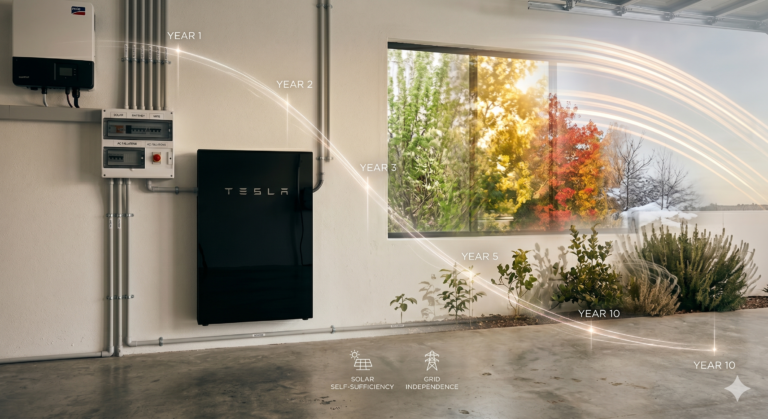
- Batteries: we install Sigenergy (SigenStor) battery systems.
Our office is at 16 Ogilvie Rd, Mount Pleasant. If you’re comparing several installers, our guide to choosing a solar and battery company in Perth walks through the full comparison.
Ready to compare? Get a free, fixed quote or call us on (08) 6255 5914. Bring all 15 questions with you.
Frequently Asked Questions
What questions should I ask a solar company before signing a contract?
Ask who will do the installation and whether they are employed or subcontracted, whether those electricians are SAA-accredited, and for the company’s WA electrical contractor licence number. Ask whether the seller is a NETCC Approved Seller, for a fully itemised quote and for the workmanship warranty in writing. Then ask about fault response times, what happens if the company closes, and who handles the Western Power connection and rebates.
How do I check if a solar installer is accredited in WA?
Use the Solar Accreditation Australia (SAA) accreditation status check, which searches by accreditation number or installer name. SAA took over installer accreditation from the Clean Energy Council in 2024. Accreditation is held by individual electricians, so ask for the names of the people doing your job rather than accepting a company-level claim. Check the business’s electrical contractor licence separately on the Building and Energy WA licence search.
Is the CEC Approved Solar Retailer program still running?
No. On 1 February 2023 the Approved Solar Retailer program was replaced by the New Energy Tech Consumer Code (NETCC) Approved Seller scheme. You can check whether a company is an Approved Seller on the NETCC website. In WA this matters for batteries, because the WA Residential Battery Scheme rebate requires the battery to be sold by a NETCC Approved Seller.
Why does it matter if a solar company uses subcontractors?
Subcontracting splits accountability between two businesses. If a fault appears later, the retailer can blame the subcontractor, who may no longer be around. A company that uses its own employed electricians is directly responsible for every installation, which makes warranty claims simpler and quality more consistent.
What is the most important solar warranty to check?
The installer’s workmanship warranty, because most early faults come from the installation rather than the equipment. It should cover wiring, mounting, roof penetrations and commissioning, and it should be in writing before you sign. Product and performance warranties come from the manufacturers and cover different risks.
What are the biggest red flags when choosing a solar installer?
The biggest red flags are pressure to sign on the day, no accreditation or licence numbers, outdated “CEC-accredited” or “CEC Approved Retailer” claims, lump-sum quotes without model numbers, no written workmanship warranty, vague rebate maths and no clear after-sales process. Evasiveness when you ask direct questions is a red flag in itself.