WA Battery Scheme 2026: Eligibility Checklist and How to Apply
Quick answer: The WA Residential Battery Scheme takes up to $1,300 off a home battery for Synergy customers and up to $3,800 for Horizon Power customers ($130 or $380 per kWh, capped at 10 kWh). You qualify if you’re a permanent resident aged 18+, your WA home is owner-occupied, rented with the landlord’s written consent, or an investment property with the tenant’s consent, and you join a Virtual Power Plant (VPP). The battery must be at least 5 kWh and on your retailer’s Supported Solutions List. The rebate isn’t means-tested and stacks with the federal Cheaper Home Batteries discount.
If you’ve been reading about the WA battery rebate, you’ve probably seen three or four different numbers quoted for it. That’s because many articles mix up the state rebate with the combined state and federal total. This guide sets out what the WA scheme actually pays, who qualifies, which batteries are eligible, and what happens from quote to installation. Every fact here was checked against the WA Government’s scheme pages in October 2026.
How much is the WA battery rebate in 2026?
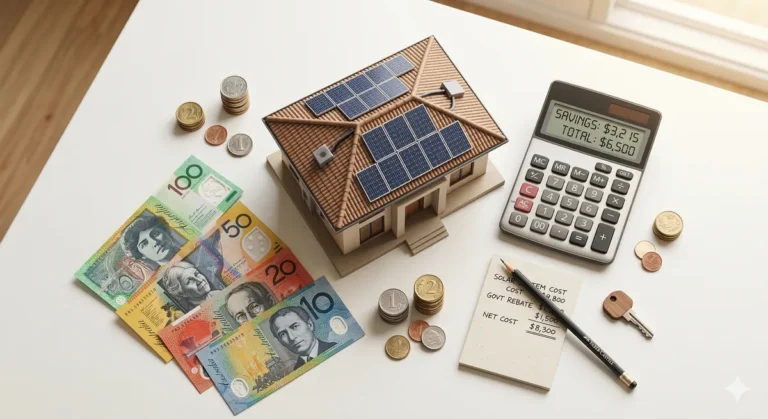
The WA rebate is $130 per kWh of usable battery capacity for Synergy customers and $380 per kWh for Horizon Power customers. It’s capped at 10 kWh, so the most you can get is $1,300 (Synergy) or $3,800 (Horizon Power). Bigger batteries get the same cap.
| Customer | WA rebate rate | WA rebate cap | Federal discount (10 kWh, approx.) | Combined on a 10 kWh battery |
|---|---|---|---|---|
| Synergy (Perth metro and South West) | $130/kWh | $1,300 | ~$2,600–$2,700 | ~$3,900–$4,000 |
| Horizon Power (regional and remote WA) | $380/kWh | $3,800 | ~$2,600–$2,700 | ~$6,400–$6,500 |
A 5 kWh battery, the smallest that qualifies, gets $650 from Synergy or $1,900 from Horizon Power. Anything from 10 kWh up gets the full cap.
Worth knowing: The rebate has been $1,300 / $3,800 since the scheme launched on 1 July 2025. The “up to $5,000” and “up to $7,500” figures you may have seen were the combined state and federal amounts in the first year. They were never the WA rebate on its own. The change on 1 May 2026 was to the federal program, not the WA scheme.
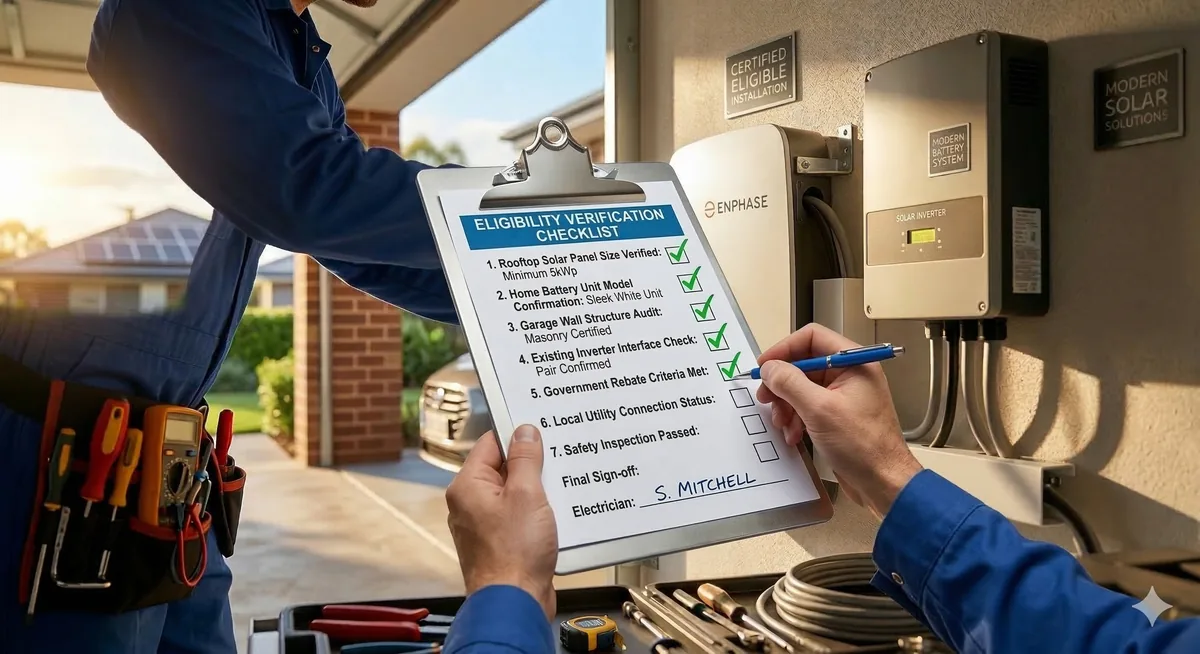
WA Battery Scheme eligibility checklist
You need to tick every box below. If one is missing, the application won’t go through.
You, the applicant
- You’re an Australian permanent resident aged 18 or over.
- You’re a current Synergy or Horizon Power electricity customer.
Your property
- It’s a standalone house or a unit-titled property in Western Australia, used mainly as a home, with an internet connection.
- You own it and live in it (a mortgage is fine), or it’s your investment property leased to a long-term tenant who has given consent, or you rent it and your landlord has given prior written consent.
- The property hasn’t already received a rebate under the scheme. It’s one rebate per property.
The battery and inverter
- The battery is new, VPP-capable and has at least 5 kWh of usable capacity. There’s no maximum size.
- The battery and inverter are on the Clean Energy Council’s approved product lists and on your retailer’s Supported Solutions List (Synergy or Horizon Power). For the Synergy rebate, the equipment must be listed under “DER-Storage”.
- The system is bought on or after 1 July 2025. The scheme isn’t retrospective.
Who sells and installs it
- The seller is an accredited vendor on the Plenti Vendor Directory and a New Energy Tech Consumer Code (NETCC) Approved Seller (or agrees to become one within three months of accreditation).
- The installer is a licensed electrician who holds Solar Accreditation Australia (SAA) Grid Connected Battery Systems accreditation.
After installation
- You join a VPP run by your retailer (or an eligible alternative listed by the WA Government).
- The battery is installed within six months of your application being approved.
Synergy or Horizon Power: which stream are you in?
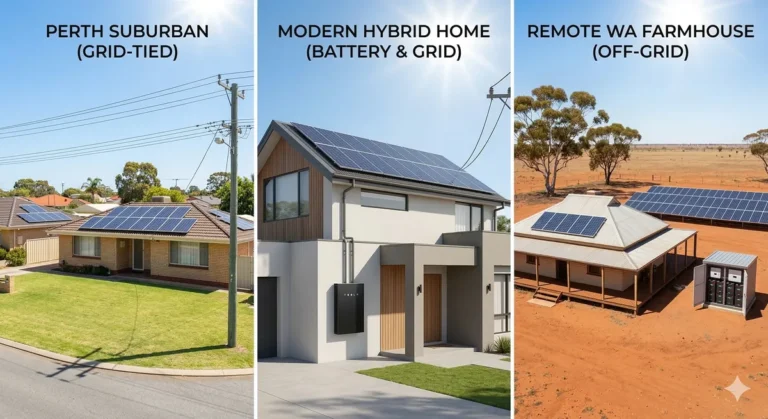
Your electricity retailer decides your rebate, not your postcode. If your bill comes from Synergy, you’re in the Synergy stream and the cap is $1,300. If your bill comes from Horizon Power, you’re in the Horizon Power stream and the cap is $3,800.
Synergy supplies Perth and most of the South West Interconnected System, where Western Power runs the poles and wires. Horizon Power supplies regional and remote towns across WA and runs its own networks and microgrids. The higher Horizon Power rate reflects the extra value batteries bring to smaller regional networks.
Both streams have the same 5 kWh minimum, the same 10 kWh cap on the rebate calculation, the same loan terms and the same VPP requirement. The only practical differences are the rebate rate, which Supported Solutions List your equipment must be on, and which VPP you join.
Which batteries are approved under the WA scheme?
A battery is eligible only if the exact model, and the inverter it’s paired with, appear on your retailer’s Supported Solutions List and on the Clean Energy Council’s approved lists. Brand alone isn’t enough. Two systems from the same brand can have different listings.
On Synergy’s list (last updated 1 October 2026), brands with “DER-Storage” listings include Sigenergy, Sungrow, GoodWe, FoxESS, AlphaESS, Fronius, SolaX and SolarEdge. Your installer should check the specific model and inverter combination on the day you sign, because the list is updated regularly.
Important: As at Synergy’s 1 October 2026 list, every Tesla Powerwall 3 entry is listed only under “DER-Generator” (provisional), with no “DER-Storage” listing. That means a Powerwall 3 doesn’t currently qualify for the $1,300 Synergy rebate. It still gets the federal discount. This can change at any list update, so check before you buy.
Do you have to join a Virtual Power Plant?
Yes. Joining a VPP is a condition of the rebate and the loan. It’s the part of the scheme people ask about most, so here’s the honest version.
A VPP links thousands of home batteries so the network can draw small amounts of stored energy at times of high demand, instead of relying on expensive peak generation. Synergy customers join a Synergy VPP product, or an eligible alternative listed by the WA Government. Horizon Power customers join a Horizon Power VPP product.
The trade-off is control. During a VPP event, part of your stored energy may be used to support the grid, so you won’t always have the full charge you’d otherwise have. Your solar still charges your battery and powers your home first. Before you sign, ask your installer to explain the VPP product’s terms: how events work, what you’re paid or credited, and what happens if there’s a blackout. Our VPP explainer and our comparison of Synergy VPP vs a standalone battery go into more detail.
How is the rebate paid?
The rebate is usually an upfront discount on your invoice, paid to your accredited vendor, not cash back to you. You don’t pay full price and wait for a refund. Your quote should show the battery price, the WA rebate and the federal discount as separate lines, and you pay the balance.
That’s why you can’t apply on your own. Your vendor lodges the application, so the vendor has to be accredited and the installer has to hold the right SAA accreditation. If a quote doesn’t show the rebate as a line item, ask why.
How to apply for the WA battery rebate, step by step
- Check your eligibility against the checklist above. Note whether you’re a Synergy or Horizon Power customer, and whether you need landlord or tenant consent.
- Get a quote from an accredited vendor. The quote should name the exact battery and inverter models, confirm they’re on your retailer’s Supported Solutions List, and show the rebate and federal discount as separate lines.
- Your vendor lodges the application through Plenti, the scheme’s administrator. If you want the no-interest loan, it’s lodged at the same time.
- Approval and grid application. Once your application is approved, you have six months to install. Your installer also applies to the network (Western Power or Horizon Power) to connect the battery.
- Installation. A licensed electrician with SAA battery accreditation installs and commissions the system.
- VPP enrolment and finalisation. The battery is enrolled in your retailer’s VPP and the vendor finalises the rebate. You pay the balance, or the loan covers it.
The no-interest loan: who qualifies?
If your household’s combined gross income is under $210,000, you can also apply for a no-interest loan of $2,001 to $10,000, repaid over 3 to 10 years. The terms are the same for Synergy and Horizon Power customers. Plenti administers the loan and runs a credit check.
The loan and the rebate together can’t be more than the purchase price. The income limit applies only to the loan. The rebate itself isn’t means-tested, so every eligible household gets the same rebate whatever its income. If you need help with the rest of the cost, our guide to solar and battery finance in Perth compares the loan with other options.
Common reasons battery rebate applications fail
Most problems come from paperwork or equipment, not the household. Watch for these:
- Missing consent. Renters need the landlord’s prior written consent. Landlords need the tenant’s consent.
- Equipment not on the right list. The battery or inverter isn’t on your retailer’s Supported Solutions List, or (for Synergy) isn’t listed under “DER-Storage”.
- Battery too small. Under 5 kWh of usable capacity doesn’t qualify.
- The property has already had a rebate. It’s one rebate per property, so check before you buy a home that already has a battery.
- Seller or installer not accredited. The vendor must be scheme-accredited and the electrician must hold SAA battery accreditation.
- Bought before 1 July 2025. Earlier systems aren’t eligible.
- The six-month window lapsed between approval and installation.
Is the battery rebate worth it for your home?
The rebate makes a battery cheaper, but it doesn’t make a battery right for every home. A simple way to check is this formula:
Payback (years) = battery price after all rebates ÷ yearly savings
As a rough guide, most Perth homes pay around $9,500–$13,000 for a 10 kWh battery before rebates in 2026, or about $5,500–$9,000 after the federal and WA rebates. Horizon Power customers pay about $2,500 less. Your price depends on the battery, your switchboard and whether you need a new inverter.
Savings come from using stored solar in the evening instead of buying power. Synergy’s Distributed Energy Buyback Scheme (DEBS) pays 2c/kWh for exports outside 3pm–9pm and 10c/kWh from 3pm–9pm. The Home Plan (A1) charges 33.26c/kWh. So every kWh you store at midday and use at night, instead of exporting it for 2c, is worth about 31c on the Home Plan. If you’re on Midday Saver, evening power costs 55.33c/kWh from 3pm to 9pm, so shifting that use is worth even more.
A battery usually makes sense when:
- you already export a lot of solar during the day (a 6.6 kW system or larger is a good sign)
- you use a fair amount of power in the evening, roughly 8 kWh or more
- you’re on, or willing to move to, a time-of-use plan such as Midday Saver
- you plan to stay in the home for several years.
The numbers are harder when your evening use is low, your solar system is small, you’re selling soon, or the same money would go further on more panels or an efficient hot water system. Our battery payback calculator walks you through it with your own bill.
Why your installer choice matters
The scheme sets the minimum: an accredited vendor and an SAA-accredited electrician. Beyond that, installers differ in ways that affect your rebate and your system for years.
- Paperwork. A vendor who manages eligibility, consent forms, the Plenti application and the network application cuts the risk of delays or a rejected claim.
- Equipment checks. The vendor should confirm the exact battery and inverter models against the current Supported Solutions List, not just the brand.
- VPP set-up. A battery set up wrongly can fail VPP enrolment or cost you savings. Ask who configures it and who you call if it drops offline.
- Workmanship warranty. The scheme covers the rebate, not installation quality. Ask how long the installer’s workmanship warranty lasts and who actually does the work.
How Talk Energy handles the paperwork
When you get a battery quote from Talk Energy, we check your eligibility, confirm the battery and inverter against your retailer’s current list, and show the WA rebate and federal discount as separate lines on your quote. We lodge the rebate application (and the loan application, if you want it), apply to the network, and enrol your battery in the VPP after installation.
Talk Energy installs Sigenergy (SigenStor) batteries using in-house SAA-accredited electricians, with no subcontractors. Every installation comes with a 20-year workmanship warranty and a 48-hour fix-or-replace guarantee. We’re based in Mount Pleasant, hold WA electrical contractor licence EC15564, and have 4.8 stars from 300+ Google reviews.
To see what the rebate means for your home, get a free, fixed quote or call (08) 6255 5914. You can also read more about our solar battery systems in Perth or see every WA solar and battery rebate in one place.
Frequently asked questions
Is the WA Battery Scheme still open in 2026?
Yes. The scheme runs until 100,000 rebates have been paid, which the WA Government expects to take into 2027. There’s no fixed closing date, and more than 20,000 WA households had already benefited by May 2026. Because the rebate is limited by numbers rather than a date, check with your installer that it’s still available when you get your quote.
Is the WA battery rebate means-tested?
No. The rebate isn’t means-tested, so every eligible household gets the same $1,300 (Synergy) or $3,800 (Horizon Power) whatever its income. Only the optional no-interest loan has an income limit: your household’s combined gross income must be under $210,000.
Can renters and landlords get the WA battery rebate?
Yes. Renters can apply with the landlord’s prior written consent. Landlords can claim on an investment property leased to a long-term tenant, with the tenant’s consent. The limit is one rebate per property, so if the property has already received one, it can’t get another.
Do I need solar panels to get the WA battery rebate?
The WA Government’s published eligibility requirements focus on you, your property, the equipment and the VPP. They don’t set a minimum solar system size or brand. In practice, a battery saves most when it stores your own solar, so most households pair it with an existing system or install solar at the same time. Your installer can confirm how the rules apply to your home.
Can I get the WA rebate and the federal battery rebate together?
Yes. The WA rebate is in addition to the federal Cheaper Home Batteries Program, and both are applied as discounts at the point of sale. On a 10 kWh battery the federal discount is about $2,600–$2,700 for installs before 31 December 2026, so a Synergy customer gets roughly $3,900–$4,000 in total and a Horizon Power customer roughly $6,400–$6,500.
Is the Tesla Powerwall 3 eligible for the WA battery rebate?
Not for Synergy customers at the moment. On Synergy’s Supported Solutions List updated 1 October 2026, the Powerwall 3 is listed only under “DER-Generator” (provisional), with no “DER-Storage” listing, so it doesn’t qualify for the $1,300 Synergy rebate. It still gets the federal discount. Horizon Power customers should check Horizon Power’s list, and anyone should re-check at the time of purchase because the list changes.
What changes for battery rebates on 1 January 2027?
The WA rebate isn’t scheduled to change. The federal discount drops from 6.8 to 5.7 certificates per kWh on 1 January 2027, which cuts about $400 off the federal discount on a 10 kWh battery. The federal discount is set by your installation date, not your quote date, so an install booked before the end of 2026 gets the current rate.