Solar Installation Timeline in Perth: Every Step From Quote to Switch-On
Quick answer: The physical installation of a home solar or solar-and-battery system in Perth usually takes one day. The whole process, from accepting a quote to a working, grid-connected system, takes longer because of the Synergy and Western Power applications, any council approval and the meter change. Synergy says it can take up to three months, depending on your installer, product availability and how long approvals take. Simple metro jobs are often quicker.
“How long will this take?” is one of the first questions Perth homeowners ask. It is a fair one. Between the quote, the site check, the paperwork and the meter, the process can feel like a black box. This guide walks through every step in order: who does it, what happens, and what can slow it down.
What are the steps in a Perth solar installation?
There are ten steps from first enquiry to handover. Some run at the same time. Here they are at a glance.
| Step | What happens | Who does it | How long |
|---|---|---|---|
| 1. Enquiry and quote | Bills reviewed, system sized, written quote issued | Installer | Days |
| 2. Site assessment | Roof, shading, switchboard and meter box checked | Installer’s electrician | About 1–2 hours on site |
| 3. Accept quote, final design | Layout, equipment and any extras confirmed in writing | You and installer | Days |
| 4. Synergy application | Retailer reference number issued | Installer, on your behalf | Synergy says usually within one business day |
| 5. Western Power application | Embedded Generation Connection application assessed | Installer, on your behalf | Varies; longer if a technical review is needed |
| 6. Council or strata approval | Only if your property needs it | You, with installer’s help | Varies by council or strata body |
| 7. Battery scheme application | WA rebate (and optional loan) lodged | Accredited vendor | Install within 6 months of approval |
| 8. Installation day | Panels, inverter, battery and wiring installed and tested | Installer’s electricians | Usually one day |
| 9. Compliance and meter | Paperwork lodged; meter replaced or reprogrammed | Installer, Synergy, Western Power | Varies |
| 10. Handover | Monitoring set up, system explained, warranties issued | Installer | At or soon after switch-on |
Step 1: How does the quote stage work?
It starts with your power bills and a conversation about what you want: lower bills, backup power, a battery now or later. A good installer then sizes the system and sends a written, itemised quote with exact panel, inverter and battery models, warranty terms and every rebate shown as a separate line.
Take your time with it. Under the Australian Consumer Law, the goods and services you buy must be of acceptable quality, match their description and be supplied with due care and skill. If you sign at home after an unsolicited visit or call, you also get a 10-business-day cooling-off period. Our questions to ask your solar installer help you test a quote before you accept it.
Step 2: What does the site assessment check?
An electrician checks that your home can take the system as quoted, so problems are found now rather than on install day. The visit usually covers:
- Roof: material, pitch, direction, condition and the space available for panels.
- Shading: trees, neighbouring buildings, chimneys, vents and air-conditioning units.
- Switchboard: whether it can safely take an inverter, and a backup circuit if you are adding a battery. Older boards sometimes need an upgrade.
- Phase: single-phase or three-phase supply, which affects inverter size and export limits.
- Battery and inverter location: wall space, ventilation, weather exposure and cable runs.
If anything changes the price, you should get a revised quote before work goes ahead. Read how we run our roof assessment and site survey.
Step 3: What is in the final design?
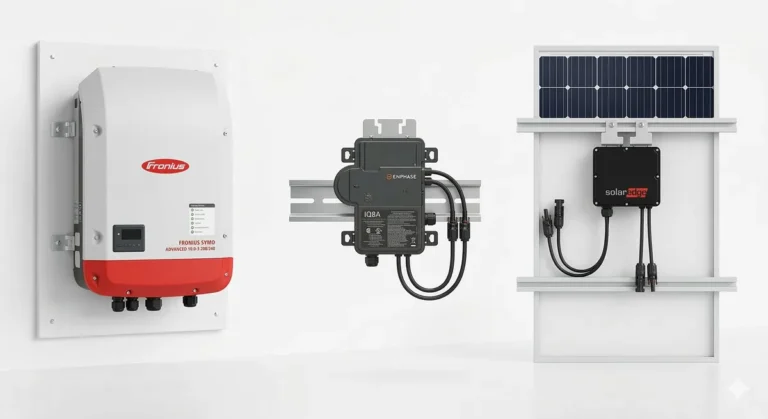
Once you accept, the installer finalises panel layout, string design, inverter and battery placement, cable routes and, for batteries, the backup circuits. The design has to meet Australian Standards and Western Power’s technical rules, and the equipment must be on the Clean Energy Council’s approved lists. Getting this right first time avoids an application being sent back.
Steps 4 and 5: How do the Synergy and Western Power applications work?
Your installer applies to Synergy for a reference number, then uses it to lodge an Embedded Generation Connection application with Western Power. Western Power says homeowners are responsible for connecting their inverter system but can authorise their solar supplier to apply for them, which is how most installs work. If your home shares a connection, such as in a strata complex, the management body needs to be consulted first.
How long Western Power takes depends on the system and the location. Western Power says most metro systems within its standard 2026 connection limits that use approved equipment do not need a technical review; rural and small-network sites do. Larger systems, three-phase setups and connections in busy parts of the network may need a technical review, which takes longer.
Worth knowing: under Western Power’s emergency management rules, new and upgraded home systems must be able to be switched off remotely in a grid emergency. Your installer sets this up through either an internet (API) connection or the meter.
Step 6: Do you need council approval for solar in Perth?
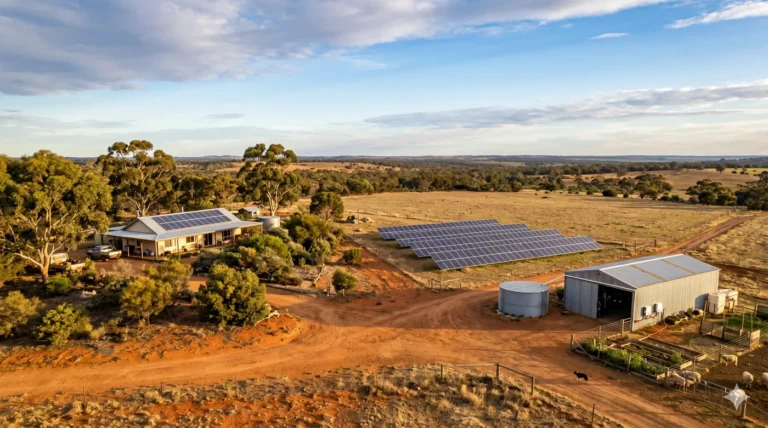
Usually not, for a house. Most Perth councils exempt standard rooftop solar on houses. The City of Joondalup, for example, says solar panels on single houses and grouped dwellings need neither planning approval nor a building permit. Heritage-listed homes, apartments, commercial buildings and strata properties are different. Check with your council or strata body before you book an install date, as that approval is what usually adds time.
Step 7: What extra steps does a battery add?
A battery adds rebate paperwork and a few technical checks, but rarely changes the install day much. If you are claiming the WA Residential Battery Scheme rebate (up to $1,300 for Synergy customers, up to $3,800 for Horizon Power customers):
- the battery and inverter must be on your retailer’s Supported Solutions List
- the seller must be an accredited scheme vendor, and the installer needs SAA battery accreditation
- you must join a virtual power plant
- once approved, the installation must be finished within 6 months
Adding a battery to existing solar counts as a change to your system, so new Synergy and Western Power applications are needed. Our WA Battery Scheme checklist has the full list of requirements.
Step 8: What happens on installation day?
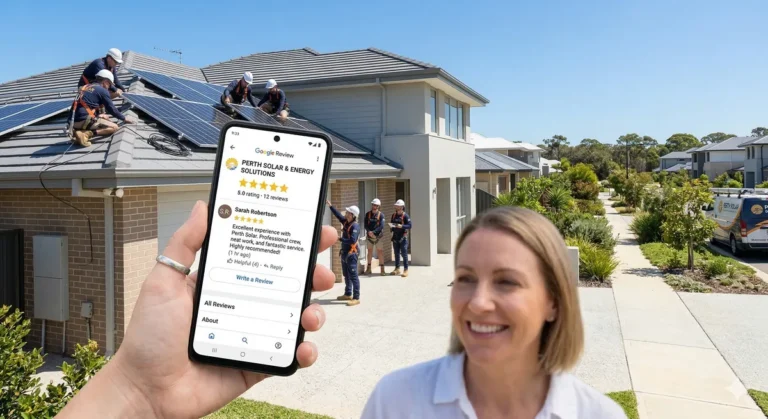
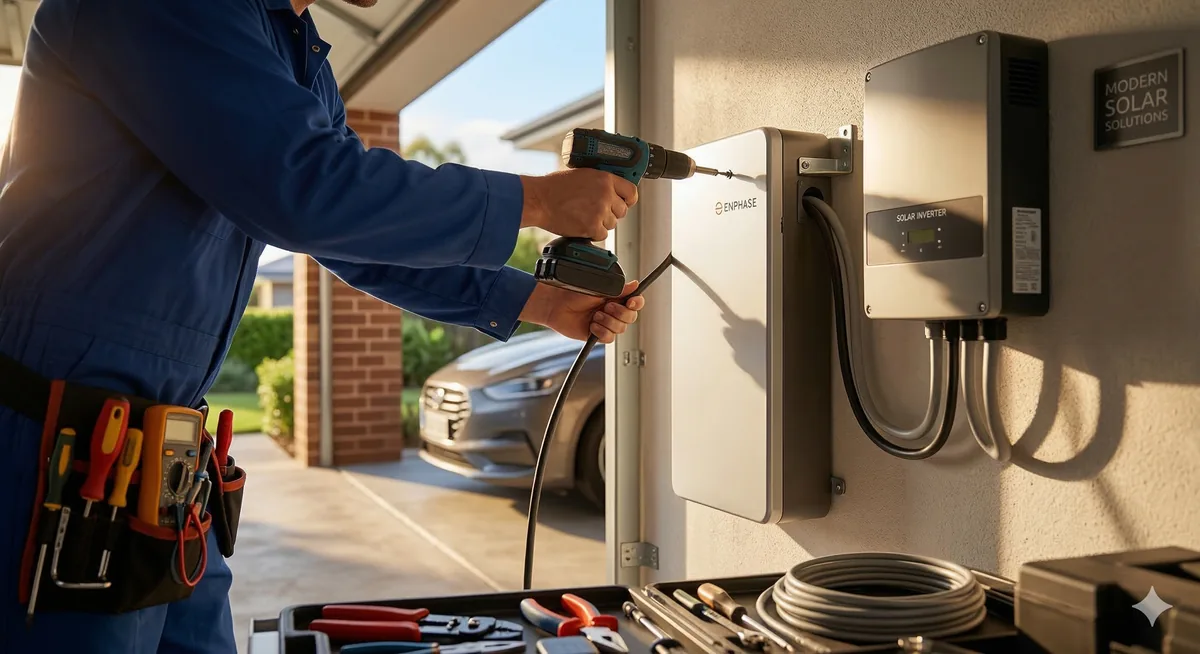
Most single-storey Perth homes are done in a day. Double-storey roofs, large battery systems, switchboard upgrades or complex roofs can run longer. A typical day goes like this:
- Safety set-up and roof access, and a final check of the layout against the design.
- Mounting rails fixed to the roof structure.
- Panels clipped to the rails and wired into strings.
- Inverter mounted, usually in the garage or on an outside wall.
- Battery installed and cabled, if included.
- DC and AC cabling run, labelled and secured.
- Switchboard connection, plus any upgrade that was quoted.
- System tested and commissioned before the crew leaves.
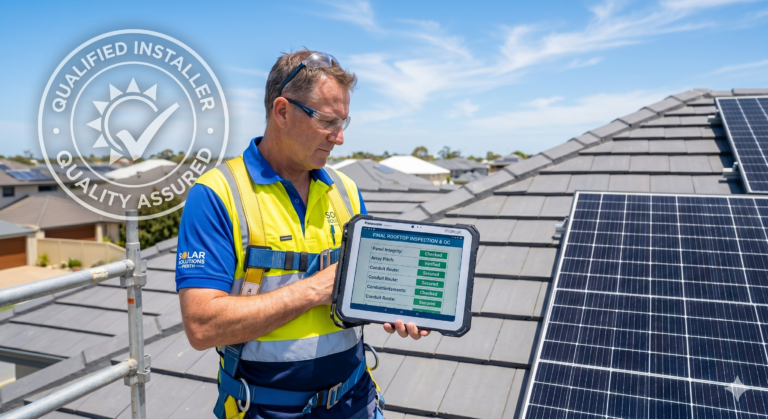
Someone needs to be home to give access to the property, the roof and the switchboard. You do not need to supervise. Our quality control process explains how we check the installed system against the quote.
Step 9: When does the meter get changed?
After installation. To be paid for the solar you export, you need a bi-directional meter that records power flowing both ways. Synergy arranges this with Western Power for you. Depending on your meter, it is replaced, reprogrammed or reconfigured. Synergy lists these metering fees, charged on the bill after your installation:
| Synergy metering cost to switch to DEBS | Fee (incl. GST) |
|---|---|
| Meter upgrade | $108.84 |
| Meter reprogramming | $111.60 |
Once the meter is set up, Synergy pays for exported solar under the Distributed Energy Buyback Scheme (DEBS): 10c/kWh from 3pm to 9pm and 2c/kWh at other times, capped at 50 kWh a day. Your installer also lodges the electrical compliance paperwork and gives you your certificates.
Step 10: What should you get at handover?
- Your monitoring app set up, with a walk-through of what normal generation and battery behaviour look like.
- An explanation of the inverter display and what to do if an error shows.
- Electrical compliance certificate and system documents.
- Manufacturer warranties for the panels, inverter and battery, and the installer’s workmanship warranty.
- A single contact for faults or questions.
Why do some installations take longer?
Most delays come from a short list of causes, and several are outside any installer’s control.
| Cause | Why it adds time | What helps |
|---|---|---|
| Western Power technical review | Larger or three-phase systems and busy parts of the network get extra checks | A compliant design lodged early |
| Switchboard upgrade | Older boards must be brought up to standard first | Identified and quoted at the site assessment |
| Roof access | Double-storey or steep roofs need scaffolding or edge protection booked | Planned at the site assessment |
| Heritage, strata or estate rules | Approval from a council or strata body comes first | Ask early; start the approval before booking |
| Equipment supply | Specific batteries or inverters may be on back order | Confirm stock before you set an install date |
| Battery scheme paperwork | Eligibility, VPP and equipment list checks | An accredited vendor who lodges it correctly |
| Changes after approval | A new inverter, added battery or bigger system means a new application | Finalise the design before lodging |
For more on scheduling, see our guide to solar installation delays in Perth.
Quick tip: any installer who guarantees a fixed switch-on date before your Western Power application is assessed is promising something it does not control. Ask for a realistic range instead, and ask to be kept updated.
How Talk Energy runs the process
At Talk Energy, the same in-house SAA-accredited electricians handle the site assessment, the installation and any later service. We do not use subcontractors. We lodge the Synergy and Western Power applications for you, and we handle the WA Battery Scheme paperwork for eligible customers. We give you a realistic timeline once we have seen your property.
Every solar installation and Sigenergy battery we fit comes with a 20-year workmanship warranty and our 48-hour fix-or-replace guarantee. We have completed 5,000+ installations over 7+ years and are rated 4.8 stars from 300+ Google reviews. Get a free, fixed quote or call (08) 6255 5914.
Frequently asked questions
How long does solar installation take in Perth?
The installation itself usually takes one day for a home. The full process, from accepting a quote to a grid-connected system, takes longer because of the Synergy and Western Power applications, any council approval and the meter change. Synergy says it can take up to three months, depending on the installer, product availability and approvals.
How long does Western Power approval take?
It depends on the system and where you live. Western Power says most systems within Western Power’s standard 2026 limits, using approved equipment and in a Perth metro location, do not need a technical review. Larger or three-phase systems, or homes in busy parts of the network, may need one, which takes longer.
Do I need council approval to install solar panels?
Usually not, for a house. For example, the City of Joondalup says solar panels on single houses and grouped dwellings need neither planning approval nor a building permit. Heritage-listed homes, apartments, commercial buildings and strata properties may need approval, so check with your council or strata body first.
Who arranges the new meter?
Synergy arranges it with Western Power after your installer has lodged the paperwork. You need a bi-directional meter to be paid for exported solar. Synergy lists a $108.84 meter upgrade fee or a $111.60 reprogramming fee (incl. GST), charged on your next bill.
Does adding a battery make installation take longer?
Usually only a little on the day, but it adds paperwork. A battery claimed under the WA Battery Scheme needs approved equipment, an accredited vendor and VPP enrolment, and must be installed within 6 months of approval. Adding a battery to existing solar also needs new Synergy and Western Power applications.
Do I need to be home on installation day?
Someone needs to be there to give access to the property, the roof and the switchboard. You do not need to supervise the crew. Ask to be home at the end for the handover, so you can see the monitoring app and how the system works.