Adding a Battery to an Existing Solar System in Perth: What You Need to Know
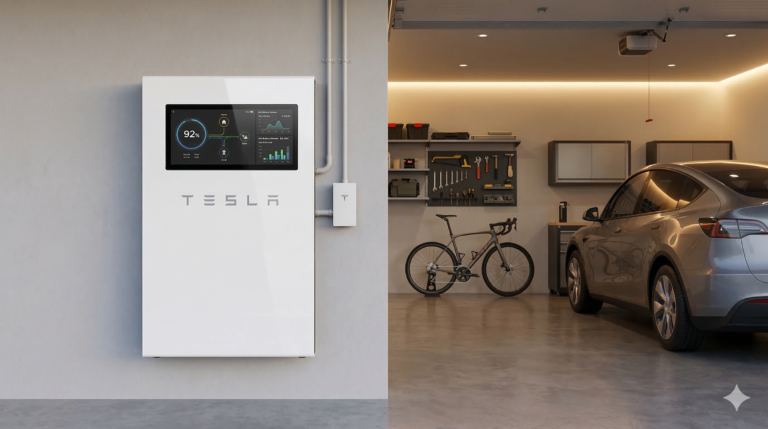
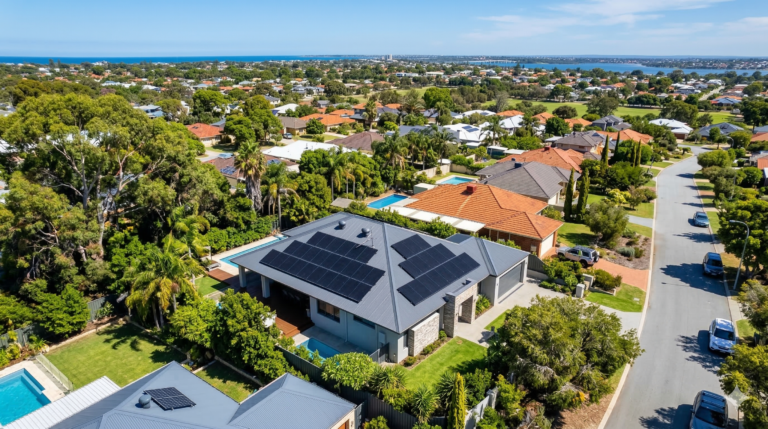
If you already have solar panels on your roof, you’re generating clean energy every day. But if you don’t have a battery, a large portion of that energy is being exported to the grid for a fraction of what you pay to buy it back at night. Adding a battery changes that equation entirely: you store the surplus during the day and draw from it after dark, reducing your reliance on grid power and cutting your electricity bills.
The good news for Perth homeowners is that the timing has never been better. The WA Residential Battery Scheme opened on 1 July 2025, offering rebates and interest-free loans that can significantly reduce upfront costs. But before you can access those incentives, your existing system needs to meet specific compatibility requirements.
This guide covers everything Perth homeowners need to know: how to assess your current system, what upgrades may be required, how the WA scheme applies to retrofit installs, and what the real numbers look like after rebates.
Key takeaway: Yes, you can add a battery to an existing solar system in most cases. Whether it’s straightforward or requires additional work depends primarily on your inverter type, switchboard condition, and the battery product you choose.
Is Your Existing Solar System Compatible?
Adding a battery to an existing solar system is not a plug-and-play exercise. Your installer will assess several factors before recommending the right upgrade pathway. The most important of these is your inverter.
The Inverter: The Single Biggest Factor
Your inverter is the control centre of your solar system. It determines whether adding a battery is a simple bolt-on or a more involved upgrade. There are two main scenarios:
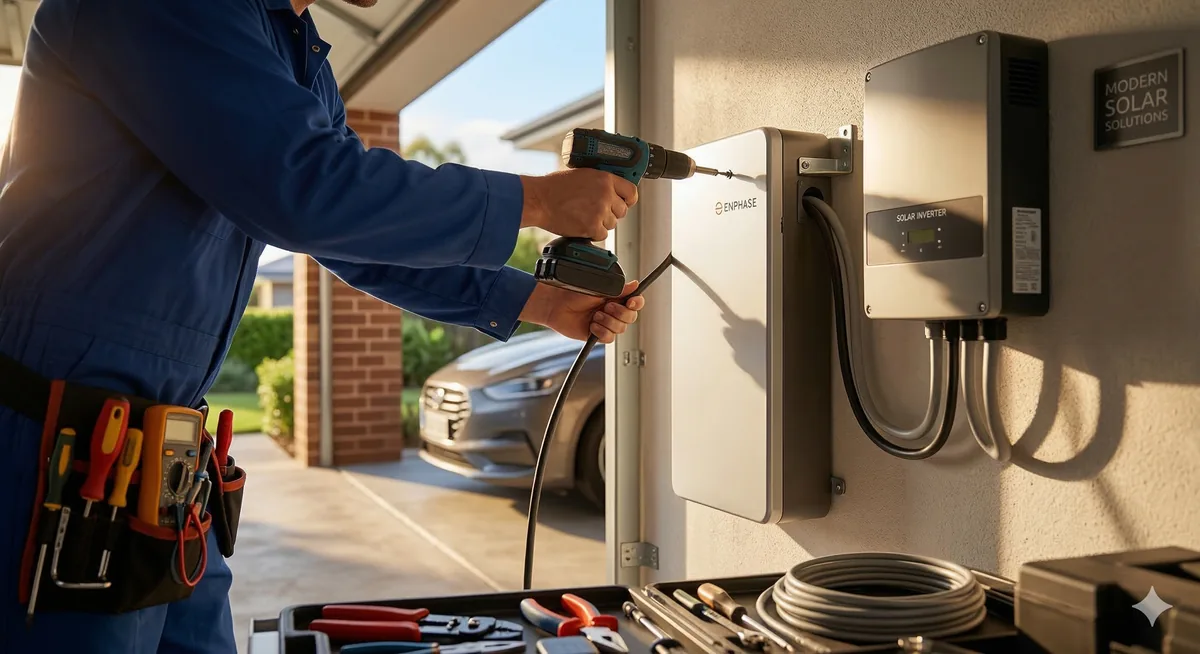
If you already have a hybrid inverter: You’re in the best position. Hybrid inverters are designed to manage both solar generation and battery storage. Adding a battery typically involves connecting compatible battery modules, configuring the system, and ensuring it meets current Australian Standards. The key caveat is that the battery must be compatible with your specific inverter brand and model.
If you have a standard solar-only inverter: This is the more common situation for homes that installed solar more than five years ago. A standard inverter cannot connect to a battery directly, but you have two options:
- AC-coupled battery: A dedicated battery inverter is added alongside your existing inverter. The battery connects on the AC side of the system. This is the most common retrofit pathway and works with almost any existing setup.
- Inverter replacement (DC-coupled): Your existing inverter is swapped out for a hybrid model. The battery connects on the DC side for higher efficiency. This is worth considering if your current inverter is ageing or undersized.
Other Compatibility Factors
Beyond the inverter, your installer will check:
- Switchboard condition: Older switchboards may need safety upgrades. Under Australian Standard AS/NZS 3000, any circuit backed up by a battery must be protected by a Type A RCBO. Homes with legacy ceramic fuses or older circuit breakers will need switchboard work before a battery can be installed.
- Rooftop isolators: If your inverter is being replaced as part of the upgrade, any existing rooftop isolators must be removed and replaced with compliant DC disconnection points. Rooftop isolators are now considered a fire risk under current standards.
- Communications compatibility: Modern batteries do far more than charge and discharge. The battery management system needs to communicate with your inverter through supported protocols. Not every battery brand is compatible with every inverter, and mismatches can affect performance, monitoring, and warranty validity.
- Available inverter capacity: Western Power limits single-phase homes to 10kVA of inverter capacity. If your existing inverter is already at or near that limit, upgrading to a larger hybrid model may not be possible without replacing the current unit.
The practical upshot: Homes that installed solar after 2018 tend to have fewer obstacles. Older systems can still be retrofitted, but the total cost of the upgrade needs to account for any additional electrical work required.
AC-Coupled vs Hybrid (DC-Coupled): Which Pathway Is Right for You?
The two main retrofit pathways suit different situations. Here’s a direct comparison to help you understand the trade-offs:
| AC-Coupled Battery | Hybrid (DC-Coupled) | |
|---|---|---|
| How it connects | Battery inverter added on the AC side | Battery connects directly to a new hybrid inverter |
| Existing inverter | Kept in place | Replaced |
| Installation complexity | Lower | Higher |
| Round-trip efficiency | Slightly lower (extra conversion step) | Higher |
| Best for | Systems under 10 years old with a functioning inverter | Ageing inverters, or systems due for an upgrade anyway |
| WA Scheme compatibility | Yes, if inverter is on Supported Solutions List | Yes, if hybrid inverter is on Supported Solutions List |
| Typical added cost | Lower upfront | Higher upfront, but often offset by inverter replacement timing |
The honest recommendation: If your existing inverter is less than eight years old and in good working order, an AC-coupled battery is usually the more cost-effective path. If your inverter is approaching the end of its 10–15 year lifespan, replacing it with a hybrid model at the same time as adding a battery makes financial sense and avoids paying twice for installation labour.
A typical Australian residential setup pairs an 8kW solar system with a 10kWh battery, which creates a good balance between daytime generation and evening storage capacity. For most Perth households, a 10kWh battery will cover the majority of evening and overnight consumption.
The WA Residential Battery Scheme: What Retrofit Customers Need to Know
The WA Residential Battery Scheme is open to homeowners adding a battery to an existing solar system, but there are specific requirements that apply to retrofit installs. Understanding these before you commit to a product or installer will save you significant headaches.
Who Is Eligible?
To access the rebate and/or interest-free loan, you must:
- Be a WA resident aged 18 or older and an Australian permanent resident
- Be a Synergy or Horizon Power customer
- Own or rent the property (with landlord consent if renting)
- Install a battery with a minimum of 5kWh usable capacity
- Use an approved scheme vendor (your installer submits the application on your behalf)
- Connect the battery to an approved Virtual Power Plant (VPP) for a minimum of two years
- Install on or after 1 July 2025 (batteries installed before this date are not eligible, with no retrospective applications)
How Much Is the Rebate?
The WA scheme pays a fixed rate per kWh of usable capacity, capped at 10kWh. When stacked with the federal Cheaper Home Batteries Program, the combined rebate is substantial:
| Network | WA Rebate (up to 10kWh) | Combined with Federal Rebate |
|---|---|---|
| Synergy (Perth metro) | Up to $1,300 ($130/kWh) | Up to $5,000 |
| Horizon Power (regional WA) | Up to $3,800 ($380/kWh) | Up to $7,500 |
The rebate is applied as an upfront discount at the point of installation by your approved vendor. You do not apply to the government directly.
Interest-free loans of up to $10,000 are also available for households with a combined gross income under $210,000, with repayment terms of 3 to 10 years and no early repayment fees. Importantly, the loan can cover not just the battery but also inverter upgrades and new solar panels if they are installed at the same time as the battery.
The Retrofit Catch: Inverter Requirements
This is the detail most articles gloss over. The WA Government’s own guidance explicitly states that adding a battery to an existing solar system may require additional technologies or a reconfiguration of your system.
Specifically:
- The inverter must appear on either Synergy’s or Horizon Power’s Supported Solutions List, depending on your location. If your existing inverter is not on the list, it cannot be used for a scheme-eligible installation.
- Battery modules must be on the Clean Energy Council (CEC) Approved Battery List.
- The system must meet Western Power or Horizon Power compliance and safety standards.
In practice, this means many homeowners with older standard inverters will need to replace their inverter with a scheme-approved hybrid model to access the rebate. The good news: the interest-free loan can cover that inverter upgrade cost, making the overall package more accessible.
Important: There are only 100,000 rebates available statewide. As of late 2025, the scheme is expected to remain open until around 2027 or until allocations are exhausted. Demand is high and approvals are processed on a first-come, first-served basis through approved vendors.
Real Cost Scenarios: What Does a Retrofit Battery Install Actually Cost in Perth?
The final cost of adding a battery to your existing system depends on your starting point. Here are three realistic scenarios for Perth homeowners, factoring in scheme rebates.
Scenario 1: Compatible Hybrid Inverter Already Installed
You installed a hybrid inverter within the last five years and simply need to add battery modules. The inverter is already on Synergy’s Supported Solutions List.
| Item | Estimated Cost |
|---|---|
| 10kWh battery (supply and install) | $8,000 – $10,000 |
| WA + Federal rebate | -$5,000 |
| Net cost | $3,000 – $5,000 |
This is the cleanest scenario and the fastest pathway to scheme approval.
Scenario 2: Standard Inverter, AC-Coupled Battery Added
Your existing inverter is in good condition but is a solar-only model. An AC-coupled battery with its own battery inverter is added alongside it. Both the battery inverter and battery modules must be on the approved lists.
| Item | Estimated Cost |
|---|---|
| 10kWh AC-coupled battery system (supply and install) | $9,000 – $12,000 |
| Minor switchboard upgrades (if required) | $500 – $1,500 |
| WA + Federal rebate | -$5,000 |
| Net cost | $4,500 – $8,500 |
Scenario 3: Older System Requiring Inverter Replacement
Your existing inverter is more than 10 years old, not on the Supported Solutions List, or undersized. A new hybrid inverter is installed alongside the battery. This is the most involved pathway but also the most comprehensive upgrade.
| Item | Estimated Cost |
|---|---|
| Hybrid inverter replacement | $2,000 – $3,500 |
| 10kWh battery (supply and install) | $7,000 – $9,000 |
| Switchboard and compliance upgrades | $1,000 – $2,500 |
| WA + Federal rebate | -$5,000 |
| Net cost | $5,000 – $10,000 |
Note on the interest-free loan: In Scenario 3, a household eligible for the scheme loan could borrow up to $10,000 at 0% interest over up to 10 years. The inverter replacement and switchboard work are covered under the loan if installed at the same time as the battery. That brings the out-of-pocket cost at installation to potentially zero for eligible households, with repayments spread over a decade.
These figures are indicative. Actual costs depend on the specific battery product, inverter brand, site conditions, and any additional electrical work identified during a pre-installation assessment. Always get a site-specific quote from an approved scheme vendor before making a decision.
How to Apply for the WA Battery Rebate as an Existing Solar Customer
The application process is straightforward, but there is one thing worth understanding upfront: you do not apply directly to the government. Your approved vendor handles the application on your behalf. Here is how the process works for retrofit customers:
- Confirm your eligibility. Check that you are a Synergy or Horizon Power customer, that your property meets the scheme requirements, and that you are comfortable with the VPP participation requirement.
- Get quotes from approved scheme vendors. Only vendors accredited by Plenti (the scheme administrator) can submit applications. Ask any installer you contact whether they are an approved vendor before proceeding.
- Request a site assessment. For retrofit installs, a pre-installation assessment is essential. This is where your installer will identify whether your inverter is on the Supported Solutions List, whether switchboard upgrades are needed, and which battery products are compatible with your system.
- Choose your battery and inverter (if applicable). Your vendor will confirm which products are eligible under the scheme and appropriate for your home.
- Your vendor submits the application. Once you have agreed on the system, your installer lodges the application through Plenti. If you are also applying for the interest-free loan, Plenti will contact you directly for a credit check.
- Installation and VPP enrolment. After approval, your system is installed and enrolled in an approved VPP. The rebate is applied as an upfront discount at the point of installation.
- Loan repayments begin after installation (if applicable), with flexible terms and no early repayment fees.
One timing note: Loan approvals require installation to be completed within six months. If you delay, the application may need to be resubmitted.
Frequently Asked Questions
Can I add a battery to my existing solar system in Perth?
Yes. Most existing solar systems in Perth can have a battery added, either via an AC-coupled battery (which works alongside your existing inverter) or by replacing your inverter with a hybrid model. The best pathway depends on your inverter type, age, and condition. A site assessment from an approved installer will confirm which option suits your system.
Do I need to replace my inverter to add a battery?
Not necessarily. If your existing inverter is a hybrid model, you can likely add compatible battery modules directly. If you have a standard solar-only inverter, an AC-coupled battery can be added alongside it without replacement. Inverter replacement is only needed if your current unit is ageing, undersized, or not on the WA Battery Scheme’s Supported Solutions List.
Does the WA Battery Scheme apply to retrofit battery installations?
Yes. The WA Residential Battery Scheme is open to homeowners adding a battery to an existing solar system, provided the battery has at least 5kWh usable capacity, the inverter is on the Supported Solutions List, and the installation is completed by an approved scheme vendor. The interest-free loan can also cover inverter upgrades and switchboard work done at the same time.
How much does it cost to add a 10kWh battery to existing solar in Perth?
After WA and federal rebates of up to $5,000 (Synergy customers), the net cost ranges from $3,000 to $10,000 depending on whether you need inverter replacement and switchboard upgrades. The simplest scenario (compatible hybrid inverter already installed) nets out at $3,000 to $5,000. The most involved scenario (inverter replacement plus compliance work) nets out at $5,000 to $10,000.
What is the difference between AC-coupled and DC-coupled batteries?
AC-coupled batteries connect on the AC side of your system via a separate battery inverter, keeping your existing solar inverter in place. DC-coupled batteries connect directly to a hybrid inverter on the DC side, offering slightly higher efficiency. AC-coupled is simpler and cheaper for retrofits; DC-coupled is more efficient and better suited to new installations or systems where the inverter is being replaced.
Is Now the Right Time to Add a Battery?
For most Perth homeowners with an existing solar system, the answer is yes, and the window to act is time-limited. Here is the honest case for moving sooner rather than later:
- 100,000 rebates available statewide. Once they are gone, they are gone. The scheme is expected to run until around 2027 but could close earlier if demand is high.
- Stacked rebates are genuinely significant. A Synergy customer installing a 10kWh battery can access up to $5,000 in combined state and federal rebates. A Horizon Power customer in regional WA can access up to $7,500.
- Perth electricity prices make batteries increasingly viable. Exporting surplus solar to the grid returns a fraction of what you pay to buy power back. Every unit of solar energy you store and use yourself is worth substantially more than what Synergy pays for it.
- The interest-free loan removes the upfront barrier. For households under the income threshold, borrowing up to $10,000 at 0% interest over 10 years means the monthly repayment is approximately $83. For many households, the bill savings from the battery will exceed that repayment from day one.
The main reason to wait would be if your system needs significant upgrades that make the economics less compelling. That is exactly what a proper site assessment will tell you, and it costs nothing to find out.
Talk Energy is an approved WA Battery Scheme vendor with in-house electricians and a 20-year workmanship warranty. If you have an existing solar system and want to know what a battery retrofit would cost and whether your system qualifies for the scheme, get in touch for a free compatibility assessment.
Talk Energy: Perth’s most trusted solar and battery installer, with 250+ five-star reviews and a 20-year workmanship warranty.