How Much Does a Solar and Battery System Cost in Perth in 2026?
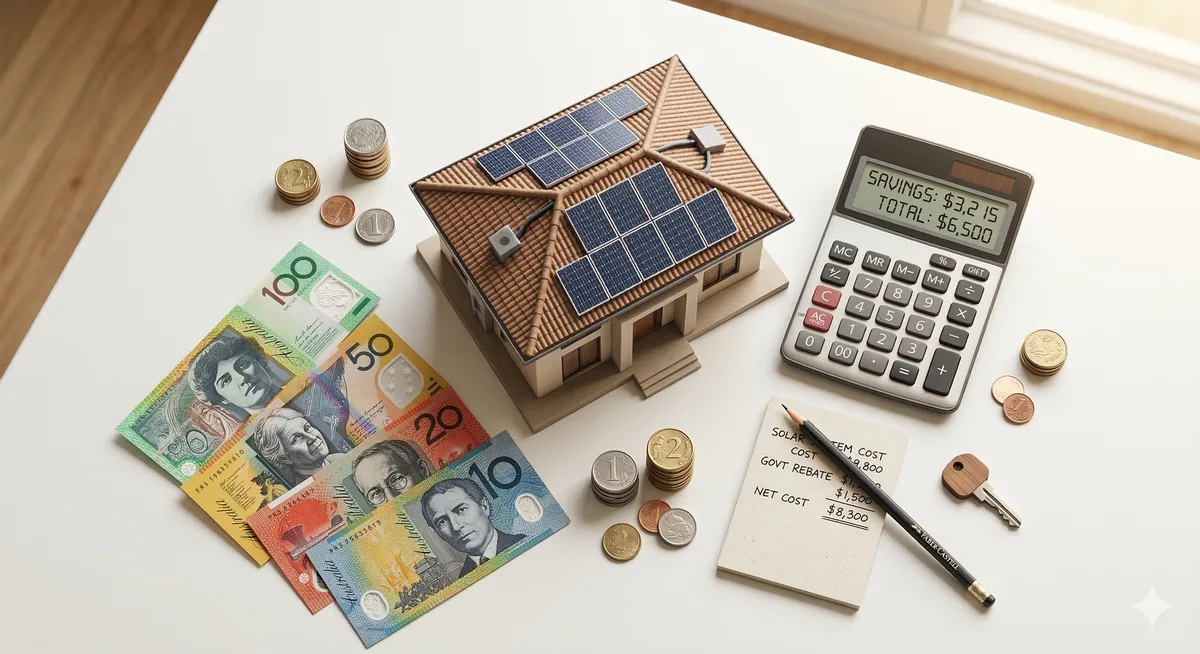
Perth homeowners are paying between $4,200 and $13,000 for a solar system in 2026, depending on size, equipment quality, and installer. Add a battery and that range shifts upward, but so does the rebate stack available to WA residents. Between federal Small-scale Technology Certificates (STCs), the WA Residential Battery Scheme, and the federal Cheaper Home Batteries Program, the gap between sticker price and what you actually pay has never been wider.
This guide breaks down the real numbers: what a 6.6kW, 10kW, and 13kW system costs before and after rebates, how batteries change the equation, what payback periods look like in Perth’s climate, and how to get a system installed for $0 upfront.
Key Takeaways
- A 6.6kW solar system costs $4,200–$6,800 after STCs; a 10kW costs $6,500–$10,000
- A 10kWh battery paired with solar attracts up to $5,000 in combined rebates (Synergy customers)
- Payback periods in Perth sit at 3–5 years, among the shortest in Australia
- $0 upfront installations are available through WA’s no-interest loan scheme (up to $10,000)
- Prices are expected to rise modestly in 2026 due to global supply pressures — early movers benefit
Solar System Prices in Perth 2026: The Three Most Popular Sizes
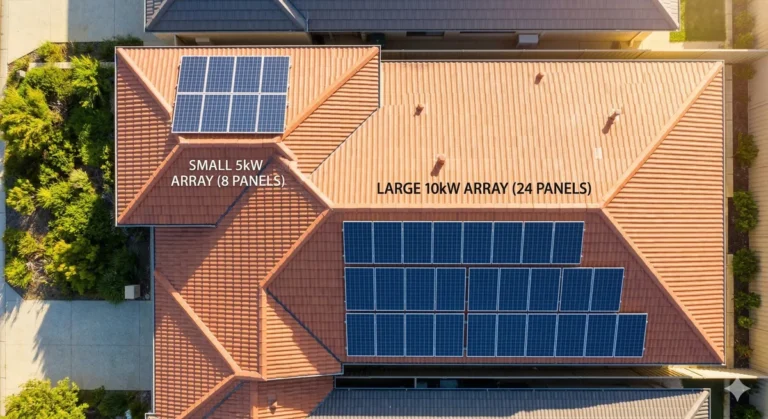
The three system sizes that dominate Perth residential installations are the 6.6kW, 10kW, and 13kW. Each suits a different household profile. Here is what each costs in 2026, both before and after the federal STC rebate is applied.
6.6kW Solar System
The 6.6kW system is Perth’s entry-level workhorse. It suits households with 2–4 people, moderate daytime energy use, and a single-phase connection. A quality 6.6kW system typically uses 16–18 panels and a 5kW inverter.
| Low End | Mid Range | High End | |
|---|---|---|---|
| Before STC rebate | ~$6,000 | ~$7,500 | ~$9,000 |
| STC rebate (approx.) | ~$1,700 | ~$2,000 | ~$2,500 |
| After STC rebate | $4,200 | $5,400 | $6,800 |
| Average daily output | 28–30.5 kWh | 28–30.5 kWh | 28–30.5 kWh |
Perth’s irradiance levels mean a 6.6kW system generates approximately 28–30.5 kWh per day, making it one of the highest-performing system sizes relative to its cost across all Australian capital cities.
10kW Solar System
The 10kW system suits larger households, home offices, or anyone running energy-hungry appliances like ducted air conditioning or a pool pump. It requires a three-phase connection or a specific inverter configuration for single-phase properties.
| Low End | Mid Range | High End | |
|---|---|---|---|
| Before STC rebate | ~$9,000 | ~$11,000 | ~$14,000 |
| STC rebate (approx.) | ~$2,500 | ~$3,000 | ~$3,500 |
| After STC rebate | $6,500 | $8,000 | $10,000 |
The real cost of a 10kW system sits around $8,000–$9,500 for most Perth homeowners choosing mid-tier panels and a reputable inverter brand. Opting for premium equipment (Tier 1 panels, a Fronius or SMA inverter) pushes the price toward the top of the range but typically adds 5–10 years to the warranty coverage.
13kW Solar System
The 13kW (or 13.3kW) system is for high-consumption households, those planning to add an EV charger, or homeowners who want to maximise export revenue. It is increasingly popular as battery storage becomes standard.
| Low End | Mid Range | High End | |
|---|---|---|---|
| Before STC rebate | ~$11,000 | ~$14,000 | ~$17,000 |
| STC rebate (approx.) | ~$3,500 | ~$4,000 | ~$4,500 |
| After STC rebate | $8,500 | $10,000 | $13,000 |
At this system size, the STC rebate is doing serious heavy lifting. A $4,000 federal discount on a $14,000 system is a 28% reduction before you factor in any battery incentives.
What Drives the Price Difference?
Within each size tier, the spread of $2,000–$4,000 comes down to four variables:
- Panel brand and efficiency — Tier 1 manufacturers (such as Jinko, LONGi, or REC) command a premium but carry stronger performance warranties
- Inverter brand — string inverters from Fronius, SMA, or Sungrow cost more than budget alternatives but are better supported in WA
- Installer quality — CEC-accredited installers with in-house electricians typically charge more but reduce the risk of compliance issues and warranty voids
- System complexity — steep roofs, metal roofing, or split arrays across multiple orientations add labour cost
How Much Does Adding a Battery Cost in Perth?
A battery changes the financial picture significantly, both in terms of upfront cost and in terms of what you can claim back. Perth homeowners adding a battery to a new or existing solar system in 2026 are looking at the following installed costs before rebates:
| Battery Size | Typical Installed Cost (Before Rebates) |
|---|---|
| 5–7 kWh | $8,000–$11,000 |
| 10–13 kWh | $12,000–$16,000 |
These figures include the battery unit, compatible hybrid inverter (if required), installation labour, and grid connection fees.
The WA Residential Battery Scheme: What You Can Claim
The WA Residential Battery Scheme launched on 1 July 2025 and is now open to applications. It stacks on top of the federal Cheaper Home Batteries Program, meaning eligible Perth homeowners can access two layers of rebate simultaneously.
State rebate amounts (per kWh of usable capacity, capped at 10 kWh):
- Synergy customers: $130/kWh, up to $1,300
- Horizon Power customers (regional WA): $380/kWh, up to $3,800
Combined rebate on a 10kWh battery (state + federal):
- Synergy customers: up to $5,000
- Horizon Power customers: up to $7,500
According to the WA Government’s scheme information page, a 15kWh or 30kWh battery receives over $5,000 in total combined rebate because the federal component continues to apply beyond the 10kWh state cap.
This matters for anyone considering a larger battery. The state rebate maxes out at 10kWh, but federal support keeps scaling with system size.
What Does a Battery Actually Cost After Rebates?
For a typical Synergy customer installing a 10kWh battery alongside solar:
- Installed cost before rebates: ~$12,000–$13,000
- Federal Cheaper Home Batteries rebate: ~$3,700
- WA state rebate: $1,300
- Net cost after rebates: approximately $7,000–$8,000
For Horizon Power customers in regional WA, the combined $7,500 rebate on a 10kWh system can bring the net cost under $5,000 in many cases.
VPP Participation: The Catch (and the Benefit)
To access the WA battery rebate, households must join a Virtual Power Plant (VPP) for a minimum of two years. Synergy’s VPP pays $0.70 per kWh exported from your battery during grid stress events (capped at 30 events per year). After the two-year term, you can opt out at any time.
For most households, VPP participation is a net positive. The export credits offset a portion of battery costs, and the two-year commitment is not onerous given a 10+ year battery lifespan.
To be eligible for the WA Battery Scheme, your system must:
- Have a minimum usable capacity of 5kWh
- Use a battery on the Clean Energy Council approved list
- Use an inverter on Synergy or Horizon Power’s Supported Solutions List
- Be installed by an accredited vendor registered with the scheme
- Be installed on or after 1 July 2025 (no retrospective claims)
Solar Payback Periods in Perth: What the Numbers Show
Perth is one of the best cities in Australia for solar payback, and the data backs that up. Perth homeowners are achieving payback periods of 4–5 years on solar-only systems, driven by high self-consumption rates (around 50%) and electricity rates near $0.32/kWh. Add a battery and the payback window extends, but so do the annual savings.
Solar-Only Payback Estimates
| System Size | Approx. Net Cost (After STCs) | Est. Annual Savings | Payback Period |
|---|---|---|---|
| 6.6kW | $4,200–$6,800 | ~$1,400 | 3–5 years |
| 10kW | $6,500–$10,000 | ~$1,800–$2,200 | 4–5 years |
| 13kW | $8,500–$13,000 | ~$2,200–$2,800 | 4–6 years |
Annual savings estimates assume approximately 50% self-consumption and a $0.32/kWh electricity rate. Households with higher daytime usage (working from home, running a pool, EV charging) will see faster payback.
Solar + Battery Payback Estimates
A battery adds upfront cost but significantly increases the proportion of solar energy you consume rather than export. Perth’s feed-in tariff under Synergy’s Distributed Energy Buyback Scheme (DEBS) pays $0.10/kWh during peak periods (3pm–9pm) and $0.03/kWh at other times, making self-consumption far more valuable than grid export.
For a 10kWh battery system:
- Installed cost after rebates: approximately $7,000–$8,000
- Estimated annual savings from increased self-consumption: $1,152–$1,400
- Payback period: 5–7 years
The key insight: a battery’s payback is slower than solar alone, but the combination produces a more resilient system with blackout protection and far greater insulation from future electricity price rises.
Why Perth Payback Periods Are Among Australia’s Shortest
Three factors make Perth exceptional for solar ROI:
- Solar irradiance — Perth averages more peak sun hours per day than Sydney, Melbourne, or Brisbane, meaning panels generate more energy per kilowatt of capacity installed
- Electricity prices — WA’s residential rates sit around $0.32/kWh, meaning every kWh self-consumed instead of purchased from the grid is worth more
- Rebate depth — the combination of STCs, the WA Battery Scheme, and the federal Cheaper Home Batteries Program means Perth homeowners are starting from a lower net cost than most other Australians
Financing Options: How to Get Solar for $0 Upfront
The most common barrier Perth homeowners cite when considering solar is the upfront cost. In 2026, there are two legitimate pathways to a $0 upfront installation, and they can be stacked.
Option 1: WA Residential Battery Scheme No-Interest Loan
The WA Government’s no-interest loan through Plenti is available to eligible households purchasing a battery (with or without new solar). Key terms:
- Loan amount: $2,001–$10,000
- Interest rate: 0% for the full loan term
- Repayment period: 3–10 years, with no early repayment fees
- Income threshold: Household gross income under $210,000
- Credit check: Required (standard prudential lending criteria apply)
- How to apply: Through your accredited installer — they submit the application on your behalf via Plenti
The loan can cover the battery, a new inverter, and solar panels if installed as part of the same project. This means a full solar and battery system can be financed entirely through this scheme if the total falls within the $10,000 cap.
Option 2: Installer Finance (0% Interest Plans)
Many CEC-accredited Perth installers offer their own 0% interest payment plans through financing partners. These typically allow repayments to be structured so that monthly savings on electricity bills exceed monthly repayments from day one, making the system cashflow-positive immediately.
A rough example for a 6.6kW system:
- Net system cost after STCs: $5,400
- Financed over 5 years at 0% interest: ~$90/month
- Estimated monthly electricity bill reduction: ~$115–$130
- Net monthly benefit from day one: $25–$40
Stacking Both Options
The WA no-interest loan and installer finance are separate mechanisms. For a solar-plus-battery project, a household could use the $10,000 government loan to cover the battery component and use the STC rebate to reduce the solar cost, potentially achieving a full system with minimal or zero upfront outlay.
Important: The combined value of the rebate and loan cannot exceed the total purchase and installation cost. Your installer will confirm the exact figures when structuring the finance.
Which Option Is Right for You?
| WA No-Interest Loan | Installer Finance | |
|---|---|---|
| Interest rate | 0% | 0% (promotional) |
| Maximum amount | $10,000 | Varies by installer |
| Income test | Yes (under $210,000) | No |
| Credit check | Yes (via Plenti) | Typically yes |
| Battery required | Yes | No |
| Application process | Via accredited installer | Via installer |
Will Solar Prices Rise in 2026?
The short answer is yes, modestly. Two supply-side pressures are pushing solar system prices upward in 2026.
Silver prices have increased significantly, and solar panels are major consumers of silver for their electrical contacts. Higher silver costs flow through to panel manufacturing costs, which eventually reach the retail price.
China’s VAT export policy changes are also affecting panel pricing. China produces the majority of the world’s solar panels, and adjustments to export tax rebates have added cost pressure across the global supply chain.
The net effect for Perth homeowners is a projected price increase of $100–$200 per system compared to late 2025 pricing. That is not dramatic, but it does mean that delaying a purchase to “wait for prices to fall further” is likely counterproductive in 2026.
There is a second timing consideration: STC values decline each year as Australia’s renewable energy targets are progressively met. The rebate available today is higher than what will be available in 2027 and beyond. For a 10kW system, a one-year delay could reduce the STC rebate by several hundred dollars.
The bottom line on timing: 2026 is a genuinely good year to install. Rebate stacking is at its peak, no-interest finance is available, and panel quality is at an all-time high. Waiting is unlikely to improve the financial case.
What to Look for in a Perth Solar Installer
Price is important, but it is not the only number that matters. A solar system is a 25-year asset. The quality of the installation and the aftercare support you receive will affect performance and savings for decades.
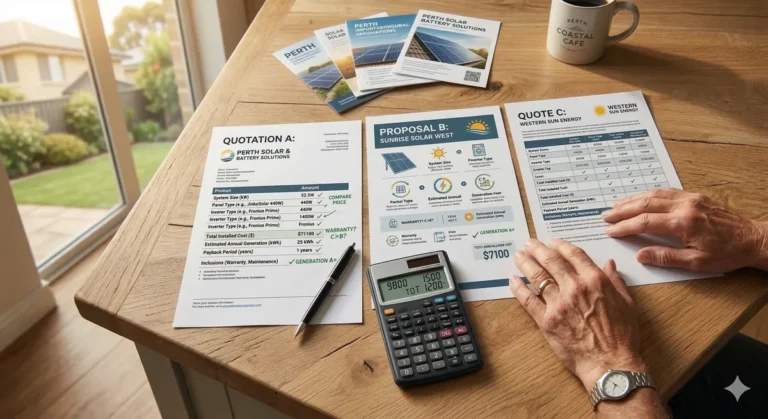
When comparing quotes, look for these non-negotiable credentials:
- CEC accreditation — the installer must be accredited by the Clean Energy Council to legally install solar in Australia and for STCs to apply
- In-house electricians — installers who subcontract electrical work introduce accountability gaps; in-house teams are accountable for the full job
- Workmanship warranty — a meaningful warranty covers the installation itself, not just the equipment. Industry standard is 5–10 years; the best Perth installers offer up to 20 years
- WA Battery Scheme accreditation — if you want to access the state rebate and no-interest loan, your installer must be registered with the scheme
- Local presence — a Perth-based company with a physical address is far easier to hold accountable than an interstate operator or a franchise model
Questions worth asking any installer:
- Who physically installs the system — your own employees or subcontractors?
- What does your workmanship warranty cover and for how long?
- Are you registered as an approved vendor under the WA Residential Battery Scheme?
- What monitoring system do you install, and what does aftercare support look like?
- Can you provide references from recent installations in my suburb?
The cheapest quote is rarely the best value. A $500 saving upfront can cost thousands in rectification work if the installation is substandard or the installer is uncontactable when something goes wrong.
Frequently Asked Questions
How much does a 6.6kW solar system cost in Perth in 2026?
A 6.6kW solar system in Perth costs between $4,200 and $6,800 after the federal STC rebate is applied. The exact price depends on panel brand, inverter quality, and installer. Mid-range systems from reputable installers typically sit around $5,400. The system generates approximately 28–30.5 kWh per day in Perth’s climate.
How much can I save with a solar battery in Perth?
A 10kWh battery paired with solar saves Perth homeowners approximately $1,152–$1,400 per year through increased self-consumption. Combined state and federal rebates reduce the upfront cost by up to $5,000 for Synergy customers. Additional Synergy Battery Rewards credits of up to $210 per year further improve the return. The typical payback period is 5–7 years.
Can I get solar installed for $0 upfront in Perth?
Yes. The WA Residential Battery Scheme offers a no-interest loan of up to $10,000 through Plenti for eligible households (income under $210,000). Combined with the STC rebate on solar panels and the battery rebate, many Perth homeowners can achieve a full solar and battery installation with zero upfront cost. Repayments are typically less than the electricity bill savings from day one.
What is the payback period for solar panels in Perth?
Solar-only systems in Perth achieve payback periods of 3–5 years, among the shortest in Australia. This is driven by Perth’s high solar irradiance, electricity rates around $0.32/kWh, and generous STC rebates. Adding a battery extends the payback to 5–7 years but provides blackout protection and greater insulation from future electricity price rises.
Will solar panel prices go down in 2026?
No. Solar system prices are expected to rise modestly in 2026 due to increased silver prices and China’s VAT export policy changes, adding approximately $100–$200 per system. Additionally, STC rebate values decline each year, meaning the total cost after rebates will be higher in 2027 than in 2026. Waiting is unlikely to improve the financial case.
Get an Accurate Quote for Your Home
Every home is different. Roof orientation, shading, household consumption patterns, and grid connection type all affect which system size delivers the best return for your specific situation. The price ranges in this guide are a reliable starting point, but the only way to know your exact cost and payback period is with a site-specific assessment.
Talk Energy is a Perth-based solar and battery retailer with in-house electricians, a 20-year workmanship warranty, and approved vendor status under the WA Residential Battery Scheme. With 250+ five-star reviews across metro and regional WA, the team can walk you through system sizing, rebate eligibility, and financing options in a single conversation.
Get a free quote from Talk Energy and find out what a solar and battery system will cost for your home, with all rebates applied.
Talk Energy: Perth’s most trusted solar and battery installer, with 250+ five-star reviews and a 20-year workmanship warranty.