Solar Installation in Regional Western Australia: What’s Different and What Rebates Apply
If you live in regional Western Australia and you’re thinking about solar, the conversation is different from what your Perth friends are having. The rebates are higher, the network rules are stricter, and the installer you choose needs to understand Horizon Power’s requirements — not just Western Power’s. Get those things right and a 10 kWh solar and battery system in regional WA can attract up to $9,900 in combined federal and state incentives in 2026. Get them wrong and you could miss the rebate entirely.
This guide covers everything regional WA homeowners need to know before committing to a system: the Horizon Power service area, the $3,800 state battery rebate, Smart Connect Solar requirements, off-grid considerations, and what to look for in an installer.
Key Facts at a Glance
- Horizon Power customers qualify for up to $3,800 under the WA Residential Battery Scheme — nearly three times the $1,300 available to Synergy (metro) customers
- Regional WA sits in STC Zone 2 for federal solar rebates, which typically generates slightly higher STC values than Perth’s Zone 3
- All new solar and battery connections in Horizon Power areas must join Community Wave, the mandatory VPP program
- Written approval from Horizon Power is required before any installation can proceed
Who Is Horizon Power and Where Do They Operate?
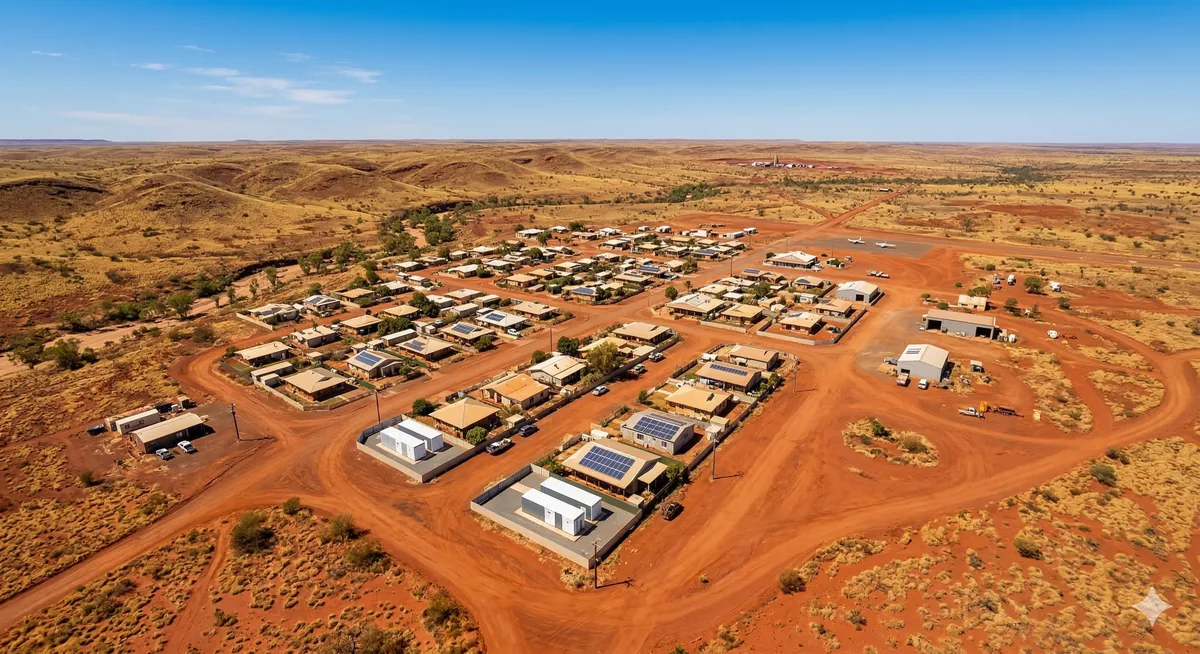
Horizon Power is Western Australia’s regional and remote energy provider, responsible for delivering electricity to communities outside the South West Interconnected System (SWIS) that serves Perth and the state’s south-west. The network spans 2.3 million square kilometres and serves over 51,000 connection points via 56,081 distribution poles.
If your property is connected to Horizon Power rather than Synergy, you are in a regional WA service area. This distinction matters enormously for solar installation because Horizon Power operates a series of independent micro-grids rather than a single interconnected network. Maintaining stability across 38 unique energy systems is a fundamentally different engineering challenge from managing the SWIS.
Standard vs Non-Standard Networks
Horizon Power classifies its networks into two categories, and the category your town falls into affects the technical assessment process for your solar system.
| Network Type | Towns Included | Assessment Process |
|---|---|---|
| Standard networks | Karratha, Roebourne, Port Hedland, South Hedland, Cossack, Point Samson (NWIS) | Basic EG Connection process |
| Non-standard networks | All other towns in Horizon Power’s service area | More detailed assessment required |
For systems greater than 5 kW, Horizon Power charges fees to conduct technical assessments. These fees exist to ensure that connecting your system does not destabilise the local micro-grid — a real concern in smaller towns where a single large solar installation can represent a significant proportion of local generation capacity.
Important: No installation can proceed until Horizon Power provides written approval. This is not a formality — it is a hard requirement, and any installer who skips this step is not compliant with Horizon Power’s technical requirements.
The $3,800 Regional Battery Rebate: What You’re Actually Entitled To
The single biggest financial advantage of being a Horizon Power customer is the state battery rebate. Under the WA Residential Battery Scheme, launched on 1 July 2025, Horizon Power customers can claim $380 per usable kWh of battery capacity, up to a maximum of $3,800 for a 10 kWh system. That is nearly three times the $1,300 cap available to Synergy customers in metro and south-west WA.
This rebate is stackable with the federal Cheaper Home Batteries Program, which currently provides approximately $311 per usable kWh (for installations before 1 May 2026). The combined picture for a Horizon Power customer with a 10 kWh battery:
| Incentive | Amount |
|---|---|
| Federal Cheaper Home Batteries Program | ~$3,110 |
| WA Residential Battery Scheme (Horizon Power) | $3,800 |
| Federal STC solar rebate (Zone 2) | ~$2,800 for a 6.6 kW system |
| Total combined savings | Up to $9,900 |
For comparison, a Synergy customer in Perth accessing the same federal rebate plus the state rebate reaches roughly $4,300 to $5,000 in total battery savings. The regional premium is real and substantial.
Eligibility Requirements
Not every regional WA household qualifies automatically. The WA Government’s scheme criteria require:
- WA resident aged 18 or older, and an Australian permanent resident
- Must be a current Horizon Power customer
- Battery must be a new system with usable capacity between 5 kWh and 10 kWh
- Battery must appear on the Clean Energy Council approved product list
- Inverter must be on Horizon Power’s Supported Solutions List
- Mandatory participation in Horizon Power’s Community Wave VPP program
- Installation must be completed by an accredited vendor registered with Plenti (the scheme administrator)
One critical point: batteries installed before 1 July 2025 are not eligible for either the rebate or the no-interest loan. Only new installations from that date qualify.
The No-Interest Loan
Eligible households with income under $210,000 can also access a no-interest loan of up to $10,000 to cover the remaining cost after rebates. For a qualifying household, this means the upfront cash required for a battery installation could theoretically be close to zero once rebates and the loan are applied.
Smart Connect Solar: The Technical Requirement Most Articles Skip
Since 2024, every new solar or battery connection in a Horizon Power service area must use Smart Connect Solar. This is not optional and it changes what your installation looks like compared to a standard Perth installation.
Smart Connect Solar works by pairing your system with a Horizon Power-supplied Secure Gateway Device (SGD), an internet-connected unit that links your inverter to Horizon Power’s Distributed Energy Resource Management System (DERMS). The DERMS analyses weather patterns and real-time grid conditions across Horizon Power’s micro-grids. When excess solar generation threatens network stability, Horizon Power can remotely reduce your system’s output.
From 1 July 2025, all new connections must also sign Horizon Power’s Community Wave terms and conditions. Community Wave is Horizon Power’s Virtual Power Plant (VPP) program, and participation is mandatory for any household wanting to access the WA Residential Battery Scheme rebate.
What This Means Practically
- Only select inverter makes and models are initially compatible with the SGD. Your installer must confirm compatibility before purchase.
- Installers must complete Horizon Power’s Solar Accreditation Australia micro-accreditation (CPD113) to install Smart Connect Solar.
- All inverters must be configured with Australia Region C settings in accordance with AS4777.2:2020, with the over-frequency reconnect setting manually updated to 50.5 Hz.
- If you are adding a battery to an existing solar system, you will need a compatible Smart Connect Solar inverter. This may require replacing your existing inverter if it is not on the compatible list.
The bottom line: a solar installer who primarily works in Perth and has not completed Horizon Power’s accreditation requirements cannot legally or compliantly install a system in a regional WA town. This is one of the most important questions to ask any installer before signing a contract.
Off-Grid and Remote Installations: A Different Conversation Again
Some properties in regional WA sit beyond Horizon Power’s grid entirely. For these homeowners, the question is not which rebate to claim or which VPP to join — it is how to design a system that works reliably in isolation, often in harsh environmental conditions.
Off-grid solar and battery systems in regional and remote WA face challenges that simply do not apply in the metro area:
- Cyclone ratings: Installations across much of northern and north-western WA are required to be rated to Category C cyclone standards. This affects both the mounting system and the structural integrity of the installation.
- Heat and dust: Ambient temperatures in the Pilbara, Kimberley, and Goldfields regularly exceed 40°C. Inverters and batteries have operating temperature ranges, and systems must be designed with adequate ventilation and shading.
- System sizing: Without grid backup, battery capacity needs to be sized to cover several days of consumption during extended cloudy periods. Under-sizing is a common and costly mistake.
- Fuel savings: For properties currently running diesel generators, the economics of solar and battery can be compelling. Regional WA electricity costs are among the highest in the country.
Does the $3,800 Rebate Apply Off-Grid?
No. The WA Residential Battery Scheme requires the property to be a current Horizon Power customer connected to the grid. Off-grid properties are not eligible for the state battery rebate or the no-interest loan, as both require grid connection and VPP participation.
Federal STC rebates do still apply to eligible off-grid solar installations, so the federal incentive remains available regardless of grid connection status.
Choosing the Right Battery System for Regional WA
Not every battery system on the market is eligible for the WA Residential Battery Scheme, and not every eligible battery is suitable for the conditions found in regional WA. There are two filters to apply: scheme compliance and environmental suitability.
Scheme Compliance
To qualify for the $3,800 rebate, a battery must:
- Appear on the Clean Energy Council approved product list
- Be paired with an inverter on Horizon Power’s Supported Solutions List
- Have a usable capacity between 5 kWh and 10 kWh (the rebate caps at 10 kWh, though larger batteries can still access the federal rebate for capacity above 10 kWh)
Hybrid inverters are the most efficient option when adding a battery to an existing solar system. If your existing inverter is not hybrid-capable, you can still add a battery via an AC-coupled system with a compatible gateway device, though this adds cost and complexity.
Environmental Suitability
For regional WA conditions, the key specifications to check:
| Specification | Why It Matters in Regional WA |
|---|---|
| Operating temperature range | Batteries with a narrow range (e.g. 0–40°C) may throttle or shut down during extreme heat |
| Ingress Protection (IP) rating | Dust is a significant issue; IP55 or higher is preferable for outdoor installations |
| Warranty terms for regional locations | Some manufacturers restrict warranties for installations outside metro areas |
| Cycle life at high temperatures | Heat accelerates battery degradation; check manufacturer specs at 35–45°C |
Ask your installer specifically: does this battery’s warranty apply to my location? Some manufacturers’ warranty terms include geographic restrictions or require installations to remain within specified temperature ranges. An installer who cannot answer this question clearly is not the right installer for a regional property.
Talk Energy’s Regional Coverage and Warranty
Talk Energy installs solar and battery systems across both metro Perth and regional Western Australia. Talk Energy’s 20-year workmanship warranty covers installations regardless of location within WA. The warranty reflects the quality of installation rather than where the property sits on a map.
Regional installations involve additional logistical coordination, including Horizon Power pre-approval, Smart Connect Solar commissioning, and Community Wave VPP enrolment. Talk Energy’s in-house electricians handle this process, including the technical documentation required by Horizon Power before any work can begin.
What to Expect From the Regional Installation Process
- Site assessment and system design tailored to Horizon Power’s network category (standard or non-standard) and local conditions
- Horizon Power application and written approval — this must be obtained before installation commences
- Equipment selection from Horizon Power’s Supported Solutions List for both inverter and battery
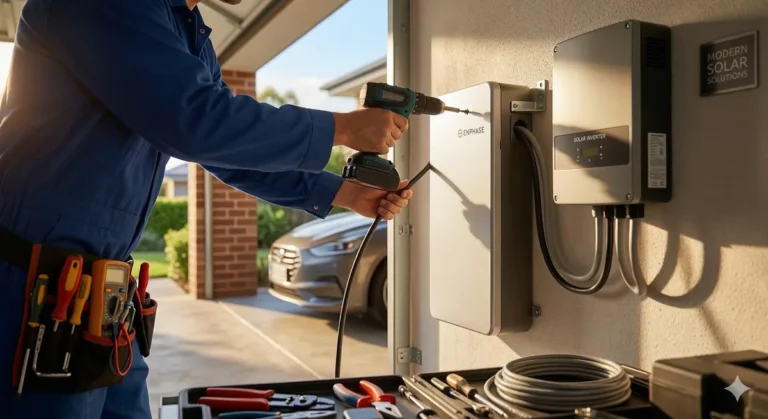
- Installation and SGD commissioning by a Smart Connect Solar-accredited installer
- Community Wave VPP enrolment — mandatory for all new connections and required for rebate eligibility
- Rebate processing through Plenti, the WA Government’s appointed scheme administrator
The rebate is claimed by your approved vendor on your behalf. You do not apply directly to the government. This makes choosing an accredited installer the most important single decision in the process.
Frequently Asked Questions
How do I know if I’m a Horizon Power customer?
If you live outside Perth and the south-west interconnected system, you are almost certainly a Horizon Power customer. Your electricity bill will show Horizon Power as your retailer. Towns including Karratha, Port Hedland, Broome, Kununurra, Carnarvon, Geraldton, Esperance, and many smaller communities are all in the Horizon Power service area.
Can I get the $3,800 rebate if I already have solar?
Yes, provided you are installing a new battery system that meets the scheme requirements. The battery must have a usable capacity between 5 kWh and 10 kWh, be on the CEC approved list, and be installed by an accredited vendor. If your existing solar inverter is not on Horizon Power’s Supported Solutions List, you may need to upgrade it as part of the battery installation.
Does the federal battery rebate reduce after May 2026?
Yes. The federal Cheaper Home Batteries Program currently provides approximately $311 per usable kWh (January to April 2026). From 1 May 2026, this drops to $252 per kWh and will continue to reduce every six months until the program ends in 2030. Installing before 1 May 2026 captures the higher rate, though the WA state rebate of $3,800 for Horizon Power customers remains unchanged.
What is Community Wave and do I have to join?
Community Wave is Horizon Power’s Virtual Power Plant (VPP) program. Joining is mandatory for all new solar and battery connections in Horizon Power areas from 1 July 2025, and is a condition of accessing the WA Residential Battery Scheme rebate. In practice, it means Horizon Power can remotely manage your system’s output during periods of network stress. Participants receive financial benefits including improved buyback rates during peak periods.
Does Talk Energy’s 20-year workmanship warranty cover regional WA?
Yes. Talk Energy’s 20-year workmanship warranty applies to all installations across WA, including regional locations. The warranty covers the quality and integrity of the installation itself, separate from the manufacturer warranties on individual components (panels, inverters, batteries).
Get a Regional WA Solar Quote
For regional WA homeowners ready to explore a system, Talk Energy provides obligation-free quotes that account for Horizon Power’s specific requirements, local conditions, and the full rebate picture.
Contact Talk Energy for a free regional solar assessment
Talk Energy: Perth’s most trusted solar and battery installer, with 250+ five-star reviews and a 20-year workmanship warranty. Serving metro and regional WA.