How Long Does It Take to Pay Off Solar in Perth? (With Battery Payback Calculator)
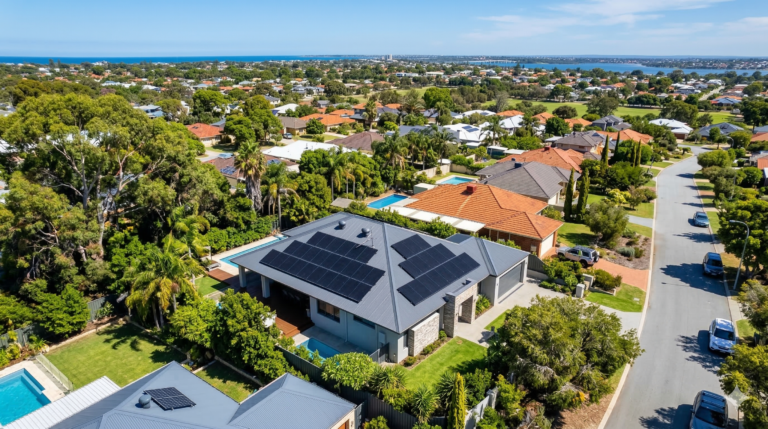
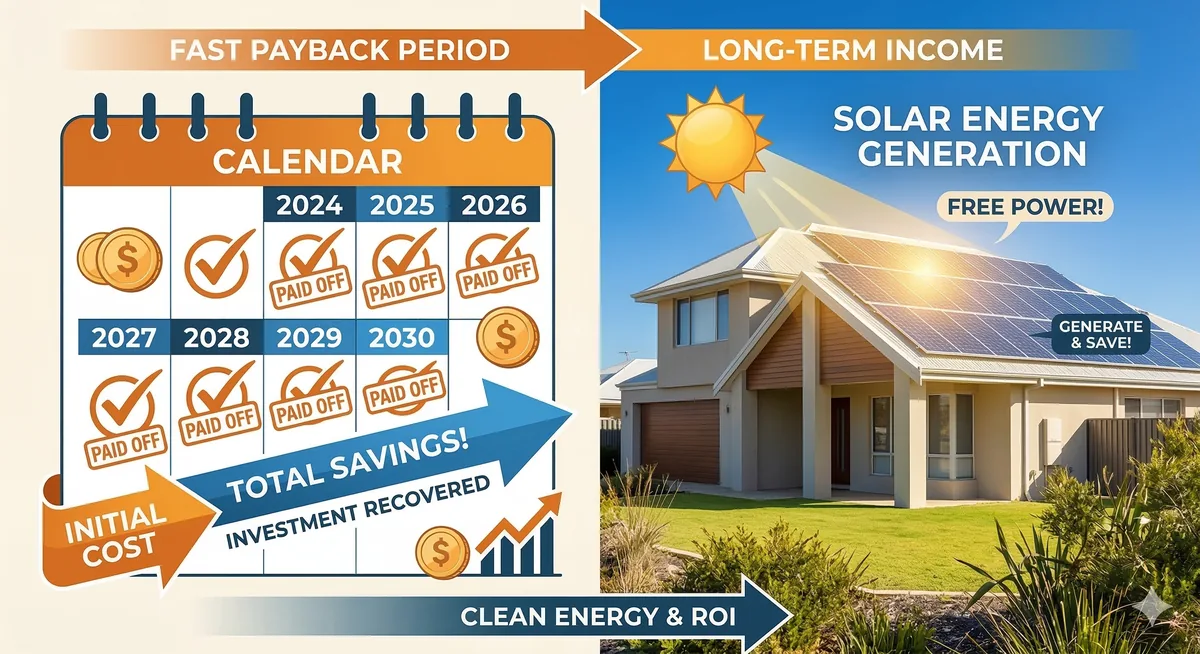
Perth homeowners are paying back their solar systems faster than almost anywhere else in Australia. With Synergy’s retail electricity rate sitting at 32c/kWh and an average of 8 peak sun hours per day, the numbers stack up quickly. Most residential solar systems in Perth pay themselves off in 3 to 5 years, then generate effectively free electricity for the next 20-plus years.
But “solar payback” isn’t one number. It shifts depending on your system size, how much power you use during the day, whether you add a battery, and which rebates you claim. A household using 4 kWh per day has a different payback story than one running 10 kWh through air conditioning, a pool pump, and an EV charger.
This guide breaks down the real payback periods for Perth homeowners, using actual Synergy tariff data, current system prices, and both WA state and federal rebate figures. No national averages, no guesswork.
What You’ll Find Here
- Solar-only payback periods by system size (6.6kW and 10kW)
- How Synergy’s feed-in tariff affects your return
- Battery payback with and without the WA Residential Battery Scheme
- A side-by-side comparison of solar-only vs solar+battery ROI
- How to get a personalised estimate for your home
Why Perth Has the Fastest Solar Payback in Australia
Perth’s solar payback advantage isn’t marketing spin. It’s the product of three factors that don’t exist in combination anywhere else in Australia: exceptional solar irradiance, high retail electricity prices, and a large, established installer market that keeps system costs competitive.
The three factors driving Perth’s fast payback:
- Sun hours: Perth averages 8 peak sun hours per day, significantly above Sydney (4.5–5 hrs) and Melbourne (4–4.5 hrs). More sun hours means more kilowatt-hours generated per kW of installed capacity.
- Electricity price: Synergy’s standard residential tariff is 32c/kWh. Every unit of solar power you consume instead of buying from the grid saves you 32 cents. That’s the core of the payback equation.
- Competitive system pricing: Perth’s solar market is mature. A quality 6.6kW system costs between $4,750 and $6,170 after federal STCs (Small-scale Technology Certificates) are applied, which is at or below the national average cost per watt.
The bottom line: A 6.6kW system generating 30+ kWh per day in Perth, with a household self-consuming 60% of that output, can save over $2,000 per year on electricity bills. At that rate, payback lands well inside 4 years.
The one catch: Synergy’s Distributed Energy Buyback Scheme (DEBS) pays just 10c/kWh during peak export hours and 2c/kWh off-peak (from 1 July 2025). That’s a significant drop from older feed-in tariff arrangements, and it means self-consumption — using your solar power directly rather than exporting it — is now the primary driver of payback speed.
Solar Payback Periods by System Size (Perth, 2026)
The table below uses real Perth system pricing, Synergy’s 32c/kWh tariff, and conservative self-consumption assumptions (50% for a typical working household). Annual savings include both avoided grid costs and DEBS export income at the blended rate.
| System Size | Cost Range (after STCs) | Est. Annual Generation | Annual Savings (50% self-use) | Payback Period |
|---|---|---|---|---|
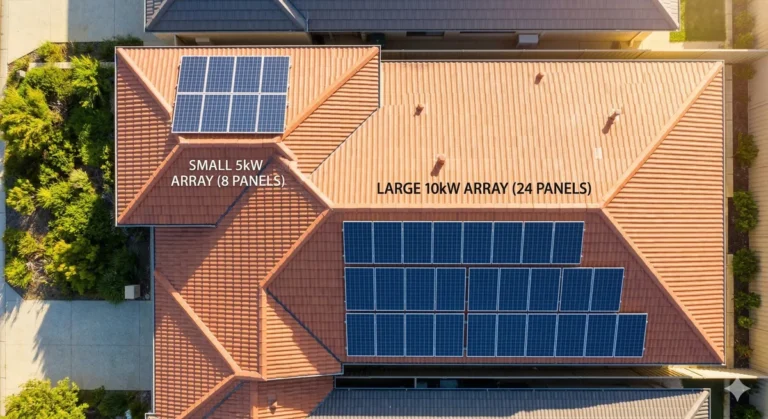
| 6.6kW | $4,750 – $6,170 | ~10,000 kWh | ~$1,850 – $2,100 | 3 – 4 years |
| 10kW | $8,490 – $10,560 | ~15,000 kWh | ~$2,700 – $3,100 | 3.5 – 4.5 years |
Annual generation figures assume 8 peak sun hours and a standard system performance ratio of 0.77. Actual output varies with roof orientation, shading, and panel quality.
How Self-Consumption Changes the Numbers
Self-consumption rate is the single biggest variable in your payback calculation. Every kWh you use directly from your panels saves you 32c. Every kWh you export earns you 10c (peak) or 2c (off-peak). The difference is stark.
- 40% self-consumption (small household, away during the day): payback stretches toward the 4.5–5 year range
- 60% self-consumption (larger household, home during the day, or daytime appliances on timers): payback compresses to 2.5–3.5 years
- 70%+ self-consumption (with a battery, EV, or pool pump on a solar timer): payback on the solar component alone can fall below 3 years
The practical takeaway: if you work from home, run your dishwasher and washing machine during the day, or have a pool pump on a timer, your payback period will be noticeably shorter than the table above suggests.
What STCs Actually Do to Your Upfront Cost
Federal Small-scale Technology Certificates (STCs) are the mechanism that reduces the sticker price of a solar system. For a 6.6kW system in Perth’s climate zone, STCs are worth approximately $2,000 off the purchase price, applied automatically at point of sale by your installer. The prices in the table above already reflect this discount. You don’t need to claim them separately.
Synergy’s DEBS Feed-in Tariff: What It Means for Your ROI
Synergy’s Distributed Energy Buyback Scheme is the only feed-in tariff available to Perth residential solar customers. From 1 July 2025, the rates are:
| Export Period | DEBS Rate |
|---|---|
| Peak (3pm – 9pm) | 10c/kWh |
| Off-peak (all other times, including overnight) | 2c/kWh |
There is also a $7.53 per account administration fee and a meter upgrade cost of approximately $108–$109 for new DEBS connections.
The Off-Peak Problem
Most solar generation happens between 9am and 3pm — the hours that attract only 2c/kWh under DEBS. If your household is empty during the day and you’re exporting the majority of your solar output, a significant portion of that generation is being valued at 2 cents per unit.
This is the structural shift that makes battery storage increasingly relevant in Perth. The 10c peak rate (3pm–9pm) aligns with when most households actually consume power in the evening, but solar panels aren’t generating at that time. A battery bridges that gap: charge during the day on cheap/free solar, discharge during the 3pm–9pm peak window, and avoid paying 32c/kWh from the grid.
Key insight: The peak FiT rate has held steady at 10c/kWh since 2020, while the off-peak rate has declined from 3c/kWh to 2c/kWh. The direction of travel is clear, and it strengthens the case for maximising self-consumption rather than relying on export income.
Battery Payback in Perth: The Real Numbers
Batteries have a longer payback period than solar panels alone. That’s the honest answer. But the gap has narrowed considerably thanks to two stacking incentives available to Perth homeowners right now.
The WA Residential Battery Scheme
The WA Residential Battery Scheme offers Synergy customers a rebate of $130 per kWh of battery capacity, up to a maximum of $1,300 (equivalent to a 10kWh battery). This is a point-of-sale discount applied by your installer, not a tax rebate you claim later.
For Horizon Power customers in regional WA, the rebate is significantly higher at $380/kWh, up to $3,800.
The Federal Cheaper Home Batteries Program
The federal government’s Cheaper Home Batteries Program delivers approximately a 30% discount on eligible battery systems through an STC-style mechanism. This stacks with the WA state rebate, meaning Perth homeowners can access both simultaneously.
Battery Payback Scenarios
The table below models a 10kWh battery added to an existing 6.6kW solar system, using Synergy’s 32c/kWh tariff and the evening arbitrage value (displacing grid power during the 3pm–9pm peak).
| Scenario | Battery Cost (10kWh) | Rebates Applied | Net Cost | Est. Annual Saving | Payback |
|---|---|---|---|---|---|
| No rebates | ~$10,000 | None | $10,000 | ~$700 | ~14 years |
| WA rebate only | ~$10,000 | -$1,300 | $8,700 | ~$700 | ~12.5 years |
| Federal discount only | ~$10,000 | -$3,000 | $7,000 | ~$700 | ~10 years |
| WA + Federal (stacked) | ~$10,000 | -$4,300 | $5,700 | ~$700 | ~8 years |
Important: Battery annual savings are calculated on displacing evening peak grid consumption only. Households with higher evening usage (larger families, EVs, ducted air conditioning) will see meaningfully faster payback than these conservative estimates.
Solar + Battery Combined Payback
When you buy solar and battery together rather than retrofitting a battery later, the combined system payback typically lands at 7 to 8 years for a 6.6kW + 10kWh configuration. The solar component pays back in 3–4 years; the battery component drags the blended average out, but the overall household energy bill reduction is substantially larger.
Households with solar and battery systems save over $900 per year compared to grid-only households, with projected network-wide savings as uptake scales across WA.
Solar-Only vs Solar + Battery: Which Makes More Financial Sense?
The right answer depends on your household profile, not a blanket recommendation. Here’s a direct comparison across the two main configurations:
| Solar Only (6.6kW) | Solar + Battery (6.6kW + 10kWh) | |
|---|---|---|
| Upfront cost | $4,750 – $6,170 | $13,000 – $16,000 (before rebates) |
| After rebates | Already includes STCs | ~$8,700 – $11,700 (WA + Federal stacked) |
| Annual savings | ~$1,850 – $2,100 | ~$2,550 – $3,000+ |
| Payback period | 3 – 4 years | 7 – 8 years |
| Grid independence | Moderate (50–60%) | High (80–90%) |
| Blackout protection | No | Yes (with backup-capable battery) |
Who Should Go Solar-Only First
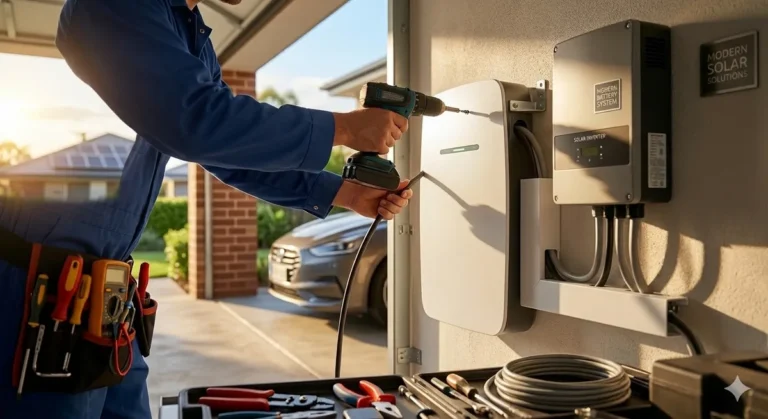
If budget is the primary constraint, solar-only is the right starting point. The payback is fast, the savings are real, and most modern inverters are battery-ready, meaning you can add storage later without replacing your inverter. Given that battery prices have been falling year-on-year, waiting 2–3 years to add a battery after your solar system has partially paid itself off is a financially sound strategy.
Who Should Go Solar + Battery Now
The case for buying solar and battery together is strongest if:
- Your evening electricity usage is high (air conditioning, cooking, EV charging after 5pm)
- You want blackout protection — solar-only systems shut down during grid outages for safety reasons, but a battery with backup capability keeps the lights on
- You want to maximise the current rebate stack — the WA and federal rebates are available now; future availability is not guaranteed
- You’re on a time-of-use tariff or expect to move to one, where the 32c evening rate makes battery arbitrage highly profitable
What Affects Your Actual Payback Period
The payback estimates in this guide are based on typical Perth conditions, but your home’s specific profile can shift the numbers by 12 to 18 months in either direction. Here are the factors that matter most.
Factors That Speed Up Payback
- High daytime electricity usage: Running appliances during solar generation hours (9am–3pm) maximises the 32c/kWh saving rather than earning 2–10c from export
- North-facing roof: A true north orientation in Perth maximises annual generation; east-west splits can reduce output by 10–15%
- Rising electricity prices: Synergy’s tariff has increased over time; if it continues to rise, your solar savings grow each year, compressing payback further
- Pool pump or hot water system on a solar timer: These are high-draw appliances that can consume 2–4 kWh per day; shifting them to solar hours meaningfully boosts self-consumption
Factors That Slow Payback
- Heavy shading: Trees, neighbouring buildings, or chimneys reducing output by even 15–20% can add 6–12 months to payback
- Low-quality panels: Panel degradation rates vary significantly; premium panels degrade at around 0.3–0.4% per year, while cheaper panels can degrade at 0.7–1% annually, affecting long-term generation
- Mostly evening usage: Households that are empty all day and consume most power after 6pm will export the bulk of their solar generation at 2c/kWh, significantly reducing annual savings
- Dirty or poorly maintained panels: Dirty panels can lose 15–25% of output, translating to $200–$400 in annual lost savings for a typical system
Key insight: The payback period is not fixed at installation. It’s a living number that improves as electricity prices rise, as you shift usage habits, and as you add battery storage. Many Perth homeowners find their actual payback comes in faster than their initial estimate.
How to Calculate Your Personal Payback Period
The tables in this guide give you a reliable starting range, but a precise estimate requires four data points specific to your home:
- Your current quarterly electricity bill (and how much of that is usage vs supply charges)
- Your daily kWh consumption (shown on your Synergy bill)
- Your roof orientation and available space (north-facing, east-west split, or south-facing)
- Whether you want solar-only or solar + battery
With those four inputs, an experienced installer can model your expected annual generation, self-consumption rate, DEBS export income, and net annual saving — then divide that into the system cost to give you a realistic payback figure.
A Simple Back-of-Envelope Calculation
If you want a rough number before speaking to anyone:
- Take your average daily electricity usage in kWh (from your Synergy bill)
- Multiply by 0.32 (Synergy’s tariff) to get your daily cost
- A 6.6kW system in Perth generates roughly 27–32 kWh per day on average
- Assume you self-consume 50% of that (13–16 kWh/day at 32c = ~$4.50/day saved)
- Add export income: remaining 50% at a blended DEBS rate of ~5c = ~$0.70/day
- Total daily saving: ~$5.20/day, or roughly $1,900/year
- Divide system cost ($5,500 mid-range) by $1,900 = 2.9 year payback
This is a simplified model. It doesn’t account for seasonal variation, panel degradation, or rising electricity prices — all of which tend to improve the actual outcome over time.
Frequently Asked Questions
How long does it take to pay off a 6.6kW solar system in Perth?
A 6.6kW solar system in Perth typically pays for itself in 3 to 4 years. At a cost of $4,750–$6,170 after STCs, with annual savings of $1,850–$2,100 based on 50% self-consumption and Synergy’s 32c/kWh tariff, the payback is among the fastest in Australia. Households with higher daytime usage can see payback in under 3 years.
What is the payback period for a solar battery in Perth?
A 10kWh battery in Perth pays back in approximately 8 years when both the WA Residential Battery Scheme rebate ($1,300) and federal Cheaper Home Batteries Program discount (~$3,000) are applied, bringing the net cost to around $5,700. Without rebates, battery payback stretches to approximately 14 years. Households with high evening usage see faster returns.
How much does Synergy’s DEBS feed-in tariff pay for solar exports?
Synergy’s Distributed Energy Buyback Scheme (DEBS) pays 10c/kWh during peak hours (3pm–9pm) and 2c/kWh during off-peak hours (all other times). Since most solar generation occurs during off-peak hours (9am–3pm), self-consumption at 32c/kWh is far more valuable than exporting. This is the primary reason batteries improve solar ROI in Perth.
Is solar + battery or solar-only the better investment in Perth?
Solar-only has a faster payback (3–4 years vs 7–8 years for solar + battery) and is the better choice if budget is the primary constraint. Solar + battery delivers higher annual savings ($2,550–$3,000+ vs $1,850–$2,100), provides blackout protection, and achieves 80–90% grid independence. The current WA and federal rebate stack makes 2026 the strongest financial case for adding a battery.
What affects solar payback period the most?
Self-consumption rate is the single biggest variable. Every kWh used directly from your panels saves 32c, while exporting earns only 2–10c. Households that use 60%+ of their solar output (working from home, pool pumps on timers, daytime appliance use) achieve payback 12–18 months faster than households that export most of their generation.
Get a Custom Payback Estimate for Your Perth Home
The numbers in this guide are grounded in real Perth data, but every home is different. Roof orientation, shading, daily usage patterns, and whether you qualify for the WA battery rebate all affect your final figure.
Talk Energy’s team provides obligation-free payback estimates tailored to your actual electricity bills, roof layout, and usage profile. With 250+ five-star reviews and in-house electricians handling every installation, you get a single point of accountability from quote through to commissioning and aftercare.
To get your personalised solar payback estimate:
- Use the Talk Energy quote form for a detailed estimate
- Or contact the team directly for a quote that includes system sizing, DEBS income modelling, and rebate eligibility
After payback, your system generates effectively free electricity for 20-plus years. The question isn’t whether solar makes sense in Perth. It’s how fast your specific home gets there.
Talk Energy: Perth’s most trusted solar and battery installer, with 250+ five-star reviews and a 20-year workmanship warranty.