Adding a Tesla Powerwall 3 to Existing Solar in Perth: Compatibility, Cost and Install Process
TL;DR: Yes, you can add a Tesla Powerwall 3 to your existing Perth solar system. Because the Powerwall 3 includes its own 11.5 kW hybrid inverter, the cleanest installation replaces your existing string inverter, keeps all your existing solar panels and racking, and adds whole-home backup capability. As a rough guide, most Perth homes pay around $13,000–$18,000 for a 13–16 kWh battery before rebates, or about $9,500–$14,500 after the federal rebate in 2026 (the Powerwall 3 is not currently eligible for the WA rebate for Synergy customers). Your price depends on your switchboard, existing inverter and backup requirements. The full retrofit is a one-day install for most Perth homes.
Will the Powerwall 3 work with my existing solar?
The Powerwall 3 is designed as an “all-in-one” solar + battery solution — it has a built-in hybrid solar inverter rated at 11.5 kW continuous (with up to 20 kW of solar input). This makes retrofits to existing Perth solar systems unusually clean compared with most batteries.
Three retrofit paths exist, and your installer chooses based on your existing setup:
Path 1: AC-coupled (keep your existing inverter)
The Powerwall 3 sits alongside your existing string inverter on the AC side of the meter. Solar continues running through the old inverter; the Powerwall 3 absorbs and dispatches energy on the AC side. This is the easiest retrofit if your existing inverter is less than 5 years old and working well. Trade-off: you lose the integrated efficiency benefit, and during a blackout the existing inverter shuts down so only the battery’s stored energy is available.
Path 2: DC-coupled with inverter replacement (recommended for most Perth homes)
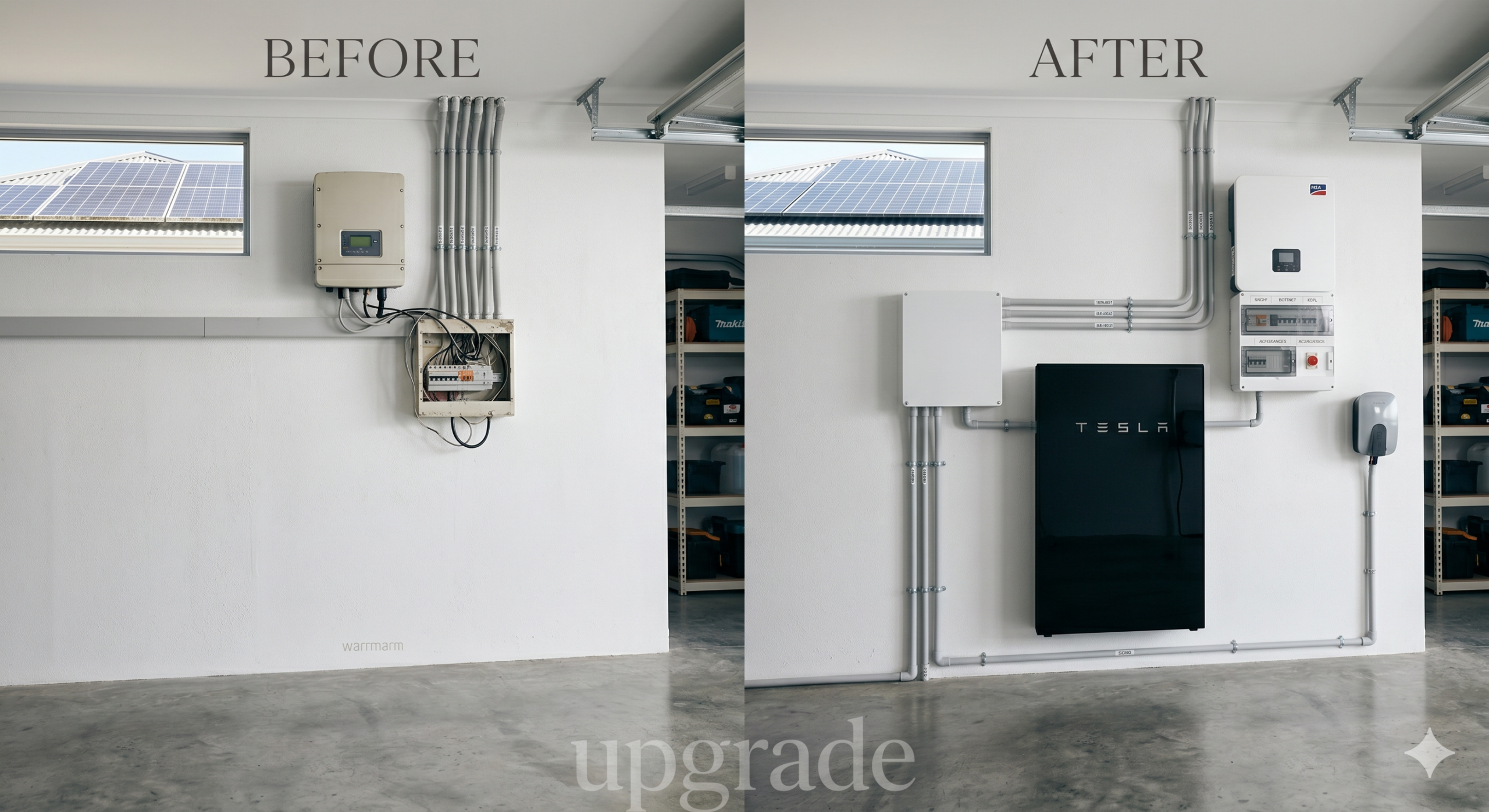
Your existing string inverter is removed and the solar panel strings are reconnected directly to the Powerwall 3’s MPPT inputs. This is the cleanest install, gives the best round-trip efficiency, and enables solar-during-blackout operation. Recommended when your existing inverter is older than 5 years, or already showing efficiency loss.
Path 3: Hybrid retrofit (existing micro-inverters)
If your existing Perth system uses Enphase microinverters, Path 1 (AC-coupled) is the only option — microinverters cannot be reconnected to a central battery inverter. The Powerwall 3 still works well in this configuration, but you don’t get the Powerwall’s MPPT efficiency on the solar side.
Compatibility checks before quoting
A proper site visit should confirm the following before any installer quotes a retrofit:
- Switchboard capacity: Many Perth homes built before 2010 have switchboards that need upgrading to accommodate the Powerwall 3’s whole-home backup function. Budget extra for a switchboard upgrade if required; the cost depends on your board’s age and condition.
- String count and panel layout: The Powerwall 3 has 4 MPPT inputs supporting up to 20 kW of solar. Most existing Perth systems (6.6 kW typical) fit comfortably.
- Panel orientation and shading: A retrofit is a good opportunity to verify your existing panels are still producing as expected.
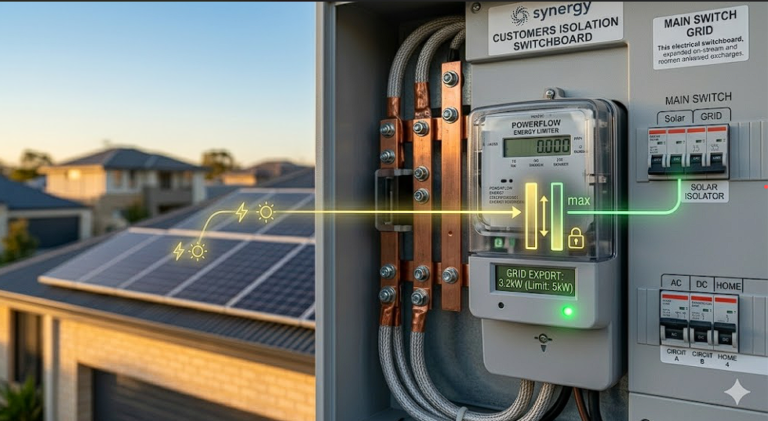
- Wi-Fi and meter location: The Powerwall 3 needs a Wi-Fi signal at the install location and uses Tesla’s smart meter (included). The smart meter must be installed at the main switchboard.
- Synergy approval: Battery installs require a Western Power connection application. Talk Energy handles this paperwork on your behalf.
What the install day looks like
A typical Perth Powerwall 3 retrofit takes one full day (8–10 hours) with two electricians on site:
- 7:30am: Electricians arrive, isolate solar and main power, do a final safety check.
- 8:00am: Existing string inverter disconnected and removed (or AC-coupled config wired up).
- 9:00am: Powerwall 3 mounted on wall (typically garage or external south-facing wall). Tesla smart meter installed at main switchboard.
- 11:00am: DC and AC wiring completed, backup gateway wired in.
- 1:00pm: System energised, firmware updated, commissioning tests run.
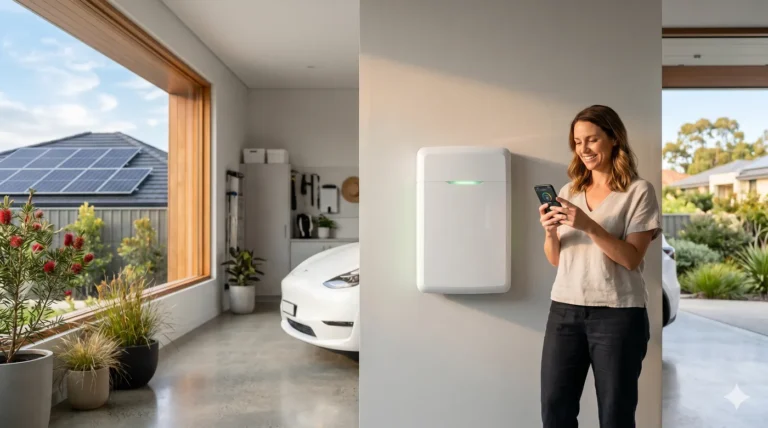
- 3:00pm: Tesla app paired to homeowner phone, walkthrough of features, settings configured for Synergy Smart Home Plan if applicable.
- 4:30pm: Final paperwork and Western Power notification sent.
Your home is without power for approximately 4–6 hours during the install.
Cost in Perth after rebates (2026)
- Supply + install (DC-coupled, no switchboard upgrade): roughly $13,000–$18,000 (2026 market estimate for a 13–16 kWh battery)
- Federal Cheaper Home Batteries Program rebate: approximately $3,500
- WA Residential Battery Scheme rebate: not available to Synergy customers for the Powerwall 3, which is not listed as battery storage on Synergy’s Supported Solutions List (updated 1 October 2026)
- Switchboard upgrade (if needed): extra, depending on your board’s age and condition
Out-of-pocket range: roughly $9,500–$14,500 for a standard retrofit without switchboard upgrade (estimate, not a quote). Rebates are applied at the point of sale by an approved retailer — you don’t pay the full amount and claim back. Talk Energy applies all rebates at quote stage so the price you see is the price you pay.
What about my existing inverter — do I get anything for it?
If your existing inverter is replaced, the old unit should be removed and properly e-waste recycled. Ask about this when you get your quote.
Will I need to upgrade my solar panels?
Usually not. Most Perth homes have 6.6 kW solar systems installed in 2018–2023, which still produce well and feed the Powerwall 3 perfectly. If you have an older 3 kW or 4 kW system, adding panels at the same time as the battery is cost-effective — the Powerwall 3 can accept up to 20 kW of solar input. It can make sense to add extra panels at the same time if you plan to add an EV or expect higher consumption.
Frequently asked questions
Can I keep my existing solar inverter when adding a Powerwall 3?
Yes via AC-coupled retrofit, but the cleanest and most efficient install is DC-coupled where the Powerwall 3 replaces the inverter and takes the solar input directly. For inverters under 5 years old, AC-coupling preserves your existing system; for older inverters, replacement is the better long-term choice.
How long does a Powerwall 3 retrofit take in Perth?
One full day on site (8–10 hours), with your home off-grid for approximately 4–6 hours during the changeover.
Will adding a Powerwall void my existing solar warranty?
No, provided the retrofit is installed by an SAA-accredited electrician to the manufacturers’ requirements. Panel manufacturer warranties stay intact. If the existing inverter is replaced, its warranty ends, but the Powerwall 3’s 10-year warranty covers the new inverter portion.
Do I need three-phase power for a Powerwall 3?
No — the Powerwall 3 works on single-phase Perth installs. For three-phase homes, three Powerwall 3 units (one per phase) or a different battery (BYD HVM with three-phase hybrid inverter) is the appropriate solution.
Can I add a Powerwall 3 to a system with Enphase microinverters?
Yes, via AC-coupled retrofit. Microinverters can’t be reconnected to a central inverter, so the Powerwall 3 sits on the AC side and provides battery storage + backup. Some Perth homeowners prefer to stay in the Enphase ecosystem (IQ Battery 5P) for tighter monitoring integration.
Adding a battery to your Perth solar? Talk Energy installs Sigenergy SigenStor batteries (not Tesla) with in-house SAA-accredited electricians, and we apply every rebate you’re eligible for at quote stage. Get a free, fixed quote or call (08) 6255 5914.