Hybrid Solar Systems in Perth: What They Are, Who Needs One, and What They Cost in 2026
Perth gets more sunshine than almost anywhere else in Australia, which is exactly why the city has one of the highest rooftop solar uptake rates in the world. But a standard solar system only goes so far. It generates power during the day and exports whatever you don’t use to the grid for a modest feed-in tariff. The moment the sun sets, you’re back on full-price grid electricity.
A hybrid solar system changes that equation entirely.
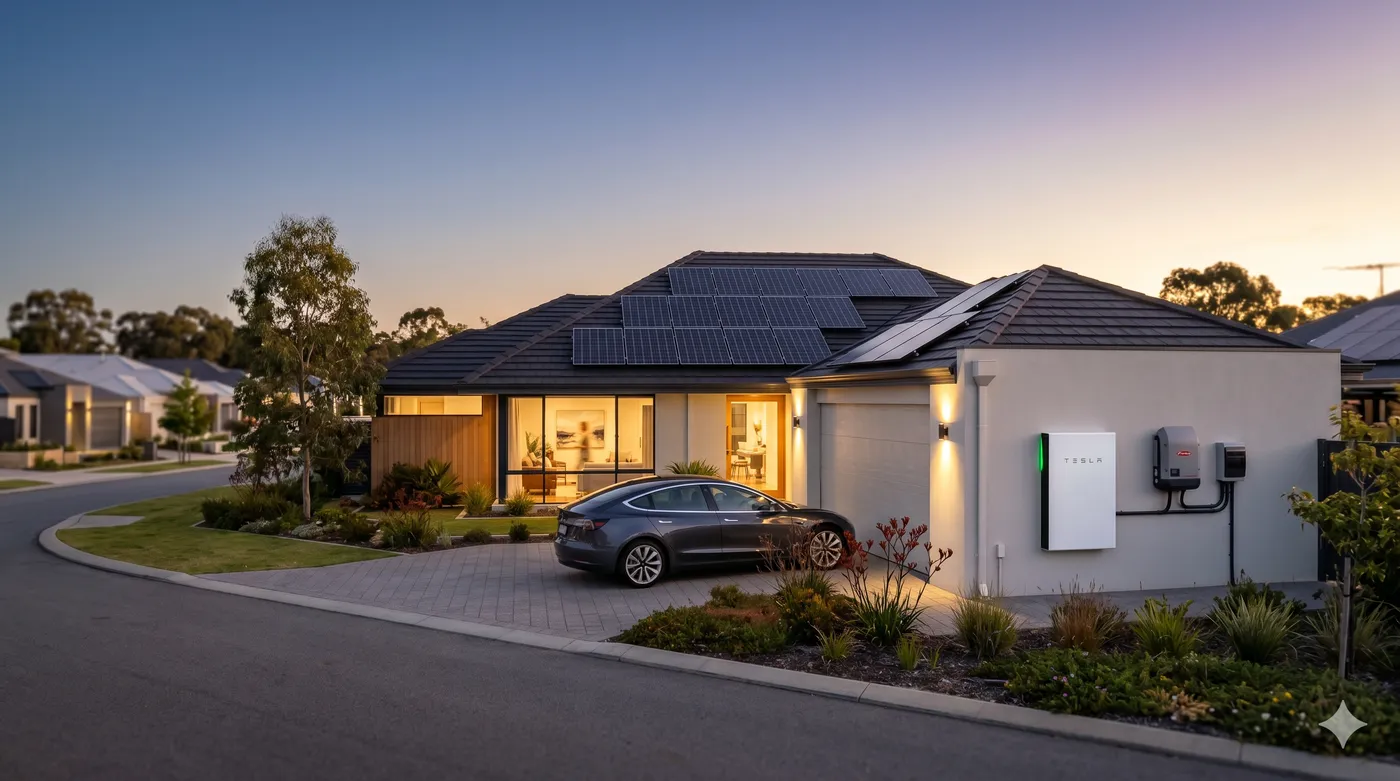
The core idea: a hybrid system is designed from the ground up to work with a battery, whether you install one now or add one later. It’s the difference between buying a car with a tow hitch already fitted and trying to retrofit one after the fact.
In 2026, with battery prices falling around 12% year-on-year and WA state rebates stacking on top of federal incentives, going hybrid from the start is increasingly the smarter financial decision for Perth homeowners. This guide covers everything you need to know: how hybrid systems work, which inverters are worth considering, what you’ll pay, and how to decide whether to add a battery now or later.
Hybrid vs Standard Solar: What’s Actually Different
Most Perth homes have a standard grid-tied solar system. Panels on the roof feed into a string inverter, which converts DC electricity to AC for use in the home. Any surplus goes to the grid. It’s simple, reliable, and cost-effective for reducing daytime bills.
The limitation is architectural: a standard string inverter has no battery port. It was never designed to store energy. If you decide you want a battery down the track, you face two options: replace the inverter entirely, or install a separate AC-coupled battery inverter alongside it. Both add cost and complexity.
How a Hybrid Inverter Changes Things
A hybrid inverter does everything a standard inverter does, plus it manages energy flow between the solar panels, the battery, and the grid simultaneously. Think of it as a traffic controller for your home’s electricity.
Here’s what that looks like in practice:
- During the day: Solar power runs your home first. Surplus charges the battery.
- In the evening: The battery discharges to power your home, reducing grid draw.
- When the battery is full: Excess solar exports to the grid as normal.
- During a blackout: Depending on the model, a hybrid inverter can keep your home running on solar and battery power (backup mode).
The key distinction from a standard system is the battery port and the bidirectional energy management built into the inverter’s firmware. Even if you don’t install a battery on day one, that infrastructure is already in place.
What this means for Perth homeowners: Choosing a hybrid inverter now means you can add a battery at any point in the future without replacing your inverter. Given that battery prices are still falling, many households are making exactly this call.
Who Actually Needs a Hybrid System?
Not every Perth household needs to go hybrid. A standard grid-tied system still makes sense if your budget is tight and you have no plans to add a battery. But hybrid is the right call for a growing majority of homeowners in 2026.
You’re a strong candidate for a hybrid system if any of these apply:
- You’re planning to add a battery within 3–5 years. Going hybrid now avoids the cost of replacing your inverter later, which can be a significant extra cost depending on the inverter brand and size.
- You have high evening energy use. If your household is busiest after dark (cooking, dishwasher, TV, air con), a battery paired with a hybrid inverter will have the biggest financial impact.
- You want backup power capability. Standard grid-tied systems shut down during blackouts for safety reasons. A hybrid system with a compatible battery can keep essential circuits running.
- You’re in a new build or doing a major renovation. Installing hybrid infrastructure now is far cheaper than retrofitting later.
- You’re eligible for WA battery rebates. The WA Residential Battery Scheme and the federal Cheaper Home Batteries Program together are worth roughly $3,900–$4,000 on a 10 kWh battery for Synergy customers, and roughly $6,400–$6,500 for Horizon Power customers in regional WA (for installs before 1 January 2027). A hybrid inverter is the gateway to accessing these.
The one scenario where standard solar still wins: you’re on a tight budget, you rent out the property, or you genuinely have no interest in batteries now or in the future. In those cases, the extra cost of a hybrid inverter over a comparable string inverter doesn’t pay off.
Best Hybrid Inverters for Perth in 2026
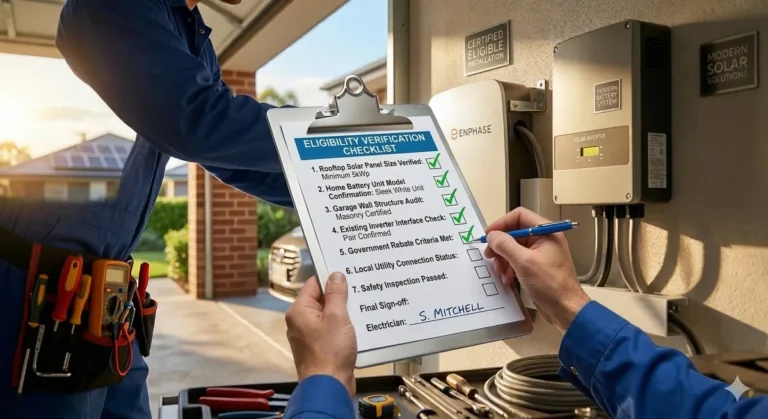
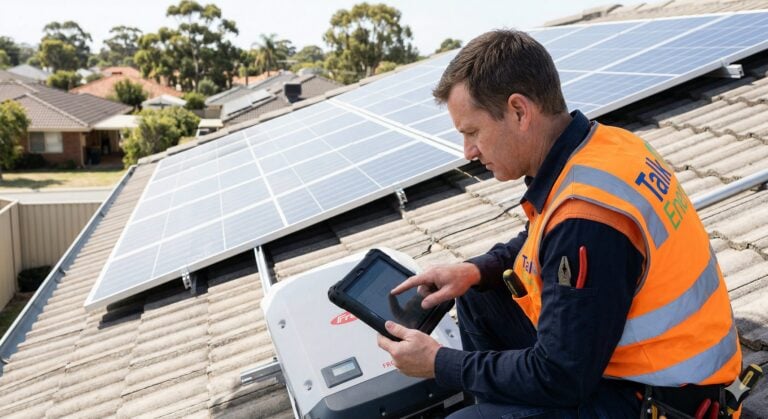
The inverter is the most critical component in any hybrid system. It determines which batteries you can use, how well your system is monitored, and how the system behaves during a grid outage. Talk Energy’s installation team works with a shortlist of proven hybrid inverters suited to Perth’s conditions and grid requirements.
The Three Leading Options
| Inverter | Origin | Warranty | Sizes | Price Position | Best For |
|---|---|---|---|---|---|
| Fronius Gen24 Plus | Austria | 10 years (with registration) | 3–10 kW | Premium | Premium reliability, European build quality |
| Sungrow SH Series | China | 10 years | 3.6–20 kW | Value | Best value, widest size range |
| Huawei SUN2000 | China | 10 years | 2–20 kW | Value to mid-range | Built-in optimisers, LUNA2000 compatibility |
Price positions are indicative for 2026; installed prices vary with system size and configuration.
Fronius Gen24 Plus
The Gen24 Plus is the premium choice for Perth homeowners who want European build quality and the industry’s best monitoring platform (Solar.web). It supports both DC-coupled batteries and AC-coupled options, giving you flexibility when adding storage later. The Gen24 Plus also offers a “PV Point” feature that can power essential loads directly from solar during a grid outage, even without a battery installed.
Compatible batteries: BYD Battery-Box, Fronius Solar Battery, and other third-party options.
Sungrow SH Series
Sungrow is one of the world’s largest inverter manufacturers and the SH Series is consistently 5–15% cheaper than equivalent Fronius models for comparable specs. The SH5.0RS (5 kW single-phase) is a common hybrid inverter choice for standard Perth homes. The 3-phase SH10RT suits larger homes or small commercial setups. Ten-year warranty is standard across the range.
Compatible batteries: Sungrow SBR Series (9.6–12.8 kWh), which delivers the lowest cost-per-kWh of any mainstream battery in the Perth market.
Huawei SUN2000 with LUNA2000
Huawei’s SUN2000 inverter is the gateway to the LUNA2000 battery ecosystem, which offers high efficiency and a modular design (you can start with 5 kWh and expand to 15 kWh without replacing any hardware). The built-in smart string optimisation on select models also improves performance on roofs with shading.
Compatible batteries: Huawei LUNA2000 exclusively.
Talk Energy’s take: For most Perth homes on a single-phase supply, the Sungrow SH5.0RS offers the strongest value. For homeowners who want the best monitoring and European support infrastructure, the Fronius Gen24 Plus justifies its premium. The Huawei SUN2000 suits those specifically planning to use the LUNA2000 battery’s modular expansion capability.
System Sizing: How Much Solar Do You Actually Need?
Sizing a hybrid system correctly matters more than with a standard grid-tied setup, because the solar array needs to cover both your daytime consumption and charge the battery. Undersizing the panels means the battery rarely fills; oversizing can cause issues with Western Power’s export limits.
A Practical Sizing Guide for Perth Homes
| Household Size | Daily Usage | Recommended Solar | Recommended Battery |
|---|---|---|---|
| Small (1–2 people) | 10–15 kWh/day | 5–6.6 kW | 5–7 kWh |
| Medium (3–4 people) | 15–25 kWh/day | 6.6–10 kW | 10 kWh |
| Large (5+ people or EV) | 25–40 kWh/day | 10–13 kW | 13–20 kWh |
Perth’s solar resource is excellent: a 6.6 kW system typically generates 28–32 kWh per day in summer and 18–22 kWh in winter. That means even a medium household can comfortably charge a 10 kWh battery and still run daytime loads from solar alone.
Western Power export limits apply across Perth: from 1 May 2026, export is capped at 1.5 kW, or up to 5 kW with a retailer off-take agreement. It is a site-level limit on single- and three-phase homes. This is why a correctly sized battery matters. Rather than exporting surplus solar at a low feed-in rate, a battery stores it for evening use, where it offsets electricity you’d otherwise buy at peak tariff rates.
For homes with an electric vehicle, Talk Energy recommends sizing up to at least a 10 kW system with a 13 kWh battery to ensure the EV charging load doesn’t hollow out overnight reserves.
What Does a Hybrid Solar System Cost in Perth in 2026?
Hybrid system costs in Perth sit higher than standard solar because of the more capable inverter, but the gap has narrowed. The real question is total system cost after rebates, and that picture has improved significantly for Perth homeowners in 2026.
Solar-Only Hybrid System (Battery-Ready, No Battery Yet)
| System Size | Typical Installed Cost (After STCs) |
|---|---|
| 6.6 kW + hybrid inverter | A little above the ~$5,000–$7,500 estimate for standard 6.6 kW solar |
| 10 kW + hybrid inverter | A little above the ~$8,000–$11,000 estimate for standard 10 kW solar |
| 13 kW + hybrid inverter | A little above the ~$10,000–$14,000 estimate for standard 13 kW solar |
The premium over a standard string inverter depends on the brand and inverter size. Given the cost of retrofitting a battery-compatible inverter later, this is almost always worth paying upfront.
Full Hybrid System (Solar + Battery)
As a rough guide, most Perth homes pay around the following for a complete hybrid system in 2026 (industry estimates; solar after STCs, battery shown separately). Your price depends on the battery brand, your roof and your switchboard:
| Configuration | Before Rebates | After Rebates (Synergy) |
|---|---|---|
| 6.6 kW solar + 10 kWh battery | ~$5,000–$7,500 solar + ~$9,500–$13,000 battery | Solar estimate + ~$5,500–$9,000 battery |
| 10 kW solar + 10 kWh battery | ~$8,000–$11,000 solar + ~$9,500–$13,000 battery | Solar estimate + ~$5,500–$9,000 battery |
| 10 kW solar + 20 kWh battery | ~$8,000–$11,000 solar + ~$18,000–$26,000 battery | Solar estimate + ~$12,000–$19,000 battery |
Rebate Stack Available to Perth Homeowners
Perth residents can layer multiple incentives to reduce the out-of-pocket cost:
- Federal STCs (solar): ~$1,700–$3,500 depending on system size (6.6–13 kW)
- Federal Cheaper Home Batteries Program: ~$2,600–$2,700 for a 10 kWh battery (steps down on 1 January 2027)
- WA Residential Battery Scheme (Synergy): $130/kWh, up to $1,300
- WA no-interest loan: up to $10,000 via Plenti for eligible households
Combined, Synergy customers can stack the solar STC discount, the federal battery discount and the $1,300 WA rebate on a solar-plus-battery installation, plus the no-interest loan. For Horizon Power customers in regional WA, the WA rebate rises to $3,800. The WA Government’s battery scheme page has the full eligibility criteria.
Payback periods for a 10 kWh battery system in Perth currently sit at 5–7 years after rebates, with annual savings from increased self-consumption estimated at $1,150–$1,400.
Should You Go Hybrid Now or Add a Battery Later?
This is the question Talk Energy gets asked most often during hybrid consultations. The honest answer depends on your budget, usage patterns, and how you weigh upfront cost against future flexibility.
Decision Guide
Go hybrid with a battery now if:
- Your household has high evening electricity use (above 10 kWh/night)
- You want backup power capability
- You’re eligible for the WA Residential Battery Scheme and the federal Cheaper Home Batteries Program (the combined rebate is most valuable when claimed together)
- Battery prices in your preferred brand are at a level you’re comfortable with
- You’re financing the system and the repayments are less than your current electricity bill savings
Go hybrid now, add battery later if:
- Budget is the primary constraint but you still want future flexibility
- You’re undecided on battery brand or capacity
- You’re waiting to see how modular battery technology (like the Huawei LUNA2000) develops over the next 1–2 years
- Your evening usage is low enough that the battery payback period would exceed 8 years
Stick with standard solar (for now) if:
- You have no plans to add a battery in the next 5 years
- The property is an investment or rental
- Your primary goal is simply reducing daytime bills with the lowest upfront cost
The bottom line: The hybrid inverter premium is almost always worth paying, even if you’re not ready for a battery yet. It keeps your options open without a significant cost penalty. Waiting until battery prices fall further is a legitimate strategy, but the rebate stack available right now is unusually generous. The WA Residential Battery Scheme no-interest loan means many households can add a battery with zero upfront cost today.
For a detailed comparison of how hybrid systems stack up against standard grid-tied and off-grid setups, see Talk Energy’s Grid-Tied vs Hybrid vs Off-Grid Solar Perth guide.
Get a Hybrid Solar Quote from Talk Energy
Talk Energy has been installing hybrid solar systems across Perth metro and regional WA for years, with in-house electricians, a 20-year workmanship warranty, and a 4.8-star rating from 300+ Google reviews by Perth homeowners. Every hybrid installation is sized to your actual usage data, not a generic template.
Whether you’re ready to go solar-plus-battery now or want a battery-ready system you can upgrade later, Talk Energy’s team will walk you through the right inverter, the correct system size, and every rebate you’re eligible for.
Get a free hybrid solar quote from Talk Energy or call to speak with one of our Perth-based solar consultants.
Frequently Asked Questions
What is a hybrid solar system?
A hybrid solar system combines rooftop solar panels with a hybrid inverter that is designed to work with a battery. Unlike a standard grid-tied system, a hybrid inverter manages energy flow between the solar panels, the battery, and the grid simultaneously. This means you can store surplus solar energy in a battery for use in the evening, rather than exporting it to the grid at a low feed-in rate.
Can I add a battery to my existing solar system?
It depends on your current inverter. If you have a standard string inverter, you will need to either replace it with a hybrid inverter or install a separate AC-coupled battery inverter. If you already have a hybrid inverter installed, adding a compatible battery is straightforward and does not require replacing any existing hardware.
How much does a hybrid solar system cost in Perth in 2026?
As a rough guide, most Perth homes pay around $5,000–$7,500 for a 6.6 kW system after the federal STC rebate in 2026, plus a little extra for a hybrid inverter. A 10 kWh battery adds roughly $9,500–$13,000 before rebates, or about $5,500–$9,000 after the WA Residential Battery Scheme and the federal Cheaper Home Batteries Program for eligible Synergy customers. Your price depends on your roof, switchboard and battery brand.
Which hybrid inverter is best for Perth homes?
The three most commonly installed hybrid inverters in Perth are the Fronius Gen24 Plus (premium, Austrian-made, excellent monitoring), the Sungrow SH Series (best value, 10-year warranty, widest size range), and the Huawei SUN2000 (modular LUNA2000 battery compatibility, built-in string optimisation). For most single-phase Perth homes, the Sungrow SH5.0RS offers the best balance of price and performance.
Does a hybrid system work during a blackout?
A hybrid inverter with a compatible battery can provide backup power during a grid outage, but only if the inverter supports this feature and a battery is installed. The Fronius Gen24 Plus can also provide limited backup from solar panels alone (without a battery) via its PV Point feature. Standard grid-tied inverters shut down automatically during blackouts for safety reasons.
What rebates are available for hybrid solar systems in Perth?
Perth homeowners can access the federal Small-scale Technology Certificate (STC) scheme for the solar component and the federal Cheaper Home Batteries Program for the battery. Synergy customers also qualify for the WA Residential Battery Scheme ($130/kWh, up to $1,300) and a no-interest loan of up to $10,000 through Plenti. Horizon Power customers in regional WA receive a higher rebate of $380/kWh, up to $3,800.
Is a hybrid inverter worth it if I’m not adding a battery yet?
In most cases, yes. The hybrid inverter premium over a comparable standard inverter is usually modest. Retrofitting a battery-compatible inverter later costs considerably more. Choosing hybrid from the start keeps your options open at minimal extra cost and means you can take advantage of battery rebates whenever you’re ready.