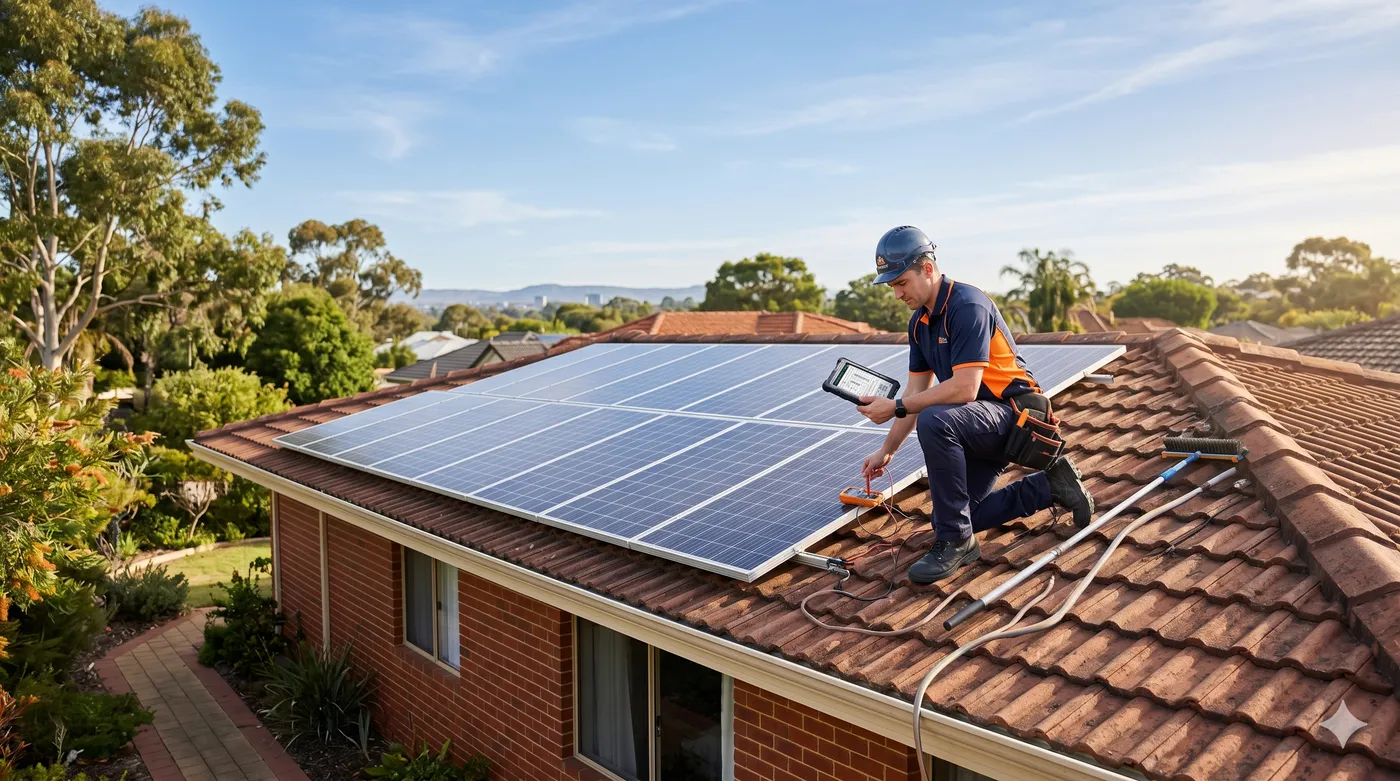
Solar System Maintenance in Perth: What You Need to Do, When, and How Talk Energy’s AfterCare Works
Solar panels are one of the lowest-maintenance investments you can make in your home, but “low maintenance” is not the same as “no maintenance.” In Perth’s climate, where long dry summers, airborne dust, coastal salt spray, and summer bushfire smoke all conspire against clean glass and healthy electronics, a system that’s ignored for years will quietly lose output without ever throwing an obvious error.
The real cost of neglect: Dirty panels alone can cut generation by 10–25%, according to research across Perth residential installations. Add inverter faults that go undetected and a battery that’s never had a health check, and you’re leaving hundreds — sometimes thousands — of dollars in savings on the table every year.
This guide tells you exactly what to do, when to do it, and what you can safely handle yourself versus when to call a licensed technician. It also explains how Talk Energy’s AfterCare service takes most of this off your plate entirely.
Panel Cleaning: How Often, and Why Perth Is Different
Perth’s Mediterranean climate is ideal for solar generation — over 3,200 hours of sunshine per year — but that same dry, dusty environment accelerates soiling faster than most Australian cities. Unlike Sydney or Melbourne, where regular rainfall does a reasonable job of rinsing panels, Perth’s long dry spells mean dust, pollen, bird droppings, and salt deposits accumulate without natural intervention.
Recommended Cleaning Frequency by Location
The right cleaning schedule depends on where you live:
| Location Type | Recommended Frequency | Primary Contaminant |
|---|---|---|
| Inland suburbs (e.g. Midland, Armadale) | Every 12 months | Dust, pollen |
| Coastal suburbs (within 5km of coast) | Every 4–6 months | Salt spray, dust |
| Near bushland or farms | Every 6–9 months | Pollen, leaf debris, ash |
| Near busy roads or construction | Every 6 months | Carbon particulates, dust |
The 10% rule: If your monitoring app shows a sustained drop of 10–15% in generation during clear weather compared to the same period last year, that’s your signal to clean — regardless of how recently you last did it.
DIY Cleaning: What’s Safe and What Isn’t
You can safely rinse panels from ground level using a hose with a gentle spray attachment. For most light dust accumulation, this is sufficient. A few rules to follow:
- Use plain water only. Detergents and household cleaners can strip anti-reflective coatings and void product warranties.
- Clean in the early morning or evening. Cold water on hot glass (midday in summer) can cause thermal stress.
- Never use a pressure washer. High-pressure water can damage frame seals and force moisture into junction boxes.
- Don’t access the roof yourself. Falls from roofs are a leading cause of serious injury in Australia. If panels need scrubbing rather than rinsing, book a professional.
Rain can actually worsen soiling in some cases: it mixes dust into muddy streaks that dry in place, creating harder deposits than dry dust alone. After a light shower during dry season, your panels may look worse than before the rain.
Inverter Monitoring: The Component Most Homeowners Ignore
Your inverter is the most mechanically and electronically complex component in your solar system. It converts DC power from your panels into AC power your home can use, manages grid interaction, and in modern systems handles battery charging and monitoring. Inverter lifespans typically run 10 to 15 years — meaning systems installed in the early 2010s are now entering a critical period.
The most dangerous inverter failure mode isn’t a complete shutdown. It’s partial failure: the system continues generating some power, looks like it’s working, but runs well below capacity. Without active monitoring, this can go undetected for months.
What to Check Monthly (Takes 2 Minutes)
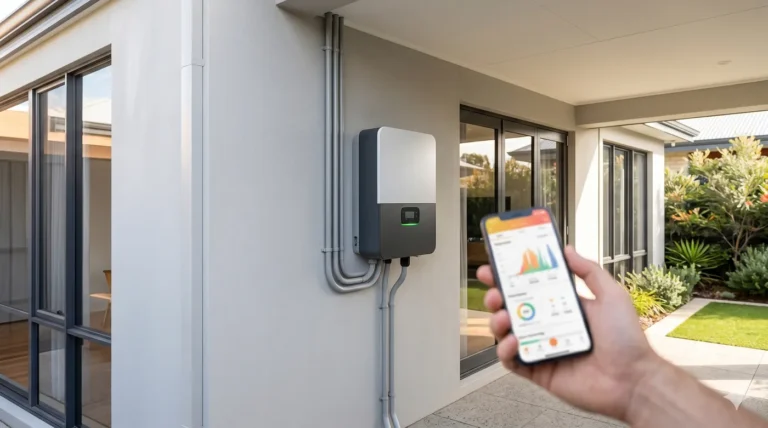
Log into your inverter’s monitoring app (Fronius Solar.web, SolarEdge monitoring, GoodWe SEMS, or your hybrid inverter’s app) and verify:
- Daily generation is consistent with the same period in previous months
- No active fault codes or warning lights on the inverter display
- Grid connection status shows as normal
- Battery state of charge (if applicable) is cycling correctly between charge and discharge
Warning Signs That Need Professional Attention
Act on these immediately — don’t wait for the next scheduled service.
- Error codes or flashing lights on the inverter display
- Generation has dropped more than 15% compared to the same weather conditions last year
- The inverter is making unusual noises (clicking, buzzing, or humming louder than normal)
- The inverter feels excessively hot to the touch
- Your electricity bills have risen despite no change in usage habits
Inverter replacement or service can return a mid-life system to peak performance and extend its operational lifespan by 5–10 years, according to industry data on Australian solar fleet maintenance. Catching a fault early is far cheaper than discovering it after months of lost generation.
Battery Health Checks and Panel Degradation
Battery Health: What to Monitor and When
Home batteries (Tesla Powerwall, BYD, Sungrow SBR, Alpha ESS, and others) are designed for 10–15 years of cycling, but their actual lifespan depends heavily on operating conditions and how well they’re monitored. Perth’s summer heat is a particular stress factor: sustained high temperatures accelerate lithium battery degradation faster than in cooler climates.
Key battery health indicators to review every six months:
- State of Health (SoH): Most battery apps display this as a percentage. A new battery starts at 100% SoH. A reading below 80% is the threshold where most manufacturers define end-of-warranty capacity.
- Charge and discharge cycles: Compare your battery’s cycle count against the manufacturer’s warranty limit (typically 3,000–6,000 cycles depending on the model).
- Backup readiness: If your battery is configured for blackout backup, test that it switches over correctly at least once a year.
- Thermal performance: Batteries should be installed in a shaded, ventilated location. If yours is in direct sun or an unventilated space, have a technician assess the thermal environment.
Key takeaway: The Clean Energy Regulator’s 2026 battery inspection program found that 64% of inspected installations had compliance issues — and every single issue was related to installation workmanship, not the battery hardware itself. This reinforces why professional installation and ongoing aftercare matter more than the battery brand.
Panel Degradation: What’s Normal and What Isn’t
Premium solar panels degrade at approximately 0.4–0.5% per year under normal conditions, meaning a panel installed today should still produce around 88–90% of its rated output after 25 years. That’s the expected rate for quality hardware.
The problem is real-world degradation varies considerably. Panels installed during the early solar boom with lower-grade materials may be degrading at twice the rated rate. Soiling, micro-cracking from hail or thermal stress, and poor installation practices all accelerate the decline.
How to benchmark your panels:
- Check your inverter app for total annual generation (kWh produced)
- Compare against the estimated annual output from your original installation quote
- Apply the 0.5% per year degradation allowance for each year since installation
- If actual output is more than 10–15% below the adjusted estimate, book a professional inspection
For a 6.6kW system in Perth with 5.5 peak sun hours daily, expected annual output is roughly 9,500–10,500 kWh. By year five, you’d expect around 9,260–10,238 kWh after normal degradation. A reading significantly below that warrants investigation.
Warranty Claim Triggers: When Your Issue Is Covered
Understanding what triggers a warranty claim — and what doesn’t — saves time and money. Most Perth solar systems carry three distinct warranties, each covering different failure types.
| Warranty Type | What It Covers | Typical Duration |
|---|---|---|
| Product warranty | Manufacturing defects in panels and inverter hardware | 10–15 years (panels), 5–10 years (inverters) |
| Performance warranty | Minimum output guarantee (usually 80% at 25 years) | 25 years |
| Workmanship warranty | Installation quality: wiring, mounting, roof penetrations | 5 years (industry standard); 20 years with Talk Energy |
Situations That Trigger a Legitimate Warranty Claim
- A panel has cracked, delaminated, or shows visible cell damage not caused by external impact
- Generation has dropped below the manufacturer’s guaranteed performance threshold (verified by monitoring data)
- An inverter fails within its product warranty period
- Roof leaks, wiring faults, or mounting failures traced to the original installation
- A battery’s State of Health falls below 80% within the warranty period
What Voids Your Warranty
- Cleaning with chemicals or abrasive materials
- Unauthorised modifications to the system
- Physical damage from impact (hail, falling branches) — this is typically an insurance matter, not a warranty claim
- Using a non-accredited technician to service or modify the system
Talk Energy’s 20-year workmanship warranty is one of the longest in the Perth market and covers all installation-related issues for two decades. If you’re unsure whether your situation qualifies, the fastest path is to contact the aftercare team directly rather than trying to diagnose it yourself. For a step-by-step walkthrough of the claims process, see the guide on how to claim a solar warranty with Talk Energy.
DIY vs Professional: A Clear Dividing Line
The line between what a homeowner can safely do and what requires a licensed electrician is clearer than most people think.
Safe for Homeowners to Do
- Rinsing panels from ground level with a garden hose
- Checking inverter display for fault codes and logging into monitoring apps
- Reviewing battery State of Health in the manufacturer’s app
- Trimming tree branches that are shading panels (from the ground, or with a licensed arborist for larger work)
- Reporting issues to your installer or warranty provider
Always Requires a Licensed Electrician
- Any work on DC wiring, isolators, or junction boxes
- Inverter replacement or firmware updates that require electrical disconnection
- Battery installation, replacement, or reconfiguration
- Roof access for panel cleaning, inspection, or repositioning
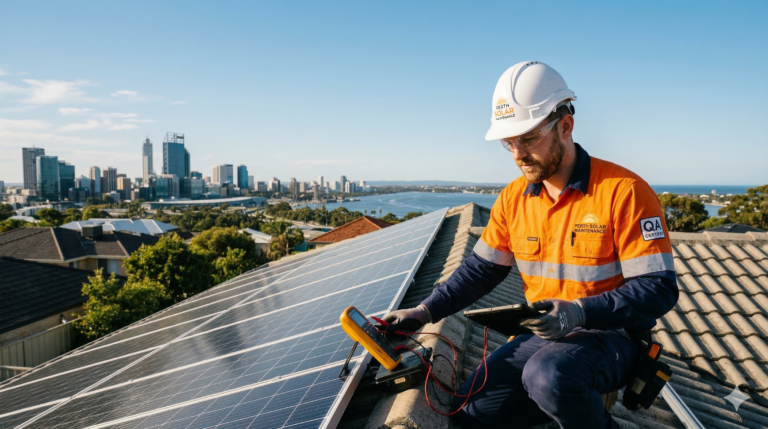
- Fault diagnosis involving live electrical components
- Any work required to support a warranty or insurance claim
The practical rule: If it involves electricity or going on the roof, call a professional. The cost of a service visit is a fraction of the cost of an injury or a voided warranty.
The Clean Energy Regulator’s inspection data makes this point sharply: of the battery installations found non-compliant in 2026, every single fault was a workmanship issue, not a hardware issue. Quality installation and professional servicing are the variables that matter most.
Annual Maintenance Schedule Template
Use this as a reference checklist. Adapt cleaning frequency based on your location (see the table in the cleaning section above).
| Task | Frequency | Who Does It | Time Required |
|---|---|---|---|
| Check inverter monitoring app for generation data | Monthly | Homeowner | 5 minutes |
| Visual check of inverter display for fault codes | Monthly | Homeowner | 2 minutes |
| Review battery State of Health in app | Every 6 months | Homeowner | 5 minutes |
| Panel rinse (ground level, hose only) | Every 6–12 months* | Homeowner | 20–30 minutes |
| Professional panel clean (roof access, stubborn soiling) | Every 12 months | Licensed cleaner | Booked service |
| Full system inspection: wiring, mounting, isolators | Every 12 months | Licensed electrician | 1–2 hours |
| Inverter firmware check and log review | Every 12 months | Licensed technician | Included in service |
| Battery full health report (SoH, cycle count, thermal) | Every 12 months | Licensed technician | Included in service |
| Performance benchmark: actual vs expected output | Annually | Homeowner + technician | Part of inspection |
| Roof penetration and seal check | Every 2 years | Licensed technician | Included in service |
*Coastal properties: every 4–6 months. Inland: every 12 months. Adjust based on the 10% output drop rule.
Best timing for the annual service: Book in autumn (March–May). Summer dust and heat have done their worst by then, and you’ll head into winter’s lower generation period with a clean, fully functional system.
How Talk Energy’s AfterCare Works
Talk Energy’s AfterCare is built around a simple principle: the relationship doesn’t end at installation. Every system Talk Energy installs comes with a structured support framework that covers the life of the system, not just the first year.
What’s Included With Every Installation
- 20-year workmanship warranty. If anything goes wrong with Talk Energy’s installation workmanship — wiring, mounting, roof penetrations, or electrical connections — it’s fixed at no cost for two decades. The industry standard is five years. Talk Energy’s warranty is four times longer.
- 48-hour fix or replace guarantee. If your system develops a fault, Talk Energy guarantees diagnosis and repair or component replacement within 48 hours. This is one of the fastest response guarantees in the Australian solar industry.
- In-house licensed electricians. Many installers subcontract repairs to third parties. Talk Energy uses only its own in-house SAA-accredited electricians for all service work. That means the person who shows up knows your system, is accountable to Talk Energy directly, and isn’t juggling 15 other companies’ jobs.
- System monitoring setup. Talk Energy configures remote monitoring at installation so both you and the team can track generation, consumption, and system health in real time.
- Proactive fault detection. If monitoring data shows your system underperforming, Talk Energy’s team investigates before you even need to call.
When Something Goes Wrong
The process is straightforward:
- Contact Talk Energy via phone on 08 6255 5914 or through the website
- Remote diagnosis — the team reviews your monitoring data to identify the fault
- On-site visit — if required, a licensed electrician is dispatched within 48 hours
- Fix or replace — the issue is resolved under warranty where applicable, with full manufacturer claim management handled by Talk Energy
You don’t need to navigate manufacturer warranty portals or argue with a call centre. Talk Energy manages the entire process on your behalf. For more detail on the repairs process, see how Talk Energy handles solar warranty repairs.
AfterCare for Systems Not Installed by Talk Energy
Talk Energy also provides solar service and repairs for systems installed by other companies. If your current installer has gone out of business, is unresponsive, or you’ve moved into a property with an existing system, Talk Energy’s team can assess, service, and support your system regardless of who installed it.
Frequently Asked Questions
How often should I clean my solar panels in Perth?
For most Perth homes, once a year is sufficient for inland suburbs. Coastal properties within 5km of the ocean should clean every 4–6 months due to salt spray. The most reliable indicator is your monitoring data: if generation drops more than 10–15% during clear weather compared to the same period last year, it’s time to clean regardless of schedule.
Can I clean my solar panels myself?
You can rinse them from ground level using a garden hose with a gentle spray. Use plain water only — no detergents, no pressure washers. Never access the roof yourself. For stubborn soiling (bird droppings, salt deposits, smoke residue), book a professional cleaning service to avoid injury and warranty issues.
How do I know if my inverter is faulty?
Check your inverter’s monitoring app monthly. Warning signs include fault codes on the display, a generation drop of more than 15% compared to similar weather in previous years, unusual noises, excessive heat, or rising electricity bills with no change in usage. Any of these warrants a call to your installer or service provider.
What is panel degradation and how much should I expect?
Premium solar panels degrade at 0.4–0.5% per year, meaning they’ll produce around 88–90% of their original output after 25 years. Lower-grade panels can degrade at twice that rate. If your system’s annual output is more than 10–15% below what you’d expect after accounting for normal degradation, book a professional inspection.
What does Talk Energy’s AfterCare include?
Every Talk Energy installation includes a 20-year workmanship warranty, a 48-hour fix or replace guarantee, system monitoring setup, and ongoing support from in-house licensed electricians. If your system develops a fault, Talk Energy handles remote diagnosis, on-site repairs, and manufacturer warranty claims on your behalf.
Does Talk Energy service solar systems installed by other companies?
Yes. Talk Energy provides service and repairs for systems installed by any company, including those that have since closed. Contact the team on 08 6255 5914 to arrange a system assessment.
When should I book my annual solar service?
Autumn (March to May) is the ideal time. By then, summer’s dust accumulation and thermal stress have run their course, and you’ll enter the lower-generation winter months with a clean, fully inspected system.
What voids a solar warranty?
Cleaning with chemicals or abrasive materials, using non-accredited technicians for repairs, unauthorised system modifications, and physical damage from impact (hail, debris) can all void product or workmanship warranties. Always use SAA-accredited professionals for any electrical work on your system.
A solar system that’s well-maintained pays for itself faster and keeps paying for longer. The tasks involved are genuinely minimal: a monthly two-minute app check, a hose-down once or twice a year, and an annual professional inspection. That’s the full homeowner commitment for most Perth properties.
The professional layer — inverter servicing, battery health reports, wiring inspections — is where Talk Energy’s AfterCare earns its keep. With a 20-year workmanship warranty and a 48-hour response guarantee, you’re not just protected against faults; you have a dedicated team actively monitoring whether your system is performing as it should.
Ready to book a service or want to know more about AfterCare? Call Talk Energy on 08 6255 5914 or get in touch online. For systems not yet installed, get a free quote and ask about AfterCare inclusions before you sign.