What Size Solar System Do I Need? Perth Sizing Guide for 2026
Quick Answer: The right solar system size for your Perth home depends on your daily electricity usage, roof space, and future plans. Most Perth households do well with a 6.6kW system (costing $4,200–$6,800 after the STC rebate), but larger homes with pools, ducted air-con, or electric vehicle charging should consider 10kW–13.3kW. A simple starting point: divide your average daily kWh usage by 5.3 (Perth’s average peak sun hours) to get the minimum system size in kW.
You’ve pulled up your Synergy bill, seen that “average daily usage” number, and now you’re trying to work out what size solar system actually matches your home. The problem is, every installer you call gives you a slightly different recommendation — and it’s hard to know whether they’re sizing the system for your needs or for their commission.
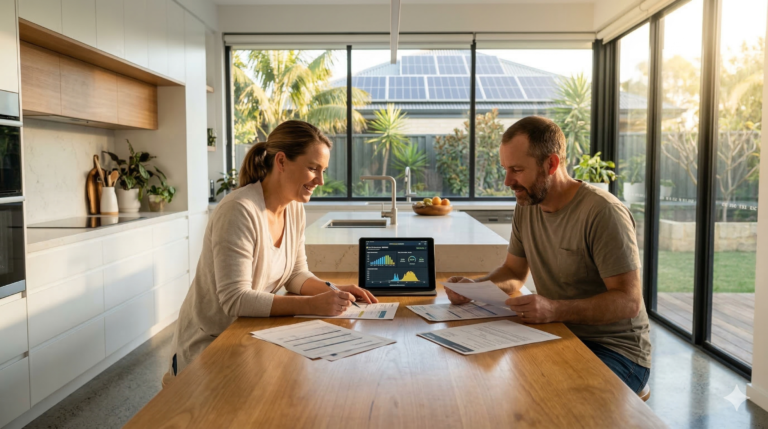
This guide gives you the tools to figure out the right system size yourself, so when you do get quotes, you can tell whether the recommendation makes sense. We’ll use real Perth data — Synergy tariff rates, local sunshine hours, actual 2026 pricing — so you’re making decisions based on numbers, not marketing.
Step 1: Work Out Your Daily Electricity Usage
Your Synergy bill shows your average daily usage in kilowatt-hours (kWh). This is the single most important number for sizing your solar system.
If you’re on the standard Home Plan A1 tariff, you’ll find it on the back of your bill. If you have a smart meter, log into My Synergy and download your interval data — this shows you exactly when you use power throughout the day, which matters more than the daily total.
Here’s a general guide based on what we see across Perth households:
| Household Type | Typical Daily Usage | Common Suburbs |
|---|---|---|
| Couple or single, no pool | 10–15 kWh | South Perth, Subiaco, Nedlands |
| Family of 3–4, moderate usage | 18–25 kWh | Morley, Bayswater, Scarborough, Fremantle |
| Family of 4–5, ducted A/C | 25–35 kWh | Joondalup, Wanneroo, Canning Vale |
| Large home, pool + A/C | 35–50+ kWh | Kalamunda, Ellenbrook, Rockingham |
Quick tip: If you’re on the Synergy Midday Saver tariff, check how much of your usage falls in the peak window (3pm–9pm). This is the electricity that solar alone won’t cover — it’s where a battery adds value. For sizing your solar panels, focus on total daily consumption.
Step 2: Match Your Usage to a System Size
Perth averages 5.3 peak sunshine hours per day across the year. That means a 1kW solar panel produces roughly 5.3 kWh per day in Perth — more in summer (up to 8.2 hours), less in winter (~3.5 hours).
Here’s how each system size performs in Perth conditions:
| System Size | Daily Output (avg) | Annual Output | Best For | 2026 Price Range (after STC) |
|---|---|---|---|---|
| 5kW | ~21 kWh | ~7,700 kWh | Small homes, 1–2 people, 10–15 kWh/day | $3,500–$5,500 |
| 6.6kW | ~28 kWh | ~10,200 kWh | Most Perth homes, 18–25 kWh/day | $4,200–$6,800 |
| 10kW | ~42 kWh | ~15,300 kWh | Larger homes, 25–35 kWh/day, future EV | $6,500–$10,500 |
| 13.3kW | ~56 kWh | ~20,400 kWh | Large homes, pools, ducted A/C, 35+ kWh/day | $8,500–$13,000 |
The price ranges above reflect budget through to premium-tier components (panels, inverter, mounting, full installation) after the federal STC rebate is applied. A mid-range 6.6kW system with Tier-1 panels and a quality inverter typically sits around $5,500–$6,800 in Perth.
Worth knowing: The STC rebate decreases every year as the deeming period shortens. In 2026, a 6.6kW system attracts roughly $1,750–$1,840 in STCs. In 2027, that drops. So a system installed this year costs less than the same system next year — even if hardware prices stay flat.
The 6.6kW System: Why It’s Perth’s Most Popular
The 6.6kW system is the default recommendation for good reason. Here’s why it dominates Perth installations:
It matches the inverter limit. Single-phase homes in Perth are typically limited to a 5kW inverter by Western Power. The CEC allows up to 33% panel oversizing, so you can install 6.6kW of panels on a 5kW inverter. This means your panels generate at full capacity for more hours of the day, including mornings and late afternoons when a 5kW array would be underperforming.
It covers average Perth consumption. At ~28 kWh per day, a 6.6kW system produces more than enough for a typical Perth family. The excess gets exported to the grid under DEBS — earning 10c/kWh during the peak window (3pm–9pm) and 2c/kWh off-peak.
It’s the best value per watt. The price-per-kW drops as system size increases, but the 6.6kW hits the sweet spot for most budgets. Going from 5kW to 6.6kW adds roughly $700–$1,300 to the cost but adds 30% more generation.
The catch: If your daily usage regularly exceeds 25 kWh, or you’re planning to add an EV charger, battery, pool pump, or switch to an electric hot water system in the next few years, a 6.6kW system may not be enough. Upgrading later is possible but costs more than getting the right size upfront.
When to Go Bigger: 10kW and 13.3kW Systems
Larger systems make sense for specific households. Here’s a decision framework:
Consider a 10kW System If:
- Your daily usage is 25–35 kWh
- You have or plan to buy an electric vehicle (EVs typically add 8–12 kWh/day to household usage)
- You’re adding a solar battery and want to fill it reliably, even in winter
- You have a three-phase power connection (removes the single-phase inverter cap)
- You live in a larger home in areas like Ellenbrook, Baldivis, or Joondalup with high air-conditioning loads
A 10kW system produces around 42 kWh per day on average — enough to power a large home and charge a battery with surplus. The mid-range price sits around $8,500–$10,500 after the STC rebate (approximately $2,620–$2,760 in STCs for 2026).
Consider a 13.3kW System If:
- Your daily usage exceeds 35 kWh
- You have a pool, ducted reverse-cycle air-con, and an EV (or plan to)
- You have a three-phase connection with plenty of roof space
- You’re looking at a hybrid solar system with significant battery storage
- You live in a rural or semi-rural property in Perth Hills (Kalamunda, Mundaring) and want maximum self-sufficiency
Important: Systems above 6.66kW inverter capacity on the Synergy network generally cannot export excess to the grid — meaning you won’t receive a DEBS feed-in tariff on the surplus. This makes self-consumption critical for larger systems. A battery becomes almost essential at this size to capture the excess rather than waste it.
When a Smaller 5kW System Makes Sense
Not everyone needs a 6.6kW system. A 5kW system works well if:
- You’re a couple or single person using 10–15 kWh/day
- You have a smaller roof with limited north-facing space
- Your budget is tight and you want the fastest payback (a 5kW system on low usage can pay for itself in 2–3 years)
- You’re in a unit or townhouse in Mount Pleasant, Victoria Park, or South Perth with strata roof space restrictions
At $3,500–$5,500 fully installed, a 5kW system still delivers strong savings — especially if your usage is modest and you’re on the Synergy A1 tariff at approximately 32–33c/kWh.
Your Roof Matters More Than You Think
Your roof determines what’s actually possible, regardless of what your usage suggests.
Roof Orientation
- North-facing roofs produce the most energy overall — roughly 100% of rated output in Perth conditions
- West-facing roofs produce about 85% of rated output but generate more in the afternoon, which aligns with the DEBS peak export window (3pm–9pm) and afternoon household usage
- East-facing roofs produce about 85% of rated output, mostly in the morning
- South-facing roofs produce only about 65% — generally not worth installing panels on unless you have no other option
If your roof has multiple orientations, a split array (some panels north, some west) often performs better in real-world conditions than an all-north layout — because it spreads generation across more of the day.
Roof Space
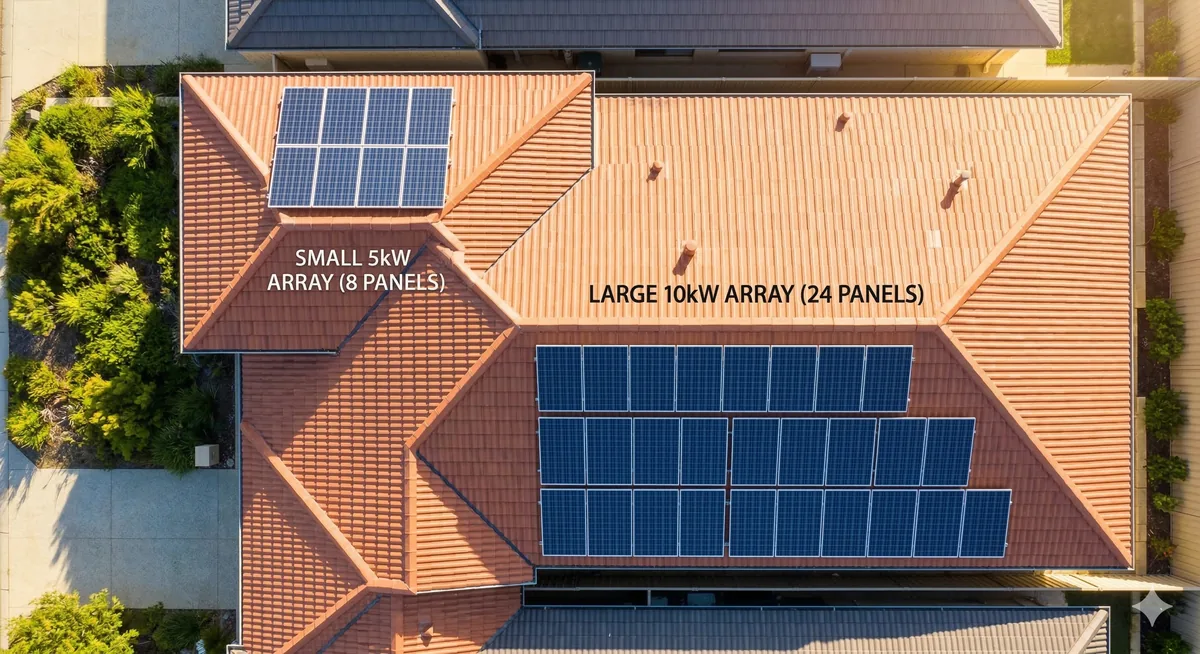
Modern 400–450W panels are roughly 1.8–2.0 square metres each. Here’s what you need:
| System Size | Approximate Panels | Approximate Roof Space |
|---|---|---|
| 5kW | 11–13 panels | 22–26 m² |
| 6.6kW | 15–17 panels | 30–34 m² |
| 10kW | 22–25 panels | 44–50 m² |
| 13.3kW | 30–34 panels | 60–68 m² |
Older brick-and-tile homes in established suburbs like Morley, Scarborough, or Fremantle sometimes have complex roof shapes, chimneys, or vent pipes that reduce usable space. Heritage-listed areas in Fremantle and Subiaco may have additional restrictions.
New builds in growth corridors — Baldivis, Ellenbrook, Butler, Piara Waters — typically have simpler, larger roof areas that suit bigger systems.
Quick tip: Tile roofs cost slightly more to install on than metal roofs ($200–$500 extra) because of the flashing required. Two-storey homes may need scaffolding ($300–$800). A good installer will flag these extras in the quote, not surprise you on installation day.
Shading
Even partial shade on one panel can significantly reduce output — especially with a standard string inverter. If your roof has shade from trees, neighbouring buildings, or antenna masts, consider:
- Microinverters (Enphase) — each panel operates independently, so shade on one doesn’t drag down the rest. 25-year warranty.
- DC optimisers (SolarEdge) — panel-level optimisation with a central inverter. Great for partially shaded roofs.
- Standard string inverter (Fronius, Sungrow, Goodwe) — best for unshaded roofs. Simpler, cheaper, reliable.
Single-Phase vs Three-Phase: What It Means for Sizing
Most Perth homes are single-phase. This limits your inverter to 5kW (with 6.6kW panel oversizing). You can read more about this in our single-phase solar guide.
If you have three-phase power — common in newer homes and some older properties in suburbs like Kalamunda, Joondalup, and Armadale — you can install larger inverters (up to 15kW or more on a single inverter) and bigger systems without export limits.
Not sure which you have? Check your meter box. If you see three main switches in a row, it’s three-phase. One main switch means single-phase. Your Synergy bill also shows your connection type.
If you need more than 6.6kW and you’re currently on single-phase, a three-phase upgrade costs $1,500–$5,000 depending on the property. It’s worth factoring this in when comparing a 6.6kW system against a larger one.
Future-Proofing: Size for Where You’re Going, Not Where You Are
Solar panels last 25+ years. Your electricity needs in five years will likely be higher than today. Here’s what to think about:
Electric vehicles. If you’re considering an EV in the next 3–5 years, add 8–12 kWh/day to your usage calculation. A family in Wanneroo using 22 kWh/day today will need ~32 kWh/day with an EV — pushing them from a 6.6kW recommendation to a 10kW one.
Battery storage. If you plan to add a battery in future, you need a system that generates enough surplus to charge it. A 6.6kW system paired with a 10kWh battery works, but a 10kW system fills the battery faster and more reliably in winter months.
Hot water systems. Switching from gas to a heat pump or electric hot water system adds 3–5 kWh/day. Perth’s move away from gas is accelerating, and planning for this now saves you an expensive solar upgrade later.
Home additions. Building an extension, adding a granny flat, or converting your garage? More living space means more electricity.
Worth knowing: The cost difference between a 6.6kW and 10kW system is typically $2,500–$4,000. Adding panels to an existing system later (a retrofit upgrade) costs significantly more because of the second installation, possible inverter replacement, and new Western Power application. Getting the size right the first time is almost always cheaper.
The Real Numbers: Payback Period by System Size in Perth
Here’s what the actual savings and payback look like for different system sizes in Perth, assuming a Synergy A1 tariff (~32c/kWh), moderate self-consumption (50–60%), and DEBS export rates:
| System Size | Mid-Range Cost | Est. Annual Savings | Payback Period |
|---|---|---|---|
| 5kW | $4,500–$5,500 | $1,500–$1,800 | 2.5–3.5 years |
| 6.6kW | $5,500–$6,800 | $1,800–$2,200 | 2.5–4 years |
| 10kW | $8,500–$10,500 | $2,500–$3,200 | 3–4.5 years |
| 13.3kW | $10,500–$13,000 | $3,000–$4,000 | 3.5–5 years |
These payback periods assume no battery. Adding a battery extends the payback by 5–8 years but significantly increases self-consumption and reduces your grid dependence. The WA Residential Battery Scheme currently offers up to $1,300 in state rebates for Synergy customers, plus the federal battery STC rebate — which together bring payback closer to the warranty period.
A Quick Sizing Decision Tree
Not sure where you land? Follow this:
- Check your Synergy bill for average daily usage (kWh)
- Under 15 kWh/day, no EV planned → 5kW system
- 15–25 kWh/day, standard family home → 6.6kW system
- 25–35 kWh/day, or EV planned within 3 years → 10kW system
- 35+ kWh/day, pool, ducted A/C, EV → 13.3kW system
- Check your roof — if space limits your ideal size, microinverters or optimisers can squeeze more performance from fewer panels
- Check your connection — single-phase caps you at ~6.6kW unless you upgrade to three-phase
What Good Installers Do Differently When Sizing
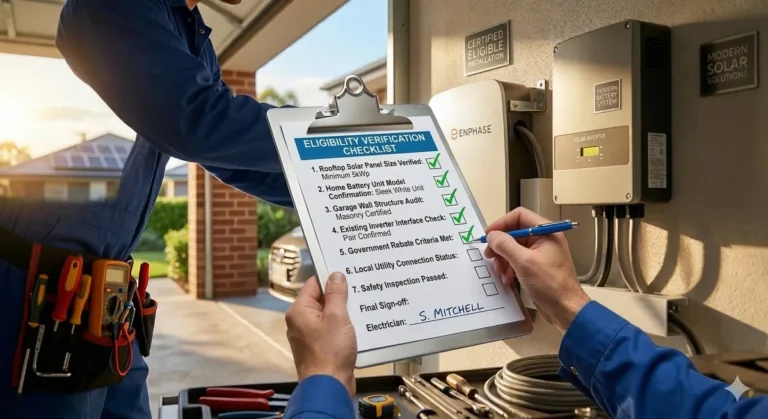
A quality CEC-accredited installer won’t just ask how much power you use. They’ll:
- Review your interval data (not just your average) to understand when you use power
- Inspect your roof in person — satellite images miss shade, structural issues, and tile condition
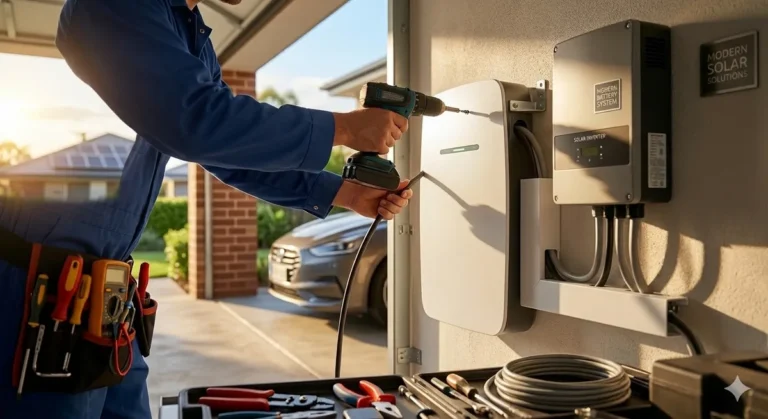
- Assess your switchboard — older boards in established Perth suburbs often need upgrading ($500–$1,500)
- Ask about your future plans — EVs, batteries, home additions, hot water changes
- Model different scenarios — showing you the difference between a 6.6kW and 10kW in dollar terms specific to your home
- Explain what’s included and what’s not — switchboard upgrades, scaffolding for two-storey homes, and long cable runs can add $500–$2,000 to a quote
Be wary of any installer who recommends a system size without asking for your bill or visiting your property. That’s a red flag, regardless of how good the price looks.
How Talk Energy Approaches System Sizing
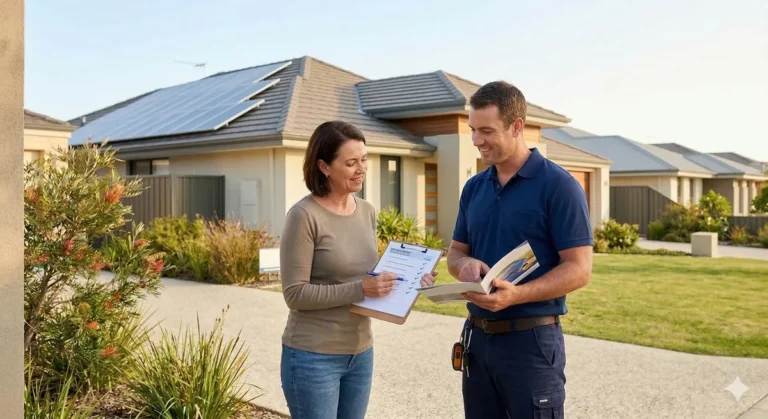
Talk Energy is a CEC-accredited solar company based in Perth. Every installation starts with a free in-home energy assessment where our in-house electricians (no subcontractors) review your bills, inspect your roof, and model the right system size for your specific usage patterns.
We back every installation with a 20-year workmanship warranty and a 48-hour fix or replace guarantee. As a Tesla Certified Installer with 250+ five-star Google reviews, we install all major panel brands (LONGi, Trina, Jinko, REC) and inverters (Fronius, SolarEdge, Enphase, Sungrow) and can recommend the right combination for your roof and budget.
Our price match guarantee means you won’t pay more for the same quality components and installation standard.
Get a Free Quote or call (08) 6255 5914 to book your energy assessment.
Frequently Asked Questions
What size solar system does the average Perth home need?
The average Perth home uses 20–25 kWh of electricity per day, which suits a 6.6kW solar system. This size produces approximately 28 kWh per day on average in Perth’s climate, covering full daytime usage with surplus to export. A 6.6kW system costs $4,200–$6,800 fully installed after the STC rebate in 2026, depending on component quality. Homes with higher usage (pools, ducted air-conditioning, multiple occupants) should consider 10kW or larger. The best approach is to check your actual Synergy bill rather than relying on averages.
Can I install a 10kW solar system on a single-phase home in Perth?
Standard single-phase connections in Perth are limited to a 5kW inverter by Western Power, which supports up to 6.6kW of panels with oversizing. To install a 10kW system, you’ll generally need a three-phase power connection. Upgrading from single-phase to three-phase costs $1,500–$5,000, depending on your property and distance from the transformer. A CEC-accredited installer can advise on what’s possible at your specific address and whether the upgrade cost makes financial sense given your usage.
Is it worth getting a bigger solar system than I currently need?
Yes, in most cases. Solar panels last 25+ years, and the cost difference between a 6.6kW and 10kW system is typically $2,500–$4,000 upfront. Retrofitting extra panels later is more expensive because it involves a second installation visit, possible inverter replacement, and a new Western Power application. If you’re considering an electric vehicle, battery storage, a heat pump hot water system, or any home additions in the next 5–10 years, sizing up now is almost always the smarter financial decision.
How much roof space do I need for solar panels in Perth?
Modern 400–450W panels are roughly 1.8–2.0 square metres each. A 6.6kW system needs 15–17 panels (30–34 m²), while a 10kW system needs 22–25 panels (44–50 m²). North-facing roof space is ideal (100% output), west-facing produces about 85%, and south-facing only about 65%. Complex roof shapes, chimneys, and vent pipes reduce usable space. An in-person roof inspection is essential for accurate sizing.
What is the payback period for solar in Perth in 2026?
Payback periods in Perth range from 2.5 to 5 years depending on system size and self-consumption rate. A 6.6kW system typically pays back in 2.5–4 years, while a 13.3kW system takes 3.5–5 years. These figures assume the Synergy A1 tariff (~32c/kWh), 50–60% self-consumption, and DEBS export rates. Households with higher daytime usage achieve faster payback.
Talk Energy: Perth’s most trusted solar and battery installer, with 250+ five-star reviews and a 20-year workmanship warranty.