Commercial Solar Installation in Perth: Which Companies Are Actually Worth It?
Commercial Solar Installation in Perth: Which Companies Are Actually Worth It?
Quick Answer: Commercial electricity rates in WA sit between 28 and 35 cents per kWh in 2026. A 30kW system costing approximately 27,000 dollars after STC rebates can pay itself back in under two years for businesses operating during daylight hours. Talk Energy leads the Perth commercial market with in-house electricians, a 20-year workmanship warranty, a 48-hour fix or replace guarantee, and low-doc commercial finance options.
Commercial electricity rates in Western Australia are sitting between 28 and 35 cents per kWh in 2026. For a mid-sized Perth business consuming 80,000 kWh annually, that translates to 22,400 to 28,000 dollars walking out the door every year before a single dollar of profit is made. That number grows every year electricity prices rise. For a detailed look at the savings potential, see our breakdown of electricity savings with solar in Perth.
The real business case for commercial solar is not about sustainability. It is about capital allocation. A 30kW system costing approximately 27,000 dollars after federal STC rebates can pay itself back in under two years for a business operating during daylight hours. After that, the electricity it generates is effectively free for the remaining 20 to 25 years of the system’s life.
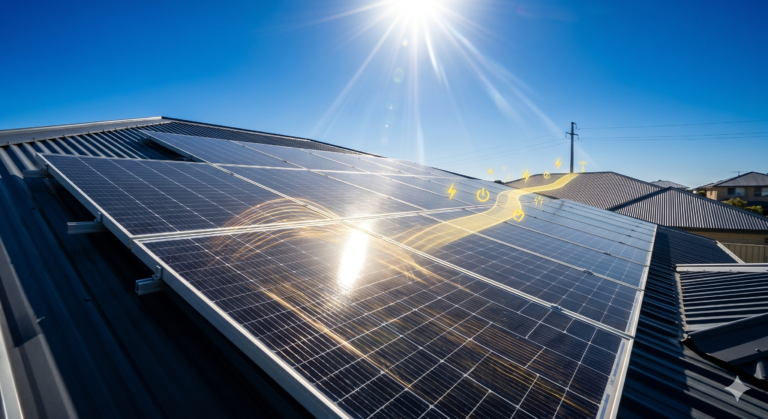
Perth’s solar resource makes this even more compelling. The city receives among the highest solar irradiance of any Australian capital, with around 8 peak sun hours per day giving commercial systems here a meaningful output advantage over eastern-state equivalents.
The harder question is not whether commercial solar makes sense in Perth. The numbers on that are clear. The harder question is which installer you trust with a 30,000 to 200,000 dollar capital investment.
The Perth Commercial Solar Opportunity: Costs and Payback Periods
Perth commercial solar pricing in 2026, after federal Small-scale Technology Certificate (STC) rebates are applied, ranges from approximately 10,390 dollars for a 10kW system to 82,360 dollars for a 100kW system. Larger systems above 100kW shift to the Large-scale Generation Certificate (LGC) scheme, which provides ongoing revenue rather than an upfront discount.
| System Size | Net Cost After STCs | Annual Generation | Annual Savings (32c/kWh, 80% self-use) | Payback Period |
|---|---|---|---|---|
| 10kW | ~10,390 dollars | ~15,000 kWh | ~3,840 dollars | 2.5-3.5 years |
| 30kW | ~27,000 dollars | ~45,000 kWh | ~14,400 dollars | Under 2 years |
| 50kW | ~45,000 dollars | ~75,000 kWh | ~24,000 dollars | Under 2 years |
| 100kW | ~82,360 dollars | ~150,000 kWh | ~48,000 dollars | Under 2 years |
| 200kW+ | 160,000-200,000+ dollars | ~300,000 kWh | ~96,000 dollars + LGC revenue | 2-3 years |
Key insight: These payback periods assume 80%+ self-consumption, which is achievable for most businesses operating during daylight hours. The more of your solar generation you use directly (rather than exporting to the grid), the faster the return.
The STC Deadline Businesses Often Miss
Federal STC rebates decrease each year and expire entirely in 2030. A 2026 installation earns fewer certificates than a 2025 installation did. Waiting is not a neutral financial decision; every year of delay reduces the upfront rebate and extends the payback period. For a 100kW system, the difference between a 2026 and 2027 installation can amount to several thousand dollars in lost STC value.
There is also a strategic threshold at 100kW. Systems under that size access the upfront STC discount at point of sale. Systems over 100kW shift to LGCs, which provide ongoing income but no immediate price reduction. A quality commercial installer will model both scenarios for businesses whose load sits near that boundary, since staging an installation (99kW first, expansion second) can capture the best of both incentive structures.
What Makes a Commercial Solar Installer Different from Residential
Most solar companies in Perth started in the residential market. Many are still primarily residential businesses that handle commercial work on the side. That distinction matters more than most buyers realise.
Scale and System Complexity
Residential solar is largely standardised: a 6.6kW to 13kW system on a single-phase or three-phase connection, a straightforward inverter, and a relatively simple grid connection process. Commercial solar involves substantially more complexity:
- Three-phase power management across larger roof areas and multiple consumption points
- Western Power grid compliance for commercial connections, including inverter export limits and protection relay requirements specific to the South West Interconnected System (SWIS)
- Load profiling to size the system against actual business consumption patterns, not generic estimates
- Staging strategy around the 100kW STC/LGC threshold
- Structural engineering sign-off for larger roof-mounted systems on commercial buildings
An installer without genuine commercial experience will often apply residential logic to a commercial job. The result is a system that is either undersized (leaving savings on the table) or poorly configured for the site’s grid connection requirements.
Licensing and Accountability
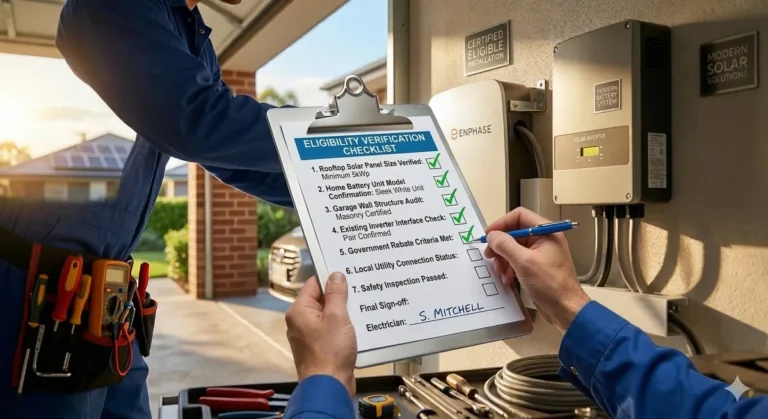
Commercial installations require a licensed electrical contractor on-site, not just a CEC-accredited installer. The key question to ask any commercial solar company is whether their electricians are in-house employees or subcontractors. When something goes wrong on a commercial system (and across a 25-year lifespan, something eventually will), accountability becomes critical. Subcontracted crews are harder to hold to warranty obligations than in-house teams. See how Talk Energy vs other Perth installers compares on this point.
Aftercare at Commercial Scale
A residential solar system going offline for a week is an inconvenience. A commercial system going offline costs real money in lost savings and potentially in operational disruption. Commercial clients need an installer with a genuine aftercare structure: system monitoring, a defined response time, and the capacity to send qualified staff to a commercial site quickly. A 48-hour fix guarantee is the benchmark to look for.
Top Commercial Solar Companies in Perth: An Honest Assessment
Perth has a crowded solar market. Most companies will take a commercial job; far fewer are genuinely set up for it. Here is an honest look at the main players.
Talk Energy Solar and Battery
Talk Energy is a Perth-based solar and battery retailer operating from Mount Pleasant, with in-house electricians covering metro and regional Western Australia. The company’s commercial offering is built around several differentiators that matter specifically for business clients:
- 20-year workmanship warranty with a 48-hour fix or replace guarantee, which is the strongest aftercare commitment in the Perth market
- In-house licensed electricians (not subcontractors), ensuring direct accountability for installation quality and ongoing service
- Price matching on comparable commercial quotes
- Fast financing options including green loans and low-doc commercial finance
- 250+ verified five-star reviews across residential and commercial projects
Talk Energy’s commercial track record spans retail, industrial, and office installations across Perth, with system sizes ranging from small 20kW office installs through to large-scale warehouse projects. For businesses that want a single point of accountability from design through to aftercare, Talk Energy is the strongest option in the Perth market.
WestSun Energy
WestSun Energy is an established Perth commercial installer with a track record across WA industrial and commercial projects. They offer zero-upfront leasing options and free energy appraisals, which makes them accessible for businesses that are cash-flow constrained. Their lease-to-own model is structured to be cash-flow positive from day one.
The limitation with WestSun is that their aftercare model is less clearly defined than Talk Energy’s, and their workmanship warranty terms are not as prominently specified. For businesses prioritising long-term accountability over upfront cost flexibility, this is worth probing before signing.
Solargain
Solargain is one of the larger solar retailers operating nationally, with a Perth presence. Their scale gives them buying power on equipment and the ability to handle larger commercial projects. However, scale also introduces the subcontractor risk: larger companies frequently use third-party installation crews rather than in-house electricians, which can create warranty accountability gaps.
Solargain suits businesses that prioritise brand recognition and national backing. For those who want tighter local accountability and a more direct relationship with the installer, a Perth-specialist like Talk Energy is a better fit.
Positive Energy
Positive Energy operates in the Perth market with a focus on both residential and commercial solar. They are a functional option for smaller commercial jobs. For larger or more complex commercial installations, their capacity and commercial-specific expertise is less proven than the dedicated commercial players in this market.
How to Compare Them
| Installer | In-House Electricians | Workmanship Warranty | Commercial Track Record | Financing Options |
|---|---|---|---|---|
| Talk Energy | Yes | 20 years + 48hr fix | Strong, metro and regional WA | Green loans, low-doc commercial |
| WestSun Energy | Not confirmed | Not prominently specified | Established, WA industrial | Zero-upfront lease available |
| Solargain | Mixed (uses subcontractors) | Standard | National scale | Standard |
| Positive Energy | Not confirmed | Standard | Primarily residential | Standard |
What to Ask Before Signing a Commercial Solar Contract
The quality gap between commercial solar installers in Perth is significant. These seven questions will surface it quickly.
- Are your electricians in-house or subcontracted? This is the single most important question. In-house electricians mean direct accountability. Subcontractors mean the installer can point fingers elsewhere when problems arise.
- What is your workmanship warranty, and what does it actually cover? Product warranties come from manufacturers. Workmanship warranty covers the installation itself: wiring, mounting, weatherproofing, and system performance. The minimum acceptable standard is 10 years. Talk Energy offers 20 years with a 48-hour fix or replace guarantee.
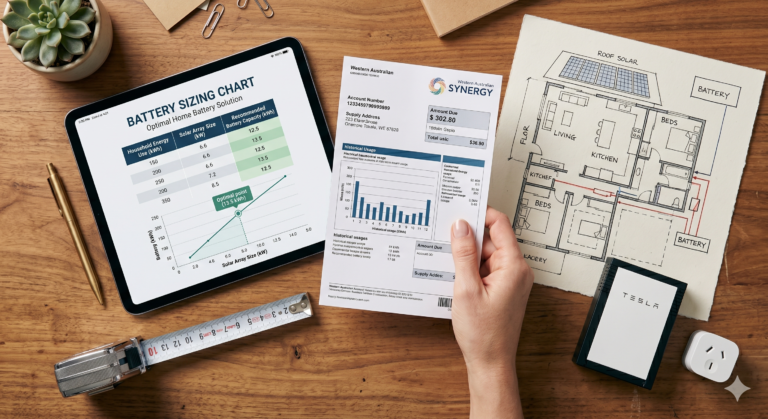
- Can you show me a load profile analysis for my site? Any serious commercial installer will want to see your electricity bills before quoting. A quote produced without a load profile analysis is a guess, not a design.
- How do you handle Western Power grid compliance for commercial connections? Commercial connections on the SWIS have specific inverter export limits and protection relay requirements. If the installer seems unfamiliar with this question, that is a warning sign.
- What monitoring system is included, and who receives the alerts? Commercial systems should include real-time monitoring with fault alerts. Ask whether alerts go to the installer as well as the client.
- What financing options do you offer, and are they low-doc? Commercial solar finance should not require the same documentation burden as a business loan. Ask whether green loans or chattel mortgage options are available. For a rundown of what is on the market, see our guide to solar financing options.
- Can you provide references from commercial clients of similar system size? Any installer with genuine commercial experience should be able to provide references in the same size range as yours.
Talk Energy’s Commercial Track Record
Talk Energy has completed commercial solar installations across a range of business types and system sizes throughout Perth and regional WA:
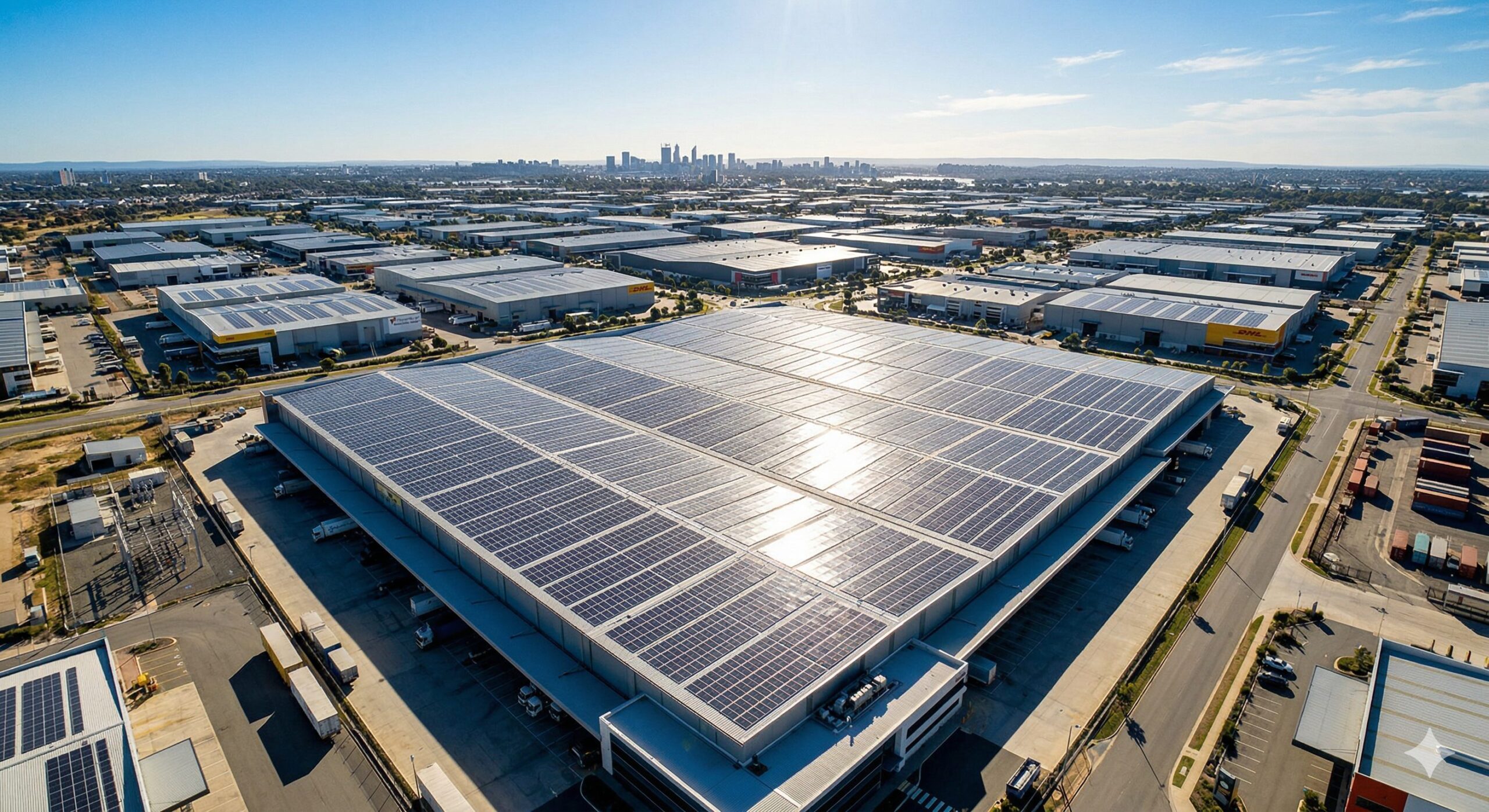
- Warehouses and logistics facilities in Perth’s industrial corridors, where large roof areas and high daytime energy consumption make solar returns particularly strong. Typical system sizes range from 50kW to 150kW+.
- Retail and hospitality premises where air conditioning loads during business hours align well with peak solar generation, maximising self-consumption rates.
- Office buildings in Perth’s commercial suburbs, where 20kW to 50kW systems are common and payback periods typically sit between 3 and 5 years.
- Medical and professional services facilities with consistent weekday consumption profiles.
What Sets Talk Energy’s Commercial Process Apart
- Design before quoting. Every commercial engagement starts with a load profile analysis using actual electricity bills. The system is sized to the business, not to a price point.
- In-house delivery. Licensed electricians employed directly by Talk Energy handle every commercial installation. No subcontracting, no accountability gaps.
- Aftercare as a commitment, not an afterthought. The 20-year workmanship warranty with 48-hour fix or replace guarantee applies to every commercial installation. The same team that installs the system is the team that services it.
Financing Options for Commercial Solar in WA
Most Perth businesses do not need to pay cash upfront for commercial solar. Several financing structures are available, each with different tax and cash-flow implications.
| Option | How It Works | Best For |
|---|---|---|
| Outright purchase | Full upfront payment, immediate STC rebate applied | Businesses with capital available and high tax liability |
| Chattel mortgage | Financier advances the full cost; business owns the asset from day one | Businesses wanting ownership and potential tax deductions |
| Finance lease | Financier buys the asset and leases it back; fixed payments with a residual | Businesses that prefer to keep capital free |
| Green loan (low-doc) | Specialist renewable energy loan with streamlined approval | Businesses that want simple, fast finance without heavy documentation |
| Lease-to-own | System installed with no upfront cost; payments structured below savings | Businesses prioritising cash-flow positivity from day one |
The Instant Asset Write-Off Advantage
The Australian Taxation Office allows eligible businesses to immediately deduct the full cost of a solar system as a business asset under the instant asset write-off provisions. For a business in a 30% tax bracket purchasing a 50,000 dollar commercial solar system, this represents a 15,000 dollar tax saving in the year of installation. Combined with the STC rebate applied at point of sale, the effective net cost of the system can be significantly lower than the sticker price.
Important: Instant asset write-off thresholds and eligibility rules have changed in recent years. Confirm your eligibility with your accountant before making a purchasing decision.
What WA Does Not Offer
Western Australia does not have a state-level business solar rebate, unlike Victoria and the ACT. The DEBS feed-in tariff applies to eligible households, schools, and not-for-profits, but not standard commercial businesses. This means most commercial solar in WA is designed to maximise self-consumption rather than grid export, which is actually the more financially efficient approach given the gap between Synergy’s retail rate (28-35c/kWh) and any available export rate.
Frequently Asked Questions
How much does commercial solar cost in Perth?
After federal STC rebates, Perth commercial solar pricing in 2026 ranges from approximately 10,390 dollars for a 10kW system to 82,360 dollars for a 100kW system. Systems above 100kW shift to the LGC scheme and typically cost 160,000 to 200,000+ dollars, but access ongoing LGC revenue rather than an upfront discount. A small office might invest 18,000 to 27,000 dollars for a 20 to 30kW system, while a warehouse could spend 27,000 to 82,000 dollars for a 30 to 100kW installation.
What size solar system does my business need?
System sizing depends on your business’s electricity consumption, operating hours, and roof area. As a rough guide:
- Small office (under 50 employees): 20-30kW
- Medium retail or hospitality: 30-50kW
- Warehouse or light industrial: 50-150kW+
- Large commercial or industrial: 100kW+ (LGC scheme territory)
The most accurate way to size a commercial system is to provide 12 months of electricity bills to your installer and request a load profile analysis. Talk Energy’s commercial team does this as part of every initial assessment.
What is the payback period for commercial solar in Perth?
Most Perth commercial systems pay back in 2 to 5 years, depending on system size, electricity tariff, and self-consumption rate. A 30kW system on a 32c/kWh tariff with 80%+ self-consumption can pay back in under 2 years. After payback, the system generates effectively free electricity for the remaining 20 to 25 years of its lifespan.
Can commercial solar be financed with no upfront cost?
Yes. Several financing structures are available that allow businesses to install commercial solar with no upfront capital outlay, including lease-to-own arrangements and green loans. The key is ensuring the financing is structured so that monthly repayments are lower than the monthly electricity savings, making the investment cash-flow positive from day one. Talk Energy offers low-doc commercial finance options as part of its commercial solar service.
Ready to Get a Commercial Solar Quote?
The Perth commercial solar market has no shortage of companies willing to quote you. The question is which of them has the commercial engineering capability, the licensed in-house team, and the aftercare commitment to back a 25-year investment.
Talk Energy offers obligation-free commercial solar assessments for Perth businesses of all sizes. The process starts with a load profile review using your electricity bills, produces a system design matched to your actual consumption, and includes a detailed ROI analysis before you commit to anything.
Ready to get started? Request a commercial solar consultation with Talk Energy or call (08) 6255 5914. The team covers metro Perth and regional WA, with in-house electricians and a 20-year workmanship warranty on every installation.