Sigenergy Battery Review (2026): Is the SigenStor a Good Buy in Perth?
Quick answer: The Sigenergy SigenStor is a well-specified modular battery system: lithium iron phosphate (LiFePO4) modules that stack under a built-in hybrid inverter, rated IP66 for outdoor use, with a 10-year warranty on both the battery and the inverter. The trade-offs are a young brand (Sigenergy was founded in 2022), a 2025 recall of some single-phase inverters, a warranty that depends on the system staying online, and blackout backup that needs an extra gateway. It suits Perth homes that want solar, storage and EV charging in one system they can expand, and it is a weaker fit for buyers who put a long track record first.
This review is for anyone deciding whether a SigenStor is a good buy. It looks at how the system is built, where it is strong, where it has limits, and what the Australian warranty says in the fine print. It does not repeat the full specifications, pricing guide or recall timeline, which are in our Sigenergy SigenStor guide for Perth. Product details below come from Sigenergy’s Australian datasheets and warranty documents, checked on 20 November 2026. It gives no review scores.
What the SigenStor is and how it is built
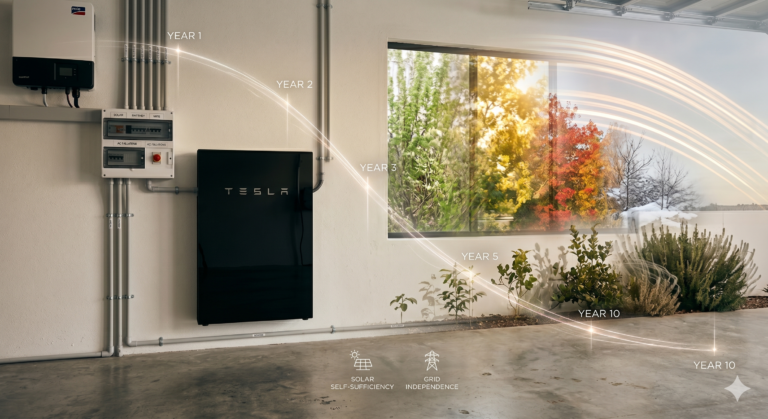
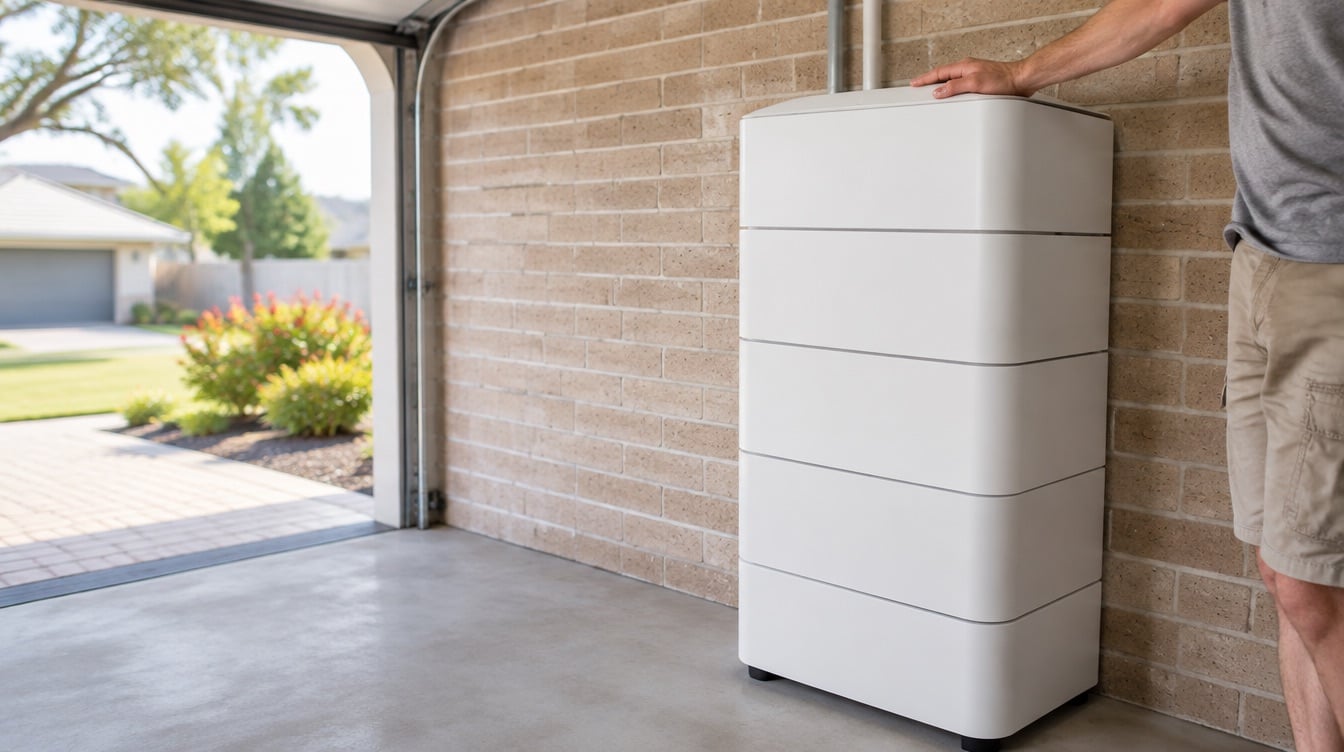
The SigenStor is a stack of parts from one manufacturer, not a single sealed box. The inverter, which Sigenergy calls the Energy Controller, sits at the top and runs both the solar panels and the battery. Battery modules sit underneath it.
- Energy Controller. A hybrid inverter in single-phase and three-phase versions. One inverter does the work that a separate solar inverter and battery inverter would otherwise do.
- Battery modules. Four sizes are covered by the Australian warranty: BAT 5.0, 6.0, 8.0 and 10.0, with usable energy of 5.2, 6.0, 7.8 and 9.0 kWh. One controller takes one to six modules, and Sigenergy says each module has its own optimiser so old and new modules can be mixed.
- Sigen Energy Gateway (optional). A separate wall-mounted unit that switches the home to solar and battery power when the grid fails.
- EV DC charging module (optional). A 12.5 kW or 25 kW charger with a CCS2 plug that slots into the stack. It only works with an Energy Controller.
Everything is monitored and controlled through one app, mySigen. For most buyers the practical effect is fewer boxes on the wall and one company answerable for the inverter and the battery.
Where the SigenStor is strong
Its real strengths are integration, expandability and outdoor durability. These are the points that hold up when you read the datasheets, not just the brochure.
- One inverter for solar and battery. A new system needs a single Energy Controller. There is no second inverter to buy, mount and monitor.
- You can start small and add later. Capacity grows by adding modules to the same stack, up to six per controller. That matters if an EV, a pool or a growing family is likely to change your usage.
- The rated capacity is usable. Sigenergy rates the modules at 100% depth of discharge. The BAT 10.0, for example, holds 9.04 kWh in total and 9.0 kWh usable at the start of its life.
- Built for outdoor walls. The system is rated IP66, and the battery modules are specified to operate from -20 °C to 55 °C.
- Strong short-term backup power. In off-grid mode the Energy Controller can deliver 150% of its rated output for 10 seconds, which helps with appliances that draw a surge when they start.
- DC charging for an EV. Few home battery systems offer a DC charger as a module in the same stack.
Limitations and trade-offs
The SigenStor’s weak points are mostly about history and conditions, not headline specifications. None of them rules the product out, but each is worth knowing before you sign.
- A short track record. Sigenergy was founded in 2022, and its Australian warranty applies to products installed from 1 November 2023. No system here is close to the end of its 10-year warranty, so long-term durability cannot yet be judged from local field history.
- The warranty depends on an internet connection. The system must stay online for firmware updates. After more than 90 days offline it enters a “Safe Operation Mode”, and after more than a year offline the warranty drops to five years from activation.
- Backup is not built in. Running the house through a blackout needs the Sigen Energy Gateway. The gateway carries a five-year warranty, with wear parts such as circuit breakers and contactors covered for two years, which is shorter than the cover on the battery and inverter.
- The EV charger has shorter cover. The EV DC charging module is warranted for three years. Vehicle-to-home and vehicle-to-grid use depend on the car and on standards that Sigenergy says are still to be published.
- Small stacks have limited power. Each module has its own charge and discharge limit: 3,000 W for a BAT 6.0 and 4,600 W for a BAT 10.0. A one-module system can be held back by the battery, not the inverter, when several large appliances run at once.
- There is a throughput cap. The battery warranty ends at 10 years or at a set amount of energy cycled, whichever comes first. The next section explains what that means.
- Claims have a time limit. The warranty asks for claims to be lodged through the mySigen app within 30 days of the failure.
Sigenergy warranty terms and life expectancy
A Sigenergy battery is warranted for 10 years, to at least 70% of its usable energy or a minimum amount of energy throughput, whichever comes first. The Energy Controller is also covered for 10 years. These terms are from Sigenergy’s warranty documents for Australia and New Zealand.
| Part | Warranty period | Key condition |
|---|---|---|
| Sigen Battery (BAT 5.0, 6.0, 8.0, 10.0) | 10 years | At least 70% of usable energy, or the minimum throughput, whichever comes first |
| Sigen Energy Controller (inverter) | 10 years | System must stay connected to the internet |
| Sigen EV DC Charging Module | 3 years | Used with an Energy Controller |
| Sigen Energy Gateway (Home and HomePro models) | 5 years | Wear parts such as breakers and contactors: 2 years |
The throughput figure is the part most buyers miss. It sets how much energy can pass through each module before the performance warranty ends.
| Battery module | Usable energy (warranty test) | Minimum throughput |
|---|---|---|
| SigenStor BAT 5.0 | 5.2 kWh | 19.76 MWh |
| SigenStor BAT 6.0 | 6.0 kWh | 22.19 MWh |
| SigenStor BAT 8.0 | 7.8 kWh | 29.64 MWh |
| SigenStor BAT 10.0 | 9.0 kWh | 33.29 MWh |
Divide the throughput by the usable energy and each module is covered for roughly 3,700 to 3,800 full cycles. That works out to about one full cycle a day for 10 years. A household that cycles its battery once a day should reach the 10-year limit and the throughput limit at about the same time. Heavier use, such as frequent discharges for a virtual power plant, uses the allowance faster.
On life expectancy beyond the warranty, Sigenergy’s battery datasheet quotes a cell cycle life of 10,000 cycles. That number comes from the cell manufacturer under laboratory conditions (25 °C, measured down to 60% of original capacity). It is not a promise about the installed system. The warranty also notes that battery life depends on operating temperature and recommends 10 to 30 °C, which is a reason to keep the stack out of the afternoon sun in a Perth summer. Our guide to how long home batteries last in Perth covers what shortens or extends battery life in general.
Two further points are in the buyer’s favour. The SigenStor warranty covers labour for on-site repairs and basic travel costs, not just parts. Sigenergy also publishes an optional extended warranty that adds five years, with a 60% retained-energy commitment at 15 years. It has to be purchased and activated within 12 months of installation and only applies to the device types Sigenergy lists, so check that your model is included. The warranty sits alongside your rights under the Australian Consumer Law, which it cannot exclude.
Safety and the 2025 recall
The battery modules use LiFePO4 cells, and the modules themselves have not been recalled. On 19 November 2025 a voluntary recall was published on the ACCC’s Product Safety Australia site for SigenStor single-phase 8, 10 and 12 kW Energy Controllers with quick-connect AC plugs, sold between 4 March and 18 November 2025, because the plugs could overheat and pose a fire risk. Sigenergy pushed a firmware update, offered a free replacement inverter with an updated AC connection and added two years of warranty to the replacement. The notice recorded no property damage, injuries or deaths. Our SigenStor guide has the full recall detail and what owners of affected units should do.
Who the SigenStor suits, and who it does not
The SigenStor fits households that value an integrated, expandable system more than a long brand history.
It tends to suit:
- Homes installing solar and a battery together, where one inverter can run both.
- Households that expect their usage to grow and want to add battery modules later.
- EV owners, or people planning to buy an EV, who like the idea of DC charging from the same system.
- Three-phase homes with large loads such as ducted air conditioning or a pool.
- People who are comfortable with an app-managed system that stays online.
It is a weaker fit for:
- Buyers who want a brand with a decade or more of Australian field history.
- Homes without a reliable internet connection, because of the warranty condition.
- Households with low evening use that only need a small battery and will never expand it.
- Anyone who assumes blackout backup is included. It is an option that has to be specified.
Battery size matters as much as brand. A stack that is too small empties early in the evening, and one that is too large never fully cycles. Use our guide to what size battery a Perth home needs before you compare module counts.
How it fits the WA battery rebate and Synergy plans
A SigenStor can qualify for the WA Residential Battery Scheme, which pays up to $1,300 for Synergy customers and up to $3,800 for Horizon Power customers. For Synergy customers the system has to appear under “DER-Storage” on Synergy’s Supported Solutions List. On the version dated 6 November 2026, SigenStor systems and Energy Controllers have DER-Storage entries, shown in the list’s provisional column. Synergy states that all DER-Storage listings meet the scheme’s technical requirements. Eligibility is checked against the exact model and configuration, and the list changes, so confirm it at quote stage.
The rebate comes with a condition: the battery must join a virtual power plant (VPP). That is where the throughput cap becomes relevant, because VPP events add cycles on top of your own use. Our comparison of a Synergy VPP versus a standalone battery explains what you agree to.
On tariffs, a battery of any brand changes which Synergy plan makes sense. From 1 July 2026 the flat Home Plan (A1) charges 33.26c/kWh. Midday Saver charges 8.85c from 9am to 3pm, 55.33c from 3pm to 9pm and 24.34c from 9pm to 9am. A battery that covers the 3pm to 9pm window can avoid most of the peak rate, which is why battery owners often move to Midday Saver. The right choice depends on your own usage pattern, and our comparison of every Synergy plan works through the cases.
Sungrow or Sigenergy: how the two differ
Neither is better for every home. They take different approaches, and the right one depends on what you value.
Sungrow is the older company. Its own material says it was founded in 1997. Its residential storage in Australia is built from a separate hybrid inverter paired with a modular battery, such as the SBH series with 5 kWh modules. Sigenergy was founded in 2022 and builds the inverter into the battery stack, with the option of a DC EV charger in the same stack. Both brands have DER-Storage listings on Synergy’s list, so both can be configured for the WA rebate.
In general terms, a buyer who puts brand history first will lean towards the longer-established maker, and a buyer who wants one integrated stack with EV charging will lean towards the SigenStor. Compare the warranty conditions, backup hardware and expansion rules of the exact models you are quoted. For general background on the other brand, see our guide to Sungrow batteries and inverters in Perth.
Getting a SigenStor installed with Talk Energy
Talk Energy Solar & Battery supplies and installs Sigenergy batteries and inverters across Perth. Installs are done by our in-house SAA-accredited electricians. We have been in business for more than 7 years, have completed 5,000+ installations, and hold WA electrical contractor licence EC15564. Our office is at 16 Ogilvie Rd, Mount Pleasant WA 6153.
If you want to know whether a SigenStor suits your home, see our solar battery installation page, request a quote or call 08 6255 5914. Ask us which Energy Controller model, how many modules and whether the gateway is included, so you can compare like with like.
Frequently asked questions
What is the life expectancy of a Sigenergy battery?
Sigenergy warrants its battery modules for 10 years, to at least 70% of usable energy or a minimum energy throughput, whichever comes first. The throughput allowance works out to roughly 3,700 to 3,800 full cycles per module, or about one full cycle a day for 10 years. Sigenergy’s datasheet also quotes a cell cycle life of 10,000 cycles, but that is a laboratory figure from the cell maker, not a warranty on the installed system. Actual life depends on heat, how hard the battery is cycled and installation quality.
Is Sigenergy a good battery?
On specifications it is a strong product: LiFePO4 cells, IP66 protection, a built-in hybrid inverter, one to six stackable modules and a 10-year warranty on the battery and inverter. The points against it are a short track record (the company was founded in 2022), a 2025 recall of some single-phase inverters, and a warranty that requires the system to stay online. Whether it is good for you depends on your usage, your plans for an EV and how much weight you put on brand history.
Which is better, Sungrow or Sigenergy?
Neither is better for every home. Sungrow is the longer-established manufacturer and pairs a separate hybrid inverter with a modular battery. Sigenergy is newer and builds the inverter into the battery stack, with an optional DC EV charger. Both have storage listings on Synergy’s Supported Solutions List, so compare the exact models quoted on warranty conditions, backup hardware and how each can be expanded.
Does a Sigenergy battery need the internet to keep its warranty?
Yes. Sigenergy’s Australian warranty requires the system to stay connected to the internet for firmware updates. If it is offline for more than 90 days it enters a Safe Operation Mode, and if it is offline for more than a year the warranty is reduced to five years from the activation date.
Will a SigenStor run my house in a blackout?
Only if the Sigen Energy Gateway is installed with it. The gateway detects a grid outage and switches the home to solar and battery power, and it is a separate unit, not part of the standard stack. How much of the house it can run depends on the size of the Energy Controller and the number of battery modules, so ask for backup to be specified in the quote.
Is the Sigenergy recall still a concern if I buy now?
The recall covered single-phase 8, 10 and 12 kW Energy Controllers with quick-connect AC plugs sold between 4 March and 18 November 2025. Sigenergy changed the AC connection design, and the Clean Energy Council approved the updated design for the affected models. If you are buying a single-phase 8, 10 or 12 kW model, ask the installer to confirm in writing that the unit has the updated AC connection.