Solar and Battery Packages in Perth: How to Size and Buy Them Together
Buying panels and a battery together is now the default question in Perth rather than the upgrade question. Doing it as one job is usually cheaper and simpler than doing it twice — but only if the system is designed as a whole, and a surprising number of “packages” are not.
What a solar and battery package actually is
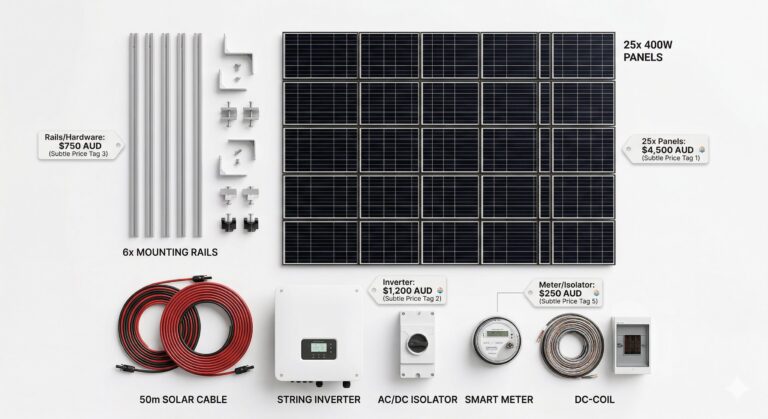
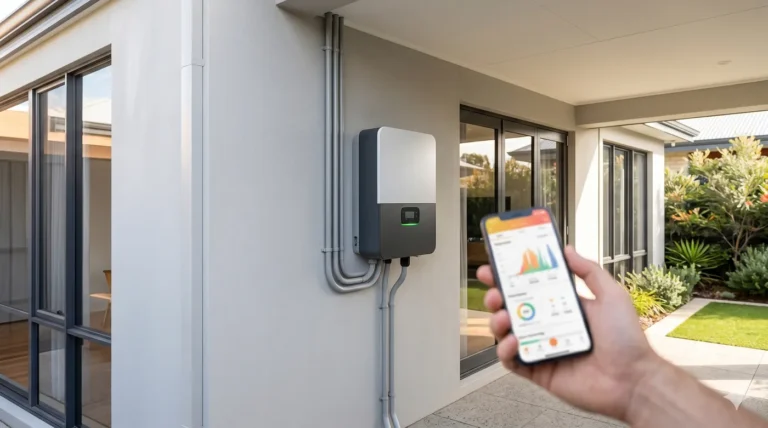
A package means the panels, the inverter and the battery are specified, installed and commissioned as one system, by one company, under one set of warranties. That is different from buying a solar system now and bolting a battery on in three years, and it is different again from a bundle of components priced together on a website.
The distinction that matters is the inverter. A system designed as a package normally uses either a hybrid inverter that handles both solar and storage, or a battery with its own integrated inverter. A solar-only system installed without storage in mind often has a standard string inverter, and adding a battery later means either replacing that inverter or adding a second one.
That single decision is the main reason retrofits cost more than people expect.
Why doing both at once usually works out better
- One installation, one set of labour. The switchboard work, the isolators, the cabling runs and the commissioning happen once rather than twice.
- One grid connection process. Adding storage later means going back to the network operator for an updated approval.
- The system is sized as a whole. Panels sized for a house with a battery look different from panels sized for a house without one — usually larger, because surplus daytime generation is what charges the battery.
- One point of accountability. If output is down, nobody is arguing about whether it is a panel problem or a battery problem.
The case for staging it is real too: it spreads the cost, and it lets you watch a year of real production data before committing to a battery size. If you go that way, the thing to insist on is that the solar system is specified as battery-ready from day one.
Sizing the two together
Battery sizing follows your evening and overnight consumption, not your total usage. The useful question is: how many kilowatt-hours do you use between sunset and sunrise? That is what the battery has to cover, and it is usually a good deal less than people assume.
Panel sizing then has to produce enough surplus during the day to both run the house and fill the battery. A system sized tightly for daytime consumption will leave the battery half-charged through winter, which is when you most wanted it.
This is why a package often means more panels than a solar-only quote for the same house. Our guide to what a 6.6kW system produces in Perth covers the base case, and the same arithmetic scales up.
The WA Battery Scheme changes the sums
Western Australia has a battery rebate, and it is substantial enough to change which option wins. Amounts differ depending on whether you are a Synergy or Horizon Power customer, and there are interest-free loan provisions alongside the rebate.
Eligibility has conditions — the property, the battery model and the installer all have to qualify — so it is worth confirming those before you settle on hardware rather than after. The eligibility checklist and application steps sets out what qualifies and in what order.
What to check before you sign
- Usable capacity, not nominal. Battery specifications quote a total figure and a usable figure. Usable is what you get.
- What happens in a blackout. Not every battery keeps the house running when the grid drops, and those that do often only back up selected circuits. If blackout protection is the reason you want a battery, get it confirmed in writing.
- Warranty terms in cycles as well as years. A ten-year battery warranty usually also carries a throughput or cycle limit, whichever comes first.
- Who installs it. Subcontracted installations spread accountability across companies when something goes wrong.
- Whether it is genuinely one system. Ask whether the battery and inverter are designed to work together, or simply sold together.
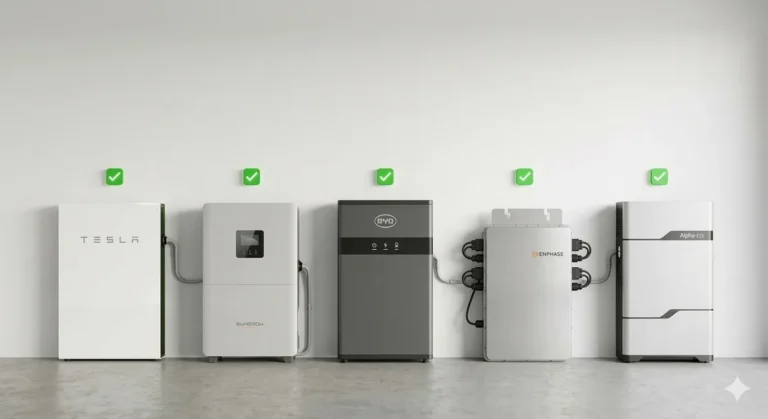
If you are still deciding which battery, our comparison of the batteries Perth homes are choosing looks at capacity, warranty and backup behaviour side by side.
What it does to your bill
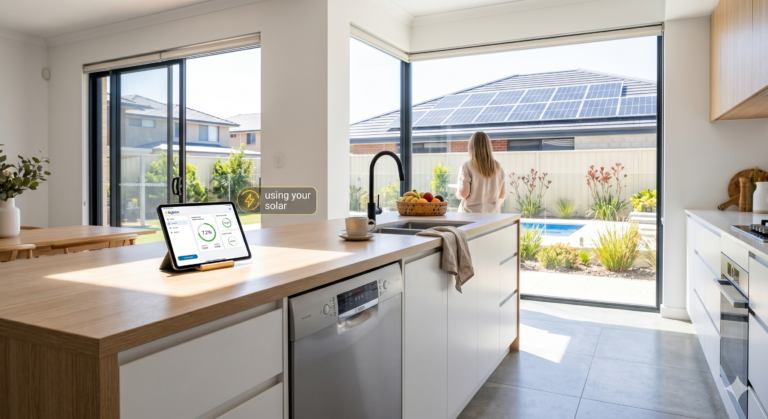
A battery does not create energy. It moves your own daytime generation into the evening, so instead of exporting surplus at a feed-in rate and buying it back at the retail rate after dark, you keep it.
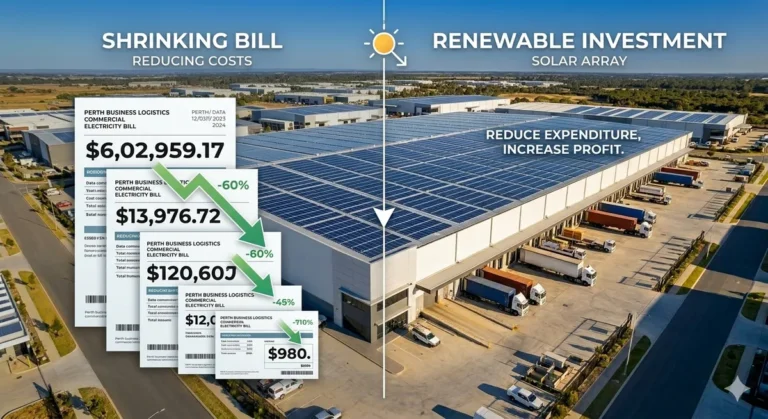
The saving therefore depends on the gap between what you are paid to export and what you pay to import, and on how much surplus you actually have. Households with high evening consumption and plenty of daytime surplus benefit most. Households that are out all day and already export very little benefit least from storage and more from getting the panel sizing right.
Common questions
Is it cheaper to buy panels and a battery together?
For most households, yes — one installation, one grid application and one commissioning visit, rather than paying for each twice. The exception is when a battery is not the right next purchase at all.
Can I add a battery to an existing system?
Usually, but the inverter decides how straightforward it is. A hybrid or battery-ready inverter makes it simple; a standard string inverter often means additional hardware.
How big a battery do I need?
Start from overnight consumption rather than daily total. Most Perth homes find that a battery sized to cover the evening and overnight period, rather than a full 24 hours, gives the best return.
Will a package cover a blackout?
Only if it is specified to. Backup requires compatible hardware and additional wiring, and it usually protects selected circuits rather than the whole house.
Getting a package designed properly
Every Talk Energy system is designed from your own bills and roof rather than a fixed package, and installed by our own in-house SAA-accredited electricians — the same team that handles any service afterwards. Installations carry a 20-year workmanship warranty and a 48-hour fix or replace guarantee, and we handle the WA Battery Scheme paperwork on your behalf.
For a free assessment covering both solar and storage, call 08 6255 5914.